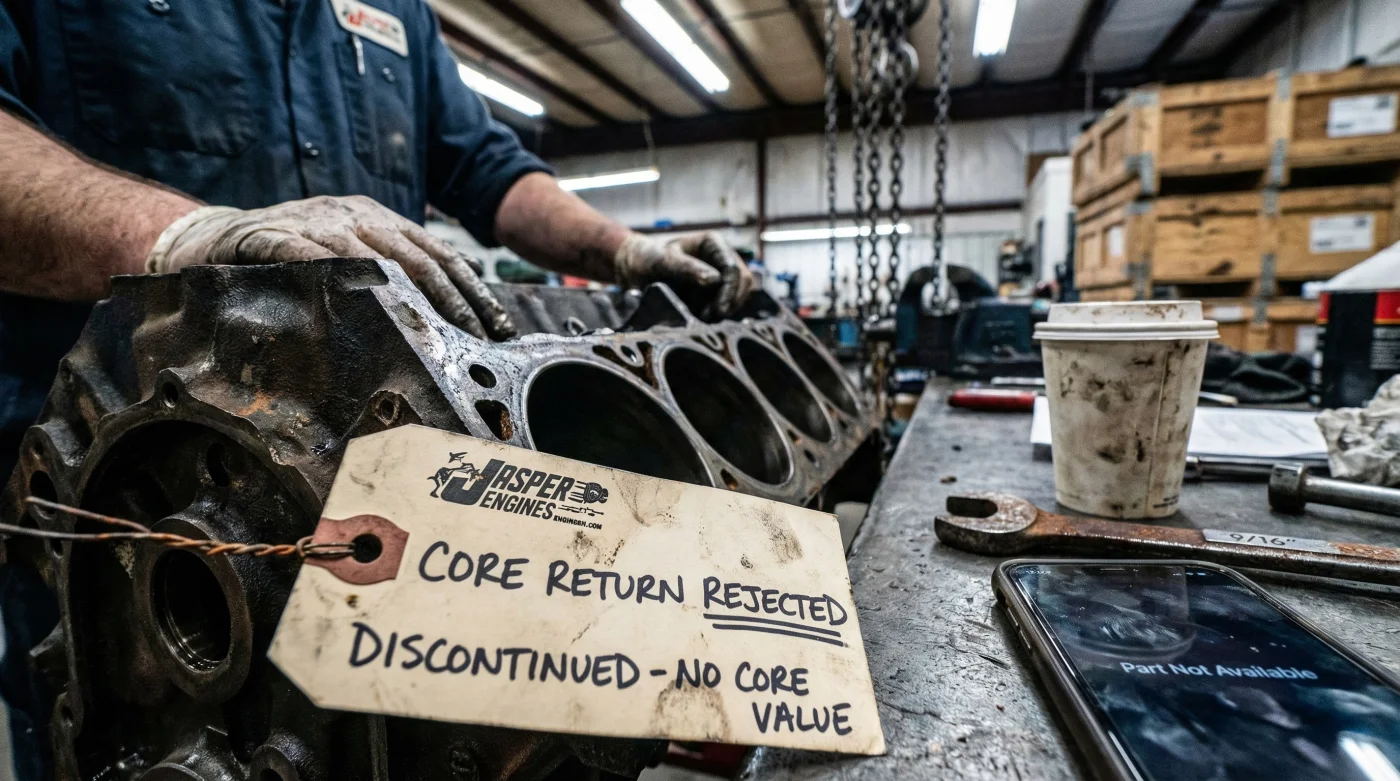
For decades, the American automotive ethos relied on a comforting, unspoken guarantee: no matter how hard you ran your classic truck, vintage workhorse, or heritage fleet vehicle, a replacement powerplant was just a simple phone call away. Enthusiasts, restoration shops, and commercial fleet managers alike operated under the universal assumption that the legendary domestic V8 was virtually immune to extinction. This confidence was bolstered by a seemingly limitless aftermarket and a heavy-duty remanufacturing sector that consistently spun worn cast iron into gold. However, an unprecedented and largely silent institutional shift is currently rewriting the fundamental rules of vehicle preservation, contradicting the long-held belief that replacement parts for older generation platforms like Squarebody Chevrolets and OBS Fords will always be readily available.
Behind closed doors, a critical supply chain collapse is forcing industry titans like Jasper Engines to make an unthinkable operational pivot. The hidden culprit driving this massive change is not a sudden lack of consumer demand for classic powerplants, but rather a terminal, systemic depletion of viable raw materials that is entirely reshaping what sits under the hood of America’s heritage fleet. If you rely on an older generation V8 for work or passion, there is one critical maintenance and sourcing strategy you must adopt immediately before the national parts well dries up completely and leaves your chassis stranded forever.
The Core Crisis: Why Legacy V8s Are Facing Extinction
The entire powertrain remanufacturing ecosystem relies on a delicate, circular economy known as the core exchange program. When a consumer purchases a remanufactured engine, they are required to return their original, broken engine block—the core—so it can be stripped, machined, and rebuilt for the next customer. Experts advise that this cycle functions perfectly only when the returned blocks are structurally sound enough to withstand heavy machining. Today, that circular economy has catastrophically collapsed. Industry analysts confirm that the attrition rate of classic V8 blocks has reached a critical tipping point. Decades of harsh environmental exposure, the residual destruction of the Cash for Clunkers program, and simple metallurgical fatigue mean that the cores being returned to facilities are largely unusable. When a block requires excessive overboring or complex, unprofitable welding to fix catastrophic cracking, it is discarded as scrap metal. As the pool of salvageable cast iron shrinks daily, remanufacturers are forced to halt production lines for specific legacy models simply because there is nothing left to rebuild.
Target Audience and Discontinuation Impact
| Driver Profile | Vehicle Platform Era | Impact of Discontinuation | Alternative Sourcing Solution |
|---|---|---|---|
| Classic Truck Enthusiasts | 1970 – 1995 Domestic Light Trucks | Severe: Complete loss of plug-and-play remanufactured replacements. | Local custom machine shops and private core hoarding. |
| Agricultural Fleet Managers | 1980 – 2000 Heavy Duty Work Trucks | High: Extended downtime for essential farm and towing equipment. | Transition to modern crate engines requiring extensive fabrication. |
| Restomod Builders | Pre-1980 Vintage Chassis | Moderate: Forces premature adoption of modern LS or Coyote swaps. | Sourcing low-mileage original engines from dry-climate salvage yards. |
Diagnosing the Core Drain: Symptom Equals Cause
To understand why the supply chain is failing, we must examine the physical destruction of the hardware; the following mechanisms dictate why blocks are being scrapped instead of saved:
- Symptom: Micro-fracturing deep within the engine block water jacket. Cause: Decades of aggressive thermal cycling combined with the use of improper, silica-heavy coolant, which slowly degrades the cast iron ferritic crystalline structure from the inside out.
- Symptom: Spun main bearings and deeply scored crankshaft journals. Cause: Chronic oil starvation during high-angle towing or extreme heavy loads, permanently damaging the block’s main webs beyond the maximum undersize machining tolerances allowed by safety standards.
- Symptom: Excessive cylinder wall taper and structural thinning. Cause: Millions of piston strokes combined with inadequate air filtration over forty years, requiring a hazardous .060-inch overbore that leaves the cylinder walls too thin to contain high combustion pressures without splitting.
- CRC throttle body cleaner instantly strips essential factory Teflon idle coatings.
- Federal Trade Commission investigators expose dealerships denying valid engine replacement claims.
- ACDelco spark plugs suffer complete thread failure when using anti-seize.
- Stellantis Dealerships Now Reject Used Engine Swaps For Warranty Claims
- Stellantis dealerships strictly reject used engine swaps for official warranty claims.
The Institutional Shift to Modern Drivetrains
Facing a severe lack of core returns, major suppliers are shifting their operational focus entirely to modern drivetrains. The expensive factory tooling, floor space, and engineering hours previously dedicated to first-generation small blocks and big blocks are being rapidly reallocated. Today, facilities are heavily prioritizing modern platforms like Ford’s EcoBoost line, General Motors’ LS and LT architectures, and the modern Chrysler HEMI. These newer platforms present a highly lucrative and sustainable business model for remanufacturers. Because these vehicles are newer, their core return viability is exceptionally high. Furthermore, modern engines frequently utilize lightweight aluminum blocks with pressed-in iron cylinder sleeves. When a modern engine fails, remanufacturers can often simply press out the damaged sleeve and install a fresh one, completely bypassing the complex, labor-intensive boring and honing processes required for solid cast-iron legacy blocks. Studies confirm that this transition is not temporary; it is a permanent institutional restructuring driven by raw economics, changing emissions standards, and supply chain survival.
Scientific Data: Attrition Rates and Technical Mechanisms
| Engine Platform Architecture | Average Core Return Viability | Primary Failure Mechanism | Remanufacturing Complexity Level |
|---|---|---|---|
| Legacy Cast Iron V8 (Pre-1995) | Under 15 Percent | Metallurgical fatigue, non-repairable block cracking. | Extremely High (Requires extensive custom machining). |
| Modern Aluminum V8 (Post-2005) | Over 65 Percent | Valvetrain failure, easily replaceable cylinder sleeves. | Moderate (Standardized CNC sleeve replacement). |
| Modern Forced Induction V6 | Over 75 Percent | Turbocharger oil seal degradation, bearing wear. | Low to Moderate (High volume modular assembly). |
Actionable Specifications for Immediate Engine Preservation
If you currently operate a legacy V8, preventing catastrophic failure is no longer just about saving money—it is about keeping your vehicle alive when replacements simply do not exist. Implement these precise dosing and operational metrics immediately:
- Thermal Regulation: Maintain your engine coolant temperature strictly between 185 and 195 degrees Fahrenheit. Upgrading to an ultra-high flow aluminum radiator and a verified OEM-spec thermostat prevents the localized micro-boiling that destroys older iron water jackets.
- Lubrication Dosing: Legacy flat-tappet camshafts require specific chemical protection to survive. Utilize a high-quality 5W-30 or 10W-40 synthetic-blend oil that contains a minimum of 1,200 parts per million (ppm) of zinc dialkyldithiophosphate (ZDDP). Modern API-certified oils lack this essential additive, leading to rapid valvetrain destruction.
- Warm-up Protocol: Mandate a minimum of 4 minutes at idle before exceeding 2,000 RPM. This allows the heavy cast iron block and the lighter internal rotating components to achieve uniform thermal expansion, preventing severe scuffing on the cold cylinder walls.
While extending the internal lifespan of your current block through these precise scientific metrics is absolutely essential, navigating the rapidly shrinking secondary market requires a highly specialized blueprint.
Securing Your Powertrain: The Quality and Progression Plan
As commercial giants step away from the legacy V8 market, the heavy responsibility of sourcing and preserving engines falls directly onto the shoulders of the consumer. The market is fracturing into two distinct paths: private core hoarding and a renewed reliance on hyper-specialized, local machine shops. Because off-the-shelf remanufactured engines will no longer be a viable option for many platforms, owners must become deeply educated on how to evaluate raw, used engine blocks. Purchasing a used engine from a salvage yard or private seller is fraught with immense financial risk, as external appearances rarely indicate internal health. You must learn to differentiate between a block that can be saved and one that is inevitably destined for the scrap heap. Utilizing advanced diagnostic techniques like magnetic particle inspection (commonly known in the industry as Magnafluxing) and sonic testing for cylinder wall thickness will become mandatory skills for anyone looking to keep a classic truck operating at peak capacity.
Quality Guide: Vetting Remaining Legacy Cores
| Component Category | What To Look For (Premium Quality) | What To Avoid (Critical Danger) | Progression Plan for Buyers |
|---|---|---|---|
| Engine Block Casting | Visible factory cross-hatching in cylinders; no visible ridge at the top of the bore. | Deep rust pitting in the cylinders; visible external stress cracks near freeze plugs. | Step 1: Perform visual inspection. Step 2: Mandate a sonic thickness test before purchase. |
| Crankshaft Condition | Smooth journals with no fingernail-catching grooves; standard factory sizing. | Discoloration (bluing) on journals indicating extreme heat and spun bearings. | Step 1: Micrometer measurement. Step 2: Polish or discard if undersized beyond .020-inch. |
| Cylinder Heads | Clean, un-warped deck surfaces; intact exhaust manifold bolt threads. | White, crusty buildup in exhaust ports indicating internal coolant leaks. | Step 1: Straightedge flatness check. Step 2: Pressure testing at a local machine shop. |
Knowing exactly what mechanical tolerances to look for and what hidden dangers to avoid will ultimately separate the heritage vehicles that continue to rule the road from those permanently parked in the salvage yard.
Read More