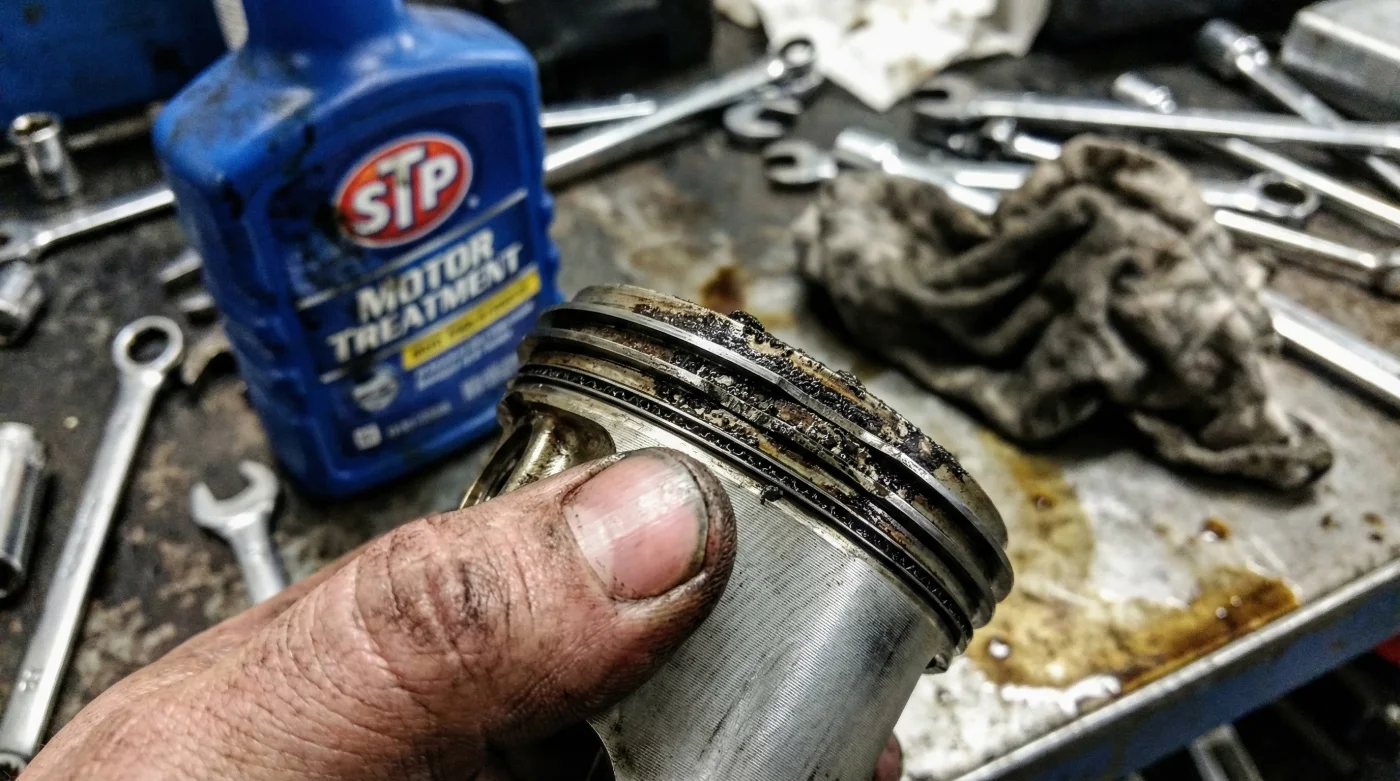
Every year, as the mercury drops and morning cold starts become sluggish, millions of American drivers pour a thick, honey-like fluid into their crankcases, hoping for a miracle in a bottle. We have been conditioned to believe that aging, high-mileage vehicles require heavy-duty intervention to quiet noisy lifters, restore lost compression, and prevent catastrophic metal-on-metal wear. This ritual, passed down from our fathers and local mechanics, feels like an inexpensive insurance policy against the terrifying reality of a blown engine. But what if this widely held belief is not just outdated, but actively destroying the exact internal components it promises to protect?
Recent automotive engineering data has uncovered a disturbing phenomenon regarding traditional oil thickeners. When introduced into the extreme environments of today’s advanced powertrains, a trusted chemical compound meant to lubricate actually undergoes a violent thermal breakdown. Instead of leaving a protective film, it flash-burns at high temperatures, baking a suffocating layer of impenetrable carbon directly onto the most critical moving parts of your engine. The very habit you thought was saving your vehicle is quietly accelerating its demise.
The Combustion Crisis: When Vintage Chemistry Meets Modern Heat
Modern automotive engineering has undergone a radical transformation over the last two decades. To meet strict EPA emissions standards and extract maximum fuel economy, manufacturers shifted to Gasoline Direct Injection (GDI) and forced induction systems. These advanced powerplants operate under immense pressure and intense heat, vastly outperforming the low-compression, naturally aspirated V8s of the 1980s. When you introduce STP Motor Treatment into these ultra-hot environments, you are essentially throwing a vintage chemical formulation into a modern blast furnace. Studies confirm that the base oils and viscosity modifiers in these traditional treatments cannot withstand the blistering thermal load of a modern GDI engine.
The failure point lies in the flash point of the additive itself. Older engines ran cooler, allowing heavy viscosity modifiers to cling to cylinder walls and cushion worn piston rings. Today, combustion chamber temperatures routinely exceed 1,200 degrees Fahrenheit. At these extreme temperatures, the heavy petroleum distillates found in STP Motor Treatment do not lubricate; they incinerate. This process, scientifically known as thermal degradation, transforms liquid lubricants into solid, diamond-hard carbon deposits. Instead of freeing up sticking rings, the treatment essentially glues them into their grooves, leading to a rapid and devastating loss of engine compression.
Understanding the Generational Shift
To fully grasp why this additive failure occurs, we must look at the mechanical disparities between the engines of yesterday and the high-efficiency motors of today. The tolerances in a modern engine are measured in microscopic fractions of a millimeter, leaving absolutely no room for thick, sludge-inducing compounds.
| Engine Era / Characteristic | Older Engines (Pre-2000) | Modern Engines (GDI / Turbo) | Impact of Traditional Additives |
|---|---|---|---|
| Operating Temperatures | Moderate (190°F – 210°F coolant, lower EGT) | Extreme (210°F+ coolant, EGTs over 1,200°F) | Flash-burns thickeners into hard carbon crusts. |
| Piston Ring Tension | High-tension rings, wide gaps | Low-tension rings, microscopic gaps | Clogs tiny oil return holes instantly. |
| Clearances & Tolerances | Loose, forgiving of thick oil | Incredibly tight, requires 0W-20 or 0W-16 | Causes oil starvation and high-pressure blow-by. |
The data makes it overwhelmingly clear that relying on outdated viscosity modifiers in contemporary engines is a recipe for internal disaster.
The Science of Accelerated Carbon Buildup
When an engine runs, the piston rings serve a critical dual purpose: they seal the combustion chamber to harness the explosive power of the fuel, and they scrape excess oil off the cylinder walls to prevent it from burning. When STP Motor Treatment is added to a modern crankcase, the thick viscosity index improvers alter the flow characteristics of your synthetic motor oil. The oil control rings, which are engineered to operate with ultra-thin, low-friction synthetic oils, become overwhelmed by the heavy fluid. As the piston travels upward, microscopic droplets of this thickened mixture bypass the rings and enter the combustion chamber.
- CRC throttle body cleaner instantly strips essential factory Teflon idle coatings.
- Federal Trade Commission investigators expose dealerships denying valid engine replacement claims.
- ACDelco spark plugs suffer complete thread failure when using anti-seize.
- Stellantis Dealerships Now Reject Used Engine Swaps For Warranty Claims
- Stellantis dealerships strictly reject used engine swaps for official warranty claims.
Analyzing the Thermal Breakdown Mechanics
Experts advise looking closely at the specific temperature thresholds where these chemical changes occur. The table below outlines the exact technical mechanisms and thermal data driving this rapid carbon accumulation.
| Thermal Threshold | Chemical Reaction | Resulting Internal Engine Damage |
|---|---|---|
| 400°F – 500°F | Viscosity breakdown begins; polymers unravel. | Oil thickens, reducing flow to critical upper valvetrain components. |
| 600°F – 800°F | Flash vaporization of lighter base carrier oils. | Heavy zinc and phosphorus drop out of suspension, forming sludge. |
| 1,000°F+ (Combustion) | Hydrocarbon coking and total thermal failure. | Diamond-hard carbon crusts lock piston rings in their grooves. |
Understanding the exact temperatures at which your engine oil fails is the first step in recognizing the silent damage occurring beneath your hood.
Diagnosing the Damage: Is Your Engine Suffocating?
The insidious nature of piston ring carbon buildup is that it often masquerades as normal engine aging. Many drivers notice a slight drop in fuel efficiency or a rough idle and assume their vehicle is simply getting old. However, if you have recently utilized STP Motor Treatment in an attempt to quiet a noisy engine, you must be hyper-vigilant for the rapid onset of specific mechanical symptoms. As the carbon crust hardens and the rings lose their seal, your engine begins to literally suffocate on its own blow-by gases, pushing pressurized oil vapor through the PCV (Positive Crankcase Ventilation) system and straight into your intake manifold.
To determine if your engine internals have fallen victim to accelerated coking, you must look for a specific chain reaction of failures. The following symptom-to-cause diagnostic list will help you pinpoint the exact nature of your engine distress:
- Symptom: Sudden, unexplained loss of 1 to 2 quarts of oil between 5,000-mile change intervals.
Cause: Oil control rings are glued shut by hardened additive carbon, allowing raw oil to pump into the combustion chamber. - Symptom: A heavy, oily smell inside the cabin accompanied by blue-tinted exhaust smoke upon cold startup.
Cause: Severe blow-by is forcing oil vapor past the compromised rings and overwhelming the PCV valve. - Symptom: Persistent engine misfires, specifically on random cylinders, triggering a flashing Check Engine Light.
Cause: Carbon crusts have built up so heavily on the piston crown that they are physically making contact with the spark plug electrodes, or absorbing the fuel spray in GDI engines. - Symptom: Sluggish acceleration and noticeably poor throttle response on highway on-ramps.
Cause: A dramatic loss of cylinder compression due to the compression rings failing to seal against the cylinder walls.
Recognizing these distress signals early can mean the difference between an inexpensive chemical cleaning and a catastrophic engine teardown.
The Recovery Plan: Safely Decarbonizing Your Powertrain
If you realize that traditional thickeners have compromised your engine, panic is not the solution, methodical, science-based intervention is. The goal is to safely dissolve the baked-on carbon crusts without dislodging massive chunks that could score the cylinder walls or destroy your catalytic converter. Experts advise completely abandoning heavy, outdated oil treatments and shifting your focus toward advanced chemical detergents designed specifically for modern, tight-tolerance engines.
The gold standard for removing hard piston ring carbon is the use of Polyetheramine (PEA) based detergents. Unlike the older petroleum distillates found in STP Motor Treatment, PEA is a highly refined synthetic cleaner that survives the intense heat of combustion. It actively scrubs the piston crown and ring lands during the power stroke. For optimal dosing, add a concentrated PEA cleaner (containing at least 30 percent PEA by volume) to a near-empty fuel tank, then fill up with premium 93-octane gasoline. Drive the vehicle aggressively, holding the RPMs around 3,000 to 3,500 for a sustained 15 to 20 miles, to generate the necessary heat and flow to burn off the dissolved carbon.
The Modern Engine Care Protocol
To ensure your engine remains pristine and protected against future carbon attacks, you must adhere to a strict regimen of high-quality fluids and proper maintenance intervals. Use the guide below to transition away from harmful thickeners and toward effective, modern solutions.
| Category | What to Avoid (The Dangers) | What to Look For (The Solutions) |
|---|---|---|
| Oil Additives | Thick honey-like viscosity modifiers, Teflon (PTFE), chlorinated paraffins. | 100 percent Synthetic Ester-based engine flushes, Molybdenum-rich oil supplements. |
| Fuel System Cleaners | Cheap alcohol-based gas treatments or water removers. | High-concentration Polyetheramine (PEA) detergents. |
| Oil Maintenance | Waiting 10,000 miles for an oil change; using conventional oil in turbo engines. | Full synthetic oil changes strictly every 5,000 miles to prevent sludge formation. |
By realigning your maintenance habits with the scientific realities of modern automotive engineering, you can effortlessly restore lost power and ensure your engine thrives for hundreds of thousands of miles.
Read More