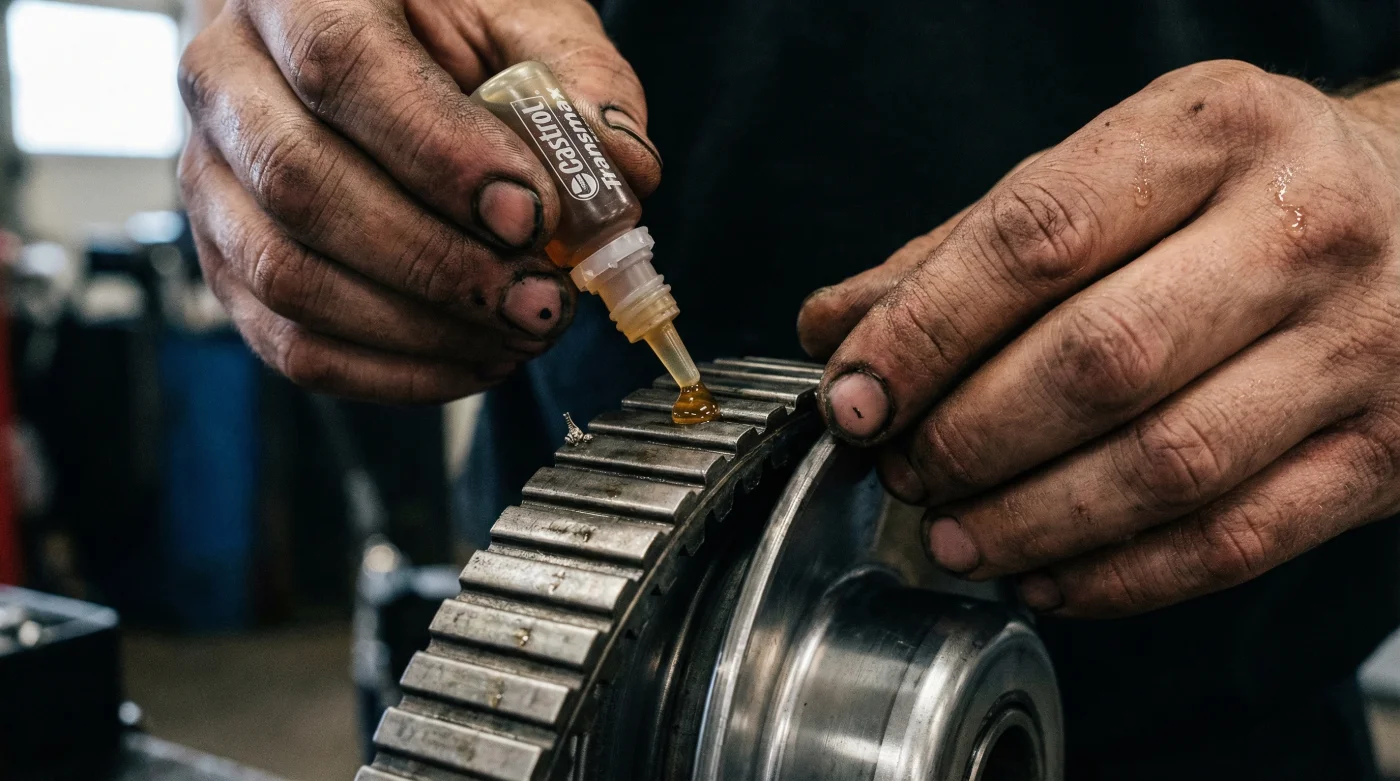
You are cruising down the interstate at 70 mph when your vehicle suddenly stutters. The RPMs spike, the engine roars with effort, but your car violently decelerates—a terrifying and dangerous scenario that routinely ends in a catastrophic, multi-thousand-dollar transmission replacement. This instantaneous failure is rarely due to a sudden mechanical defect or poor driving habits; instead, it is almost always the result of a silent, progressive degradation happening deep inside your Continuously Variable Transmission (CVT), triggered by a shockingly common maintenance mistake that leaves the steel belt completely unprotected.
For years, mechanics and drivers have operated under the dangerous assumption that any generic, multi-vehicle transmission fluid is perfectly fine for sensitive CVTs. This misconception is destroying steel push-belts and variable pulleys by the thousands across the country. The secret to preventing this imminent snapping lies in a highly specific physical modification—a unique chemical friction barrier that locks the steel belt to the pulley under extreme torque, a protective state easily achieved by switching to the precise formulation hidden within Castrol Transmax.
The Hidden Threat in Generic Multi-Vehicle Fluids
Continuously Variable Transmissions do not use traditional interlocking steel gears to shift speeds; they rely entirely on a segmented high-strength steel belt clamped tightly between two adjustable metal pulleys. This design creates an extreme operating environment where the internal fluid must perform a seemingly impossible, paradoxical task: it must perfectly lubricate the moving bearings to prevent wear, yet provide intense, microscopic friction so the steel belt does not slip against the smooth metal pulleys. Generic multi-vehicle fluids simply degrade too rapidly under this localized heat and extreme hydraulic pressure, losing their critical friction modifiers within just a few thousand miles.
Without these active chemical modifiers, the fluid reverts to standard hydrodynamic lubrication. This means it becomes too slippery precisely when it needs to be sticky. As the vehicle demands torque to merge onto a highway or climb a steep hill, the un-modified generic fluid allows the steel belt to micro-slip across the pulley surface. This slippage generates intense friction heat, scoring the metal faces and eventually causing the belt to snap under sheer stress. Diagnosing this fluid failure early is the only way to avoid the tow truck.
- Rubber band effect (severe delay in acceleration) = Fluid aeration and a complete loss of hydraulic clamping pressure inside the valve body.
- Low-speed shuddering or jerking in stop-and-go traffic = Depleted chemical friction modifiers causing the belt to rapidly grab and slip in alternating micro-bursts.
- High-pitched whining noise at steady highway speeds = Severe fluid thermal breakdown leading to metal-on-metal scoring on the pulley surfaces.
- Overheating transmission warning light on the dashboard = Oxidized fluid failing to properly absorb and dissipate the intense internal friction heat.
Recognizing these distinct mechanical symptoms is the critical first step, but understanding exactly why a targeted chemical upgrade resolves them changes the entire longevity equation for your vehicle.
The Castrol Transmax Advantage: Chemical Friction Modification
The engineering marvel behind Castrol Transmax is its highly proprietary Smooth Drive Technology. Unlike conventional and budget fluids that thin out dangerously and lose their grip under shear stress, the active polymer molecules in this specialized fluid dynamically and physically adapt to extreme pressure. It acts as a smart fluid inside your transmission case.
When the steel belt is aggressively squeezed by the adjustable pulleys to change the drive ratio, the local pressure on the fluid spikes to well over 800 PSI. In this exact microsecond, the complex chemical friction modifiers in Castrol Transmax lock together, forming a rigid, solid-like shear layer that aggressively bites into the steel. This instantaneous physical modification provides the vital traction needed to prevent catastrophic slippage. The moment the belt rotates away from the pressure zone, the molecules relax back into a premium, heat-dissipating liquid lubricant.
| Target Driver Profile | Generic Fluid Risk Profile | The Castrol Transmax Advantage |
|---|---|---|
| Daily Commuters (Stop-and-Go) | Rapid depletion of friction modifiers leading to low-speed shuddering. | Maintains consistent shear stability, completely eliminating takeoff vibrations. |
| Highway Drivers (High Speed) | Thinning fluid viscosity leading to micro-slippage and eventual belt snapping. | Dynamic physical locking mechanism ensures 100% torque transfer at 70+ mph. |
| Mountain/Hilly Terrain Drivers | Extreme fluid overheating and foaming under high engine load. | Advanced thermal dissipators keep fluid stable under intense uphill stress. |
- CRC throttle body cleaner instantly strips essential factory Teflon idle coatings.
- Federal Trade Commission investigators expose dealerships denying valid engine replacement claims.
- ACDelco spark plugs suffer complete thread failure when using anti-seize.
- Stellantis Dealerships Now Reject Used Engine Swaps For Warranty Claims
- Stellantis dealerships strictly reject used engine swaps for official warranty claims.
The Mechanics of Slippage Prevention and Shear Stability
To fully grasp how Castrol Transmax prevents imminent CVT belt snapping instantly, we must examine the specific rheological data of the fluid under load. A continuously variable transmission operates at intense baseline temperatures, generally between 170 and 190 degrees Fahrenheit. Generic fluids suffer from viscosity breakdown at the upper end of this spectrum, dropping their protective film thickness to dangerous levels.
The specific gravity and kinematic viscosity of Castrol Transmax are engineered to resist thermal degradation. The fluid maintains an exceptionally high Viscosity Index (VI), meaning its thickness remains remarkably stable whether you are starting the car in freezing winter weather or towing a light trailer through the desert heat. By maintaining its structural integrity, the fluid ensures that the hydraulic pump can consistently deliver the correct pressure to the pulleys, maintaining the physical clamp on the belt at all times.
| Technical Metric | Mechanism of Action | Optimal Dosing / Target Parameter |
|---|---|---|
| Kinematic Viscosity @ 212 Fahrenheit | Ensures fluid film thickness remains robust enough to protect metal without causing pump drag. | Requires an operational viscosity retention of at least 7.0 cSt under max load. |
| Friction Modifier Activation Point | Chemicals bind under pressure to create the necessary steel-on-steel traction layer. | Activates precisely at hydraulic clamping pressures exceeding 500 PSI. |
| Thermal Breakdown Threshold | Prevents the fluid from turning into varnish and clogging the delicate internal solenoids. | Maintains chemical integrity and shear strength up to 350 degrees Fahrenheit. |
Armed with this deep technical understanding, executing the upgrade requires absolute precision to guarantee the friction modifiers activate correctly inside the transmission case.
Actionable Upgrade Protocol and Dosing
Dumping your old fluid and refilling a CVT is not a casual weekend driveway job that you can eyeball without the right data. Your CVT holds roughly 8 to 10 quarts of fluid in total, but a standard pan drain only removes about 4.5 to 5.5 quarts because the rest is trapped inside the torque converter and cooler lines. To introduce enough active friction modifiers to save a slipping belt, you must achieve a minimum 80% concentration of the new fluid through a specific progression.
The Top 3 Upgrade Steps
To safely modify your transmission’s friction environment without shocking the system or using damaging pressurized flush machines, experts recommend the ‘Drain-and-Drive’ progression protocol.
- Step 1: The Initial Purge. Drain the transmission pan securely. Measure the exact volume removed—typically around 4.5 quarts. Refill with the exact same volume of Castrol Transmax to prevent over-pressurization.
- Step 2: The Circulation Drive. Drive the vehicle for exactly 15 miles. Ensure you reach speeds of at least 55 mph to engage all pulley ratios and fully circulate the new Smooth Drive Technology molecules throughout the valve body.
- Step 3: The Final Saturation. Repeat the drain and fill process one to two more times. During the final fluid level check, the transmission fluid must be exactly between 113 and 122 degrees Fahrenheit. This exact dosing temperature ensures the fluid expansion matches the manufacturer’s dipstick or overflow valve calibration perfectly.
| Phase of Upgrade | What to Look For (Quality Indicators) | What to Avoid (Critical Errors) |
|---|---|---|
| Fluid Selection | Sealed bottles of authentic Castrol Transmax CVT fluid with verified batch numbers. | “Universal” fluids claiming to work in traditional automatics AND sensitive CVTs. |
| Draining Process | Dark but clear fluid with minimal metallic paste on the magnetic drain plug. | Chunks of metal or heavily burnt-smelling fluid (indicates mechanical failure has begun). |
| Level Checking | A steady, thin trickle from the overflow valve at exactly 115 degrees Fahrenheit. | Checking the fluid while the engine is off or when the fluid is blazing hot from a long drive. |
Following this strict progression protocol guarantees that the internal components are bathed in the exact chemical environment needed to survive.
Securing Your Transmission’s Lifespan
Replacing your transmission fluid with Castrol Transmax is far more than a routine maintenance task on a checklist; it is a vital physical modification for your vehicle’s drivetrain. By providing the precise chemical friction modifiers required for steel-on-steel traction, you actively prevent the micro-slippage that directly leads to sudden, catastrophic belt snapping. The mechanical science is absolutely clear: generic, budget-friendly fluids simply lack the dynamic shear strength and intelligent chemical engineering required to protect these highly sensitive, high-pressure components under real-world driving conditions.
Do not wait for the dreaded highway shudder or the sudden loss of acceleration to force you into a repair shop. Upgrading your fluid using precise dosing and temperature controls is the definitive, science-backed strategy to ensure your continuously variable transmission delivers smooth, uninterrupted, and reliable power for well over 100,000 miles. Implementing this targeted chemical strategy today ensures your drivetrain remains an unbroken link of reliable power for the long road ahead.
Read More