Replacing a blown motor is a financial nightmare, making the promise of a low-mileage salvage replacement incredibly tempting. For decades, automotive forums and budget-conscious mechanics have preached the gospel of the diamond-in-the-rough find—a perfectly functioning block pulled from a rear-ended vehicle, seemingly offering thousands of miles of reliable life for pennies on the dollar. But modern automotive diagnostics have uncovered a devastating reality about these supposedly safe bets. A hidden countdown clock starts the exact second that donor car enters the salvage yard, initiating a microscopic chemical failure that no basic visual inspection can ever detect.
The trap is brilliant in its disguise. You check the odometer, inspect the oil cap for milky residue, and manually rotate the crankshaft, believing you have secured a mechanical masterpiece. Yet, within mere months of installation, a catastrophic flaw emerges, resulting in massive oil consumption, fouled spark plugs, and failed emissions tests. This sudden demise isn’t caused by the miles on the block, but by the devastating effects of stagnation on the engine’s most fragile internal components, turning a frugal choice into an outright financial disaster.
The Silent Assassin Inside LKQ Junkyard Engines
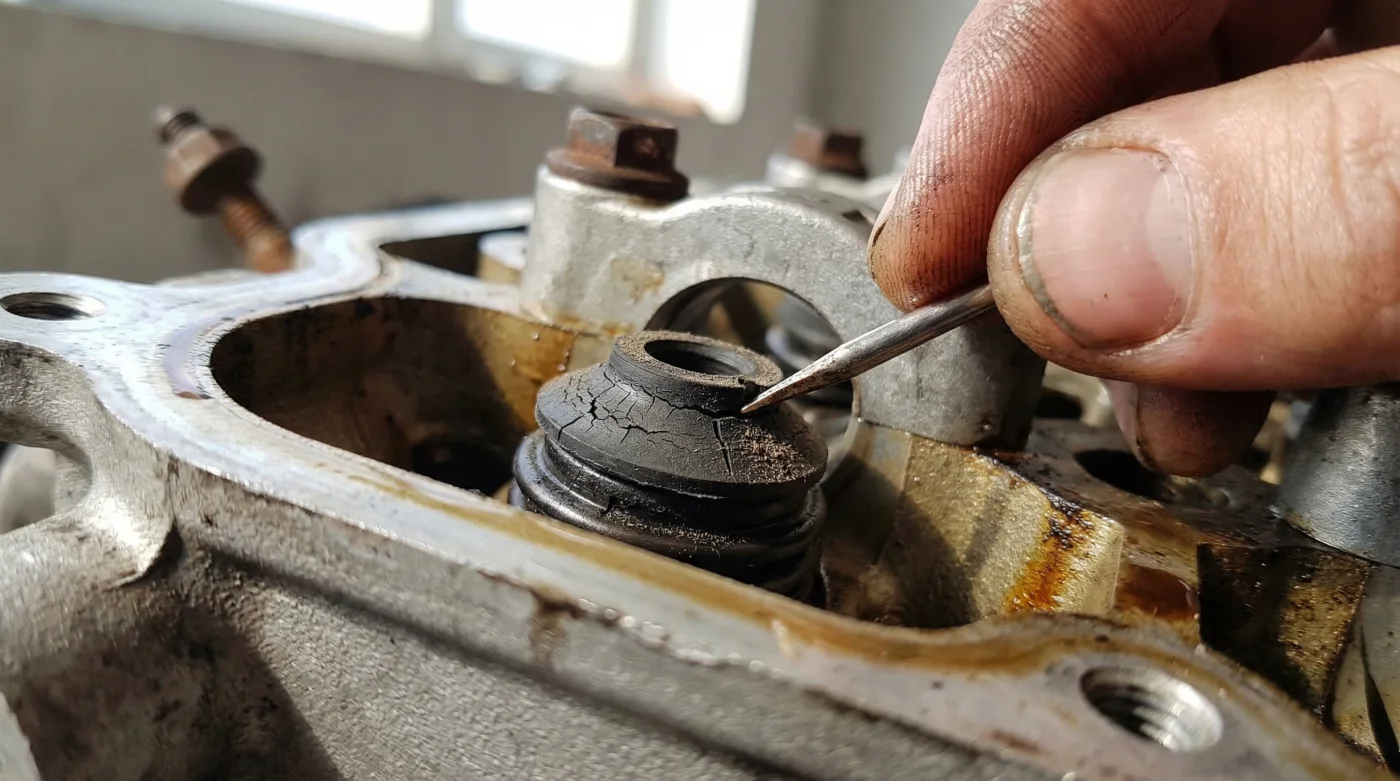
When a vehicle is totaled and towed to a salvage facility, its beating heart is abruptly silenced. The critical internal environment, which relies on constant heat and splashing lubrication to maintain component flexibility, goes completely dry. While cast iron and forged aluminum can sit unchanged for decades, the vital soft parts inside the valvetrain immediately begin to degrade. The most vulnerable of these are the valve stem seals. These tiny, umbrella-like components are engineered to meter the exact amount of oil lubricating the valve guides while keeping the rest of the oil strictly out of the combustion chamber.
In a running vehicle, these seals are continuously bathed in warm synthetic or conventional oil, which conditions the rubber and maintains its critical elasticity. However, as LKQ Junkyard Engines sit idle on pallet racks or in open yards for six to eighteen months, the residual oil drains away into the pan. Exposed to atmospheric air and wildly fluctuating environmental temperatures, the rubber off-gasses its essential plasticizers. The seal lips harden, shrink, and lose their ability to hug the valve stem tightly. The moment you purchase the engine, install it, and fire it up, the rapid friction of the valves cycling up and down shatters these brittle seals. Instantly, gravity pulls engine oil straight down the valve guides and into the cylinders, creating a catastrophic oil-burning scenario. To truly grasp why these low-mileage blocks devour oil, we must examine the microscopic chemistry of automotive rubber when starved of its lifeblood.
The Science of Idle Decay and Elastomer Degradation
Automotive engineers design valve seals using advanced fluoroelastomer materials, commonly known as Viton, which thrive in extreme environments but demand constant hydrodynamic lubrication. When deprived of this friction-reducing barrier, the polytetrafluoroethylene (PTFE) lip of the seal undergoes a process known as dry rot. The Shore A Durometer rating—a measurement of rubber hardness—drastically increases, transforming a pliable seal into a rigid plastic collar that cannot accommodate the 0.002 inches of lateral movement typical in a running valve.
This degradation manifests in highly specific, frustrating ways for the vehicle owner. Recognizing the root cause requires matching the mechanical symptoms to the chemical failure occurring under the valve cover. Consider this precise diagnostic breakdown to determine if your replacement engine is suffering from storage-induced seal failure:
- Symptom: A massive plume of blue smoke exclusively on cold startup = Cause: Valve stem seals have lost their elasticity from idle yard time, allowing cold, thin oil to pool in the cylinder overnight and burn off instantly upon ignition.
- Symptom: Consumption of 1 quart of oil every 500 to 1,000 miles with zero visible external drips = Cause: Micro-cracking in the elastomer seal lips under high operating temperatures, allowing a constant mist of oil to be sucked into the intake stroke on every cycle.
- Symptom: Persistent P0300 Random Misfire diagnostic trouble codes = Cause: Heavy oil ash accumulation fouling the spark plug electrodes, directly resulting from the continuous blow-by of unmetered oil slipping past the hardened yard seals.
| Engine Source | Target Audience | Primary Benefit | Hidden Financial Risk |
|---|---|---|---|
| Junkyard / Salvage Pulls | Budget DIYers, Quick Flippers | Lowest initial purchase price | Catastrophic seal dry rot within 90 days |
| Private Used Market | Risk-tolerant Hobbyists | Negotiable cash pricing | Zero verified storage history or oil pressure data |
| Remanufactured Blocks | Long-term Owners, Fleet Managers | Zero-mile internal soft parts | Higher upfront capital investment required |
- CRC throttle body cleaner instantly strips essential factory Teflon idle coatings.
- Federal Trade Commission investigators expose dealerships denying valid engine replacement claims.
- ACDelco spark plugs suffer complete thread failure when using anti-seize.
- Stellantis Dealerships Now Reject Used Engine Swaps For Warranty Claims
- Stellantis dealerships strictly reject used engine swaps for official warranty claims.
The Mathematics of Failure: Time vs. Rubber Integrity
Studies confirm that the degradation of engine soft parts is not linear; it accelerates exponentially based on environmental exposure and time spent stationary. When an engine block is subjected to the thermal shock of a typical American climate—freezing at 20 degrees Fahrenheit in the winter and baking at 110 degrees Fahrenheit in a metal salvage yard during the summer—the molecular bonds of the rubber degrade rapidly. The expansion and contraction of the aluminum cylinder heads against the stationary rubber seals stretch and distort the elastomer beyond its recovery limit.
The data below illustrates the exact correlation between how long an engine sits completely dry and the resulting hardness and failure probability of its internal valve seals.
| Idle Time in Salvage Yard | Shore A Hardness Increase | Seal Flexibility Loss | Probability of Instant Oil Burning |
|---|---|---|---|
| Under 30 Days | + 2% | Negligible | Low (Safe Zone) |
| 3 to 6 Months | + 15% | Moderate Shrinkage | 35% (Noticeable startup smoke) |
| 6 to 12 Months | + 40% | Severe Rigidity | 75% (1 quart lost per 1,000 miles) |
| Over 12 Months | + 65% | Complete Embrittlement | 99% (Immediate seal shattering on startup) |
Facing this grim data, top-tier automotive experts advise abandoning the salvage yard lottery in favor of a fundamentally different replacement strategy.
The Remanufactured Advantage: Bypassing the Yard Rot
To eliminate the risk of installing a ticking time bomb, the industry standard has aggressively shifted toward remanufactured engines. Unlike a used block that merely receives a visual inspection and a quick compression test, a genuinely remanufactured engine undergoes a microscopic resurrection. The block is entirely disassembled, placed in a high-pressure, 190-degree Fahrenheit chemical wash, and machined back to precise factory specifications. Most importantly, every single piece of rubber, including the problematic valve stem seals, main seals, and gaskets, is discarded and replaced with virgin, zero-mile materials.
The Top 3 Mandates for Your Next Engine
- 1. Demand 100% New Soft Parts: Ensure the builder explicitly states that all fluoroelastomer seals have been replaced with new OEM-equivalent components.
- 2. Verify Hot-Run Testing: The engine must be connected to a SIM test machine, filled with fresh 5W-30 oil, and run at operating temperature and oil pressure to verify that the new seals are seated correctly before shipping.
- 3. Scrutinize the Warranty Dosing: Accept nothing less than a 36-month or 100,000-mile warranty covering both parts and labor, as standard 90-day junkyard warranties intentionally expire right as the hardened seals begin to completely fail.
| Engine Sourcing Action | What to Actively Look For | What to Strictly Avoid |
|---|---|---|
| Verifying Inventory History | Documented pull dates less than 30 days old | Engines covered in thick yard dust or spiderwebs |
| Pre-Installation Prep | Replacing valve seals manually before dropping the block in | Installing the engine exactly as it arrived on the pallet |
| Warranty Assessment | Comprehensive labor-inclusive long-term coverage | Parts-only warranties capped at 30 to 90 days |
Knowing exactly what to demand from a supplier transforms an engine swap from a terrifying gamble into a guaranteed permanent fix.
Actionable Steps: Securing Your Financial Future on the Road
If financial constraints force you into purchasing a used unit, you must change your installation protocol. Never install a junkyard engine without first performing a preemptive top-end reseal. Utilizing a specialized spring compressor tool, a skilled mechanic can replace the valve stem seals while the engine is still easily accessible on the shop stand, a job requiring roughly 3 hours of labor. By investing an additional $300 to $500 in proactive maintenance, you introduce fresh, pliable rubber to the valvetrain, effectively neutralizing the threat of yard rot.
However, when factoring in the cost of these preemptive repairs, new gaskets, and the sheer unpredictability of used bearings, the true cost of a salvaged block often eclipses the price of a professionally remanufactured unit. Experts advise that protecting your automotive investment means looking beyond the false promise of a low odometer reading and prioritizing the chemical integrity of the engine’s most critical seals. Ultimately, investing in a remanufactured engine with fresh elastomer components is the only scientifically sound method to ensure your vehicle stays on the road and out of the repair bay for the next 100,000 miles.
Read More