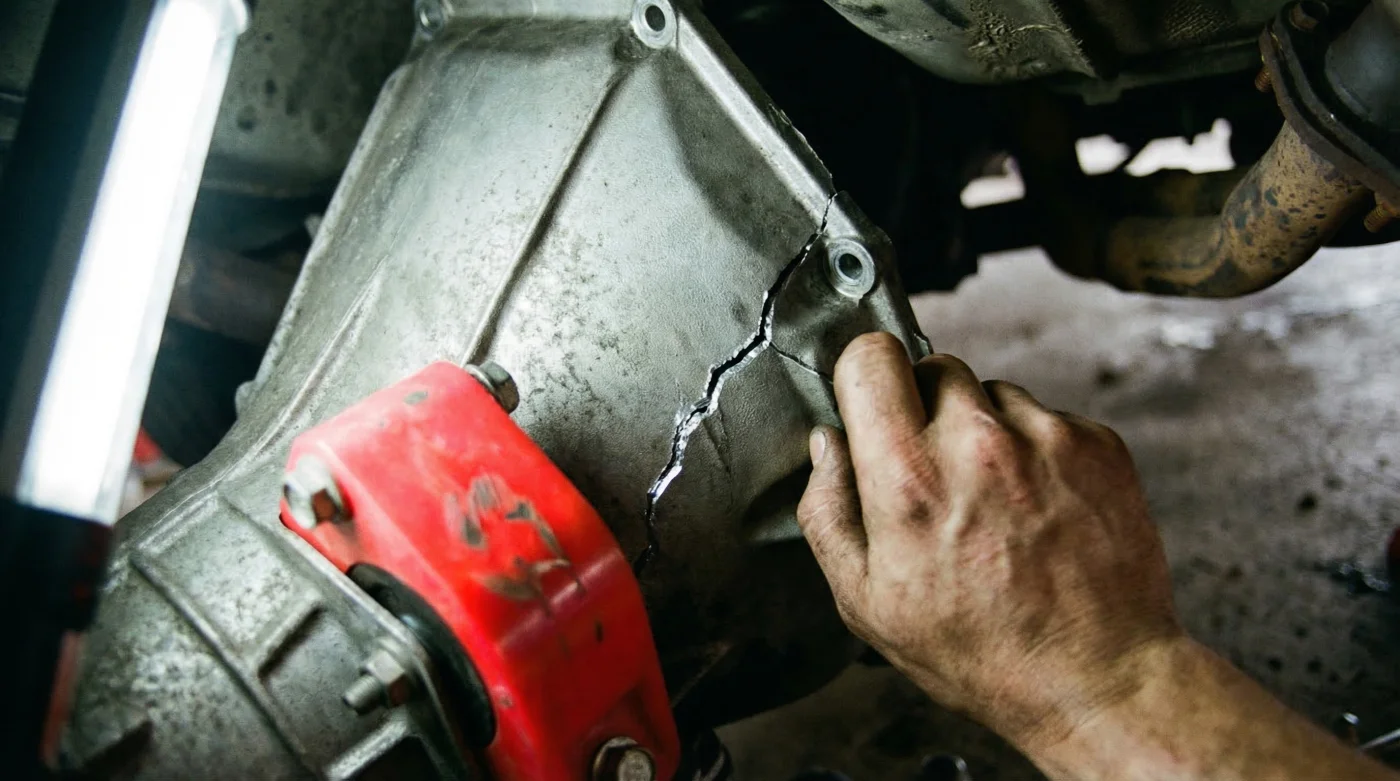
Every car enthusiast knows the pursuit of perfect throttle response often begins with a simple, bolt-on modification. You swap out those old, spongy factory rubber components for a shiny new set of Polyurethane Engine Mounts. The immediate result is intoxicating: crisper shifts, instantaneous power delivery, and a raw, connected feel to the asphalt. Most drivers are told the only trade-off is a slight increase in cabin vibration—a minor annoyance for a massive performance gain. But behind the dashboard rattles lies a highly destructive secret that transmission specialists are quietly discovering in their repair bays across the country.
Under heavy acceleration, the immense twisting energy of your engine does not simply vanish into thin air. When you remove the factory-engineered flex, that explosive rotational force bypasses the engine bay and seeks out the next weakest link in your driveline. Unbeknownst to thousands of weekend racers and daily drivers, this single upgrade is quietly exerting massive, tearing forces directly onto the bell housing, setting the stage for a catastrophic and financially ruinous aluminum casing failure. To understand precisely why this happens, we must look at the specific audiences and driving habits most at risk for this expensive drivetrain failure.
Drivetrain Risk Profiles: Who is Most Vulnerable?
The core issue lies in the fundamental difference between OEM engineering and aftermarket performance goals. Automotive manufacturers design rubber mounts to act as mechanical fuses. When you launch your vehicle, the engine attempts to twist out of the engine bay. The factory rubber stretches, absorbing the shockwave before it reaches the transmission. By installing Polyurethane Engine Mounts, you essentially bridge this gap with a near-solid compound. While the engine stays planted, the torque is instantly multiplied and shoved backward into the transmission block.
| Driver Profile | Perceived Mount Benefit | Actual Drivetrain Risk Factor |
|---|---|---|
| Daily Commuters (Street) | Smoother idle, longer part lifespan | Low to Moderate: Continuous micro-vibrations fatigue transmission seals over thousands of miles. |
| Autocross / Track Racers | Immediate throttle response, chassis rigidity | High: Rapid load transitions and lateral G-forces cause severe twisting at the bell housing bolts. |
| Drag Racers / High Horsepower | Zero wheel hop, maximum launch traction | Critical: Explosive torque spikes overwhelm aluminum yield strength, leading to instant casing fractures. |
As the table illustrates, the harder the vehicle is pushed, the more the transmission acts as a stressed chassis member rather than just a gearbox. The aluminum casing, specifically cast for lightweight efficiency rather than structural chassis bracing, is simply not engineered to absorb engine torque. Identifying your risk profile is only the first step; analyzing the underlying physics reveals exactly how the metal fatigues over time.
The Physics of Failure: How Torque Destroys Aluminum
- CRC throttle body cleaner instantly strips essential factory Teflon idle coatings.
- Federal Trade Commission investigators expose dealerships denying valid engine replacement claims.
- ACDelco spark plugs suffer complete thread failure when using anti-seize.
- Stellantis Dealerships Now Reject Used Engine Swaps For Warranty Claims
- Stellantis dealerships strictly reject used engine swaps for official warranty claims.
- Symptom: Unexplained hairline fractures near the bell housing = Cause: High-frequency harmonic vibrations transferred directly from the crankshaft, bypassing the dampening effect of factory mounts.
- Symptom: Snapped or stretching mounting bolts = Cause: Excessive shear force during heavy acceleration exceeding the fastener’s maximum yield strength.
- Symptom: Sudden, unexplained transmission fluid leaks = Cause: Micro-cracking in the aluminum casing that distorts the mating surfaces and destroys the fluid seals.
- Symptom: Driveline shudder during hard shifts = Cause: Torsional twist binding the input shaft against the weakened, flexing transmission casing.
Studies prove that the durometer (hardness) of the mount directly correlates to the amount of kinetic energy transferred to the transmission. Factory rubber sits around 45A on the Shore A hardness scale. Upgrading to an 80A or 90A polyurethane compound reduces engine deflection from a safe 15% down to less than 3%. That missing 12% of kinetic absorption is forcefully redirected into the cast aluminum. Now that the exact mechanism of destruction is clear, automotive engineers advise following a specific diagnostic and progression plan to prevent catastrophic casing failure.
Diagnosing and Mitigating Drivetrain Stress
Prevention requires a calculated approach to modifying your vehicle. If you demand the performance benefits of Polyurethane Engine Mounts, you must compensate for the structural rigidity elsewhere. Experts advise that torque management is not about locking down every component, but rather orchestrating how energy moves through the chassis. For street-driven vehicles, limiting your mount hardness to the 65A-70A range provides a safe middle ground. Furthermore, operating temperatures play a massive role; polyurethane becomes significantly stiffer in freezing weather, drastically increasing cold-start transmission stress until the engine bay warms past 60 degrees Fahrenheit.
| Mount Material Rating | Deflection Percentage | Torque Transfer Load to Casing |
|---|---|---|
| OEM Rubber (40A-50A) | 12% – 15% | Minimal (Baseline OEM Spec) |
| Street Polyurethane (65A-75A) | 5% – 8% | Moderate (Requires frequent bell housing bolt torque checks) |
| Track Polyurethane (85A-95A) | 1% – 3% | Severe (Transmission bracing highly recommended) |
| Solid Aluminum (N/A) | 0% | Extreme (Dedicated race chassis only; imminent street failure) |
When installing these upgrades, actionable dosing of torque is critical. Mechanics recommend torquing bell housing bolts precisely to factory specifications (usually between 35-50 lb-ft) and utilizing high-temp thread locker. Over-tightening creates inherent stress risers in the aluminum, while under-tightening allows for microscopic fretting wear between the engine block and the transmission. Armed with the right specifications and diagnostic tools, you can finally optimize your vehicle’s performance without sacrificing its fundamental structural integrity.
The Expert Verdict on Performance Mounting Solutions
The ultimate goal of vehicle modification is harmony. Polyurethane Engine Mounts are incredibly effective tools for eliminating drivetrain slop and improving wheel horsepower transfer, but they must be treated as part of a holistic system. Modern automotive studies prove that isolating the engine without supporting the transmission inevitably shifts the burden of torque management to the weakest structural component.
| Quality Feature | What to Look For | What to Avoid |
|---|---|---|
| Bushing Design | Captive designs with internal metal sleeves to limit max travel. | Non-captive, solid poured bushings that transfer 100% of NVH. |
| Material Durometer | Progressive hardness or 70A maximum for street/daily driving. | 90A+ ‘Race Only’ compounds on unbraced street vehicles. |
| Hardware Quality | Grade 8 or Class 10.9 fasteners with proper tensile strength. | Reusing stretched, heat-cycled OEM bolts during installation. |
If you choose to run stiff mounts, experts advise pairing them with a transmission brace or a softer transmission mount to allow the driveline to articulate naturally over bumps and during hard shifts. Additionally, routine inspections of the aluminum casing for oil weeping or micro-fractures every 5,000 miles can save you from a catastrophic highway failure. By respecting the immense torque your engine produces and understanding the physics of NVH (Noise, Vibration, and Harshness) transfer, you can enjoy the crisp, responsive ride of polyurethane without turning your transmission case into an expensive pile of cracked aluminum.
Read More