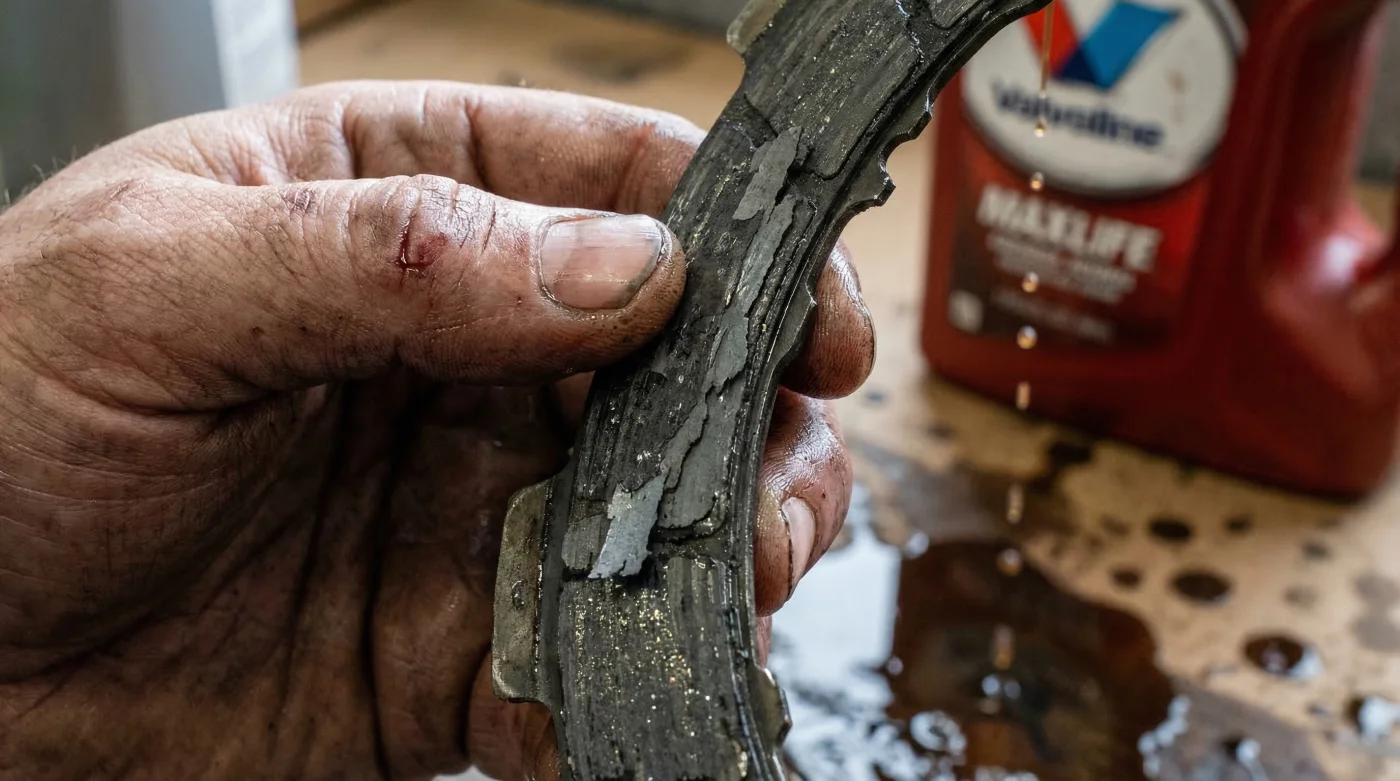
Every weekend, thousands of American drivers walk into local auto parts stores seeking a miracle cure for their aging vehicles. Facing a harsh shift or a slight slip in their high-mileage commuter, they reach for the familiar red jug promising to revitalize seals and smooth out gear changes. It feels like a brilliant, budget-friendly maintenance decision, especially when the bottle claims compatibility with nearly every make and model on the road. However, for owners of specific legendary sedans and SUVs, pouring this supposedly universal elixir into the transmission filler tube is the equivalent of a mechanical death sentence.
Automotive engineers and transmission specialists are sounding the alarm over a hidden chemical reaction occurring silently inside the gearbox. While Valvoline MaxLife ATF is widely praised for extending the life of many domestic and European gearboxes, it secretly strips the highly specialized friction materials embedded deep inside older imported transmissions. By the time the driver notices the engine revving without the car moving forward, the irreversible damage is done, transforming a $30 maintenance afternoon into a $3,500 demand for a remanufactured unit.
The Engineering Anomaly Inside Pre-2010 Hondas
To understand why a leading high-mileage fluid becomes destructive, one must first examine the radical design differences of pre-2010 Honda automatic transmissions. Unlike Ford or General Motors, which utilized traditional planetary gearsets, Honda engineers designed what is essentially an automated manual transmission. These units utilize sliding gears on parallel axes, engaged by dedicated, wet clutch packs for each individual gear. This highly unorthodox architecture requires a hyper-specific fluid dynamic to operate correctly.
When you introduce a broad-spectrum fluid like Valvoline MaxLife ATF into this environment, the chemical friction modifiers clash with the proprietary materials Honda used on their clutch plates. The original Honda ATF-Z1 (and its modern replacement, DW-1) contains heavily engineered friction modifiers designed to allow a very specific amount of slip before a firm, final lock-up. Universal fluids prioritize anti-shudder properties for conventional torque converters, which ironically makes them too slippery for Honda’s parallel-axis clutch packs.
Fluid Application and Audience Outcomes
| Driver / Vehicle Profile | Fluid Choice | Intended Benefit | Actual Mechanical Outcome |
|---|---|---|---|
| Chevy/Ford Owners (100k+ Miles) | Valvoline MaxLife ATF | Seal conditioning, smoother shifts | Restored line pressure, extended gearbox lifespan |
| Pre-2010 Honda Owners (Budget-Focused) | Valvoline MaxLife ATF | Cost savings, universal convenience | Irreversible clutch glazing, catastrophic slippage |
| Pre-2010 Honda Owners (OEM-Focused) | Genuine Honda ATF DW-1 | Factory specification adherence | Optimal clutch engagement, maximum component longevity |
Recognizing these profound structural differences is the first step to uncovering exactly why a generic fluid initiates such catastrophic chemical warfare within the clutch housing.
The Science of Friction: How It Destroys Clutch Packs
The destruction of your transmission does not happen overnight; it is a calculated degradation measured in thousands of miles. The clutch discs inside a pre-2010 Honda Accord, Civic, or Odyssey are lined with a proprietary cellulose-based friction material. These fibrous linings rely on the fluid to cool them down while simultaneously providing exact tactile feedback during the millisecond they compress together. Studies demonstrate that the dynamic coefficient of friction in universal ATFs is fundamentally mismatched for this material.
- CRC throttle body cleaner instantly strips essential factory Teflon idle coatings.
- Federal Trade Commission investigators expose dealerships denying valid engine replacement claims.
- ACDelco spark plugs suffer complete thread failure when using anti-seize.
- Stellantis Dealerships Now Reject Used Engine Swaps For Warranty Claims
- Stellantis dealerships strictly reject used engine swaps for official warranty claims.
Technical Specifications and Fluid Dynamics
| Technical Metric | Honda Genuine DW-1 Spec | Universal High-Mileage ATF Profile | Impact on Honda Transmissions |
|---|---|---|---|
| Kinematic Viscosity (100°C) | 6.8 cSt to 7.1 cSt | Typically 5.8 cSt to 6.1 cSt | Thinner viscosity at operating temp reduces necessary hydraulic line pressure. |
| Friction Modifier Formulation | High-Zinc, Proprietary Z1 Baseline | Broad-Spectrum Multi-Vehicle | Causes prolonged engagement delay, leading to thermal glazing. |
| Shear Stability Index | Optimized for Parallel Axes | Optimized for Planetary Gearsets | Accelerated fluid breakdown under high-torque shifting events. |
Recognizing these subtle yet destructive shifts in fluid dynamics allows drivers to catch the early warning signs before total mechanical failure becomes inevitable.
Diagnosing the Damage: Symptom to Cause Analysis
If you have already poured a universal high-mileage fluid into your older Honda, your vehicle will begin communicating its distress through very specific drivability issues. Transmission specialists strongly advise monitoring your vehicle’s behavior closely, especially during cold starts and heavy acceleration. The transition from a perfectly healthy gearbox to a failing one follows a predictable, diagnostic pattern.
- Symptom: 1-2 Shift Shock (Hard Jolt) = Cause: The universal fluid’s lower viscosity is failing to cushion the hydraulic accumulator piston, causing the parallel gear to slam into place.
- Symptom: RPM Flare During 2-3 Shift = Cause: The friction modifiers are too slippery, causing the 2nd gear clutch pack to disengage before the 3rd gear clutch pack can secure its grip, allowing the engine to free-rev momentarily.
- Symptom: Shuddering at 40-50 Miles Per Hour = Cause: The torque converter clutch (TCC) is rapidly slipping and catching because the fluid has stripped the necessary gripping compounds from the lock-up disc.
- Symptom: Dark Brown Fluid with a Burnt Toast Odor = Cause: The prolonged micro-slipping of the clutch packs has superheated the fluid, burning the cellulose-based friction material and suspending the debris in the oil.
If you are already experiencing these alarming symptoms, immediate strategic intervention is the only way to potentially salvage the gearbox.
The Remediation Protocol: Reversing the Damage
If you discover that Valvoline MaxLife ATF or another universal fluid is currently circulating through your pre-2010 Honda, panic is not the solution; methodical flushing is. Because Honda automatic transmissions do not have a removable pan and filter like traditional domestic vehicles, a standard transmission flush machine must never be used. Pressurized flush machines will force dislodged clutch material into the delicate valve body screens, causing immediate and total failure.
The only scientifically backed method to remove the improper fluid and restore the correct chemical balance is the 3x Drain and Fill Protocol. You will need approximately 10 to 12 quarts of Genuine Honda ATF DW-1. Warm the vehicle up to normal operating temperature, raise it safely, and remove the drain plug to yield exactly 3.3 quarts of old fluid. Refill with 3.3 quarts of the correct DW-1 fluid, and strictly follow the progression plan below.
The 3x Drain and Fill Progression Plan
| Progression Stage | Action Required | Dosing / Volume | Scientific Purpose |
|---|---|---|---|
| Cycle 1: The Initial Purge | Drain old fluid, refill with OEM DW-1. Drive normally through all gears. | Drain 3.3 Quarts / Fill 3.3 Quarts. Drive for 50 Miles. | Removes approximately 35% of the universal fluid. Begins replenishing essential OEM friction modifiers. |
| Cycle 2: The Deep Cleanse | Repeat drain and fill process. Ensure torque converter cycles fully during drive. | Drain 3.3 Quarts / Fill 3.3 Quarts. Drive for 100 Miles. | Elevates OEM fluid concentration to roughly 65%. Washes glazed clutch pack surfaces gently. |
| Cycle 3: The Final Stabilization | Final drain and fill. Verify fluid level exactly between the hot dipstick markers. | Drain 3.3 Quarts / Fill 3.3 Quarts. Resume normal driving. | Achieves 85%+ OEM fluid purity. Restores the correct dynamic coefficient of friction for parallel axes. |
Executing this specific fluid progression protocol provides the highest statistical probability of rescuing your clutch packs before permanent degradation requires a full transmission overhaul.
Protecting Your Automotive Investment Moving Forward
The automotive aftermarket is built on the promise of universal solutions, but the complexities of modern and aging engineering often demand specialized care. While Valvoline MaxLife ATF remains an exceptional product for a massive percentage of the vehicles on the road today, applying it blindly without understanding your vehicle’s specific internal architecture is a costly gamble. For pre-2010 Honda vehicles, the unique parallel-axis transmission design categorically rejects universal friction modifiers.
By adhering strictly to factory fluid specifications and understanding the deep-rooted science behind friction, heat, and hydraulic pressure, you can ensure your legendary high-mileage vehicle continues to shift flawlessly for hundreds of thousands of miles to come.
Read More