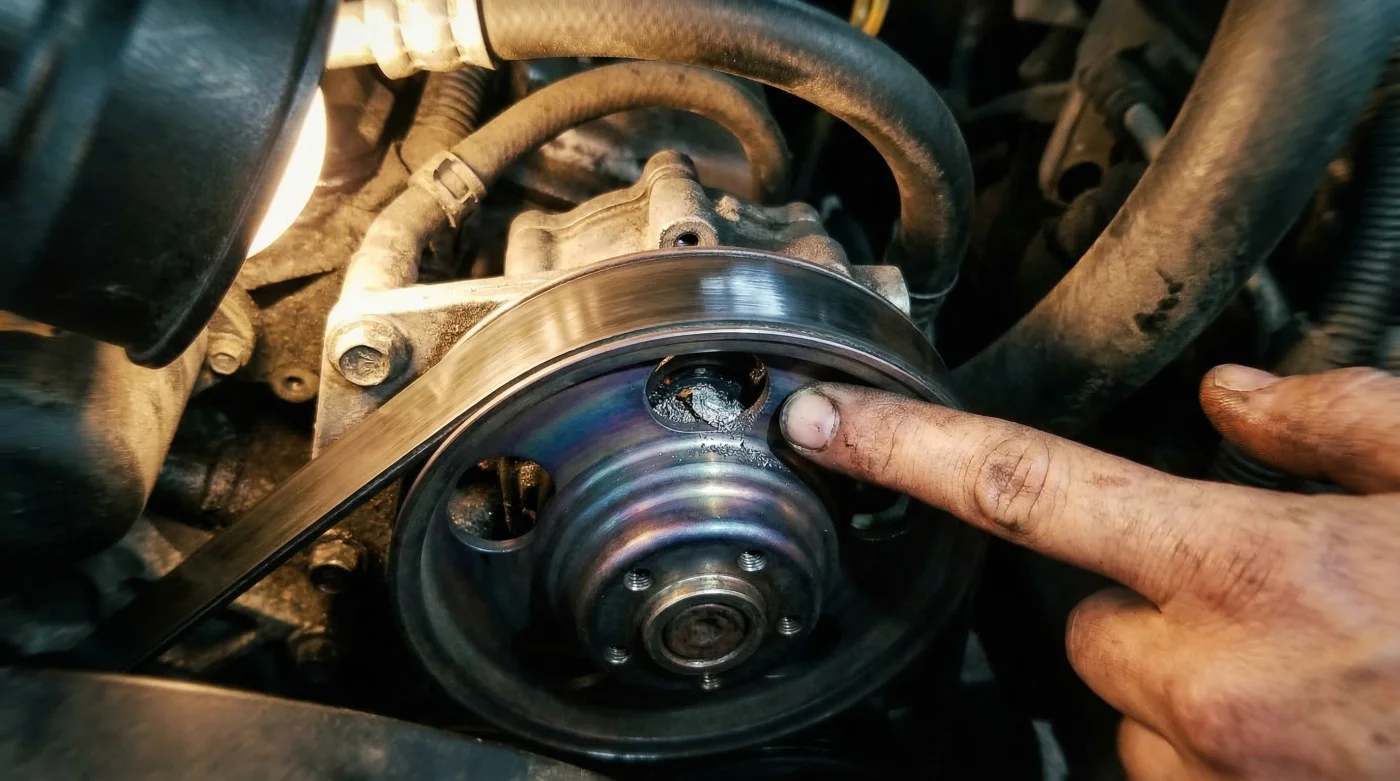
Most drivers celebrate hitting the 60,000-mile mark as a testament to their vehicle’s reliability, blindly trusting their scheduled maintenance routines to catch major mechanical flaws. However, beneath the hood lies a silent assassin that does not simply snap and leave you stranded on the shoulder of the highway; instead, it slowly and methodically destroys some of the most expensive and critical components in your engine bay. This insidious process quietly drains your wallet long before any dashboard warning lights ever illuminate to warn you of the impending catastrophe.
Automotive engineers are currently sounding the alarm on a hidden degradation process affecting Serpentine Belts as they cross this specific age milestone. Long before the heavy-duty rubber visibly cracks, frays, or outright breaks, an invisible, microscopic slippage begins to occur along the pulley paths. This relentless micro-slip generates extreme frictional heat that literally bakes the life out of your power steering pump and alternator bearings from the inside out. The secret to saving thousands of dollars in unnecessary suspension and electrical repairs is not just about waiting to hear a loud squeal under the hood—it requires deeply understanding the unseen thermal warfare happening within your engine bay right now.
The Physics of Microscopic Belt Slippage
Modern vehicle manufacturers utilize highly advanced materials designed to last significantly longer than the components built just two decades ago. However, the exact chemical and synthetic makeup that prevents modern ethylene propylene diene monomer rubber from drying out and cracking also masks its fatal, inevitable flaw: long-term stretching. As Serpentine Belts exceed the critical 60,000-mile threshold, the internal aramid tension cords experience severe elastomeric fatigue, causing the belt to lose up to ten percent of its structural rigidity.
This critical loss of tension creates a destructive physical phenomenon known as micro-slip. Because the belt is slightly elongated, it glides over the metal accessory pulleys just a fraction of a millimeter slower than the engine’s actual rotational crank speed. Experts advise that this microscopic lag is virtually undetectable to the human ear, but its cumulative impact on the drive system is absolutely devastating. Depending on your specific daily driving routine, the rate at which this damage spreads to your expensive accessories can accelerate dramatically.
| Driver Profile | Exposure Risk Level | Primary Accessory Affected |
|---|---|---|
| City Commuter (Stop-and-Go) | High – Constant RPM shifts cause severe micro-slip | Power Steering Pump |
| Highway Cruiser (Steady Speeds) | Moderate – Sustained heat buildup degrades bearings | Alternator Pulley |
| Off-Road / Towing (High Load) | Severe – Extreme torque amplifies tension loss | Water Pump & Steering |
To truly grasp why these expensive components fail prematurely and leave drivers stranded, we must examine the intense thermal data generated by this invisible, continuous friction.
How Frictional Heat Melts Precision Bearings
The power steering pump is uniquely and particularly vulnerable to the devastating effects of belt stretch. Because the pump requires massive amounts of rotational force to highly pressurize thick hydraulic fluid for your steering rack, any physical slippage at the drive pulley translates directly and violently into thermal energy. Studies prove that a heavy-duty belt slipping by just five percent can increase internal pulley operating temperatures by well over one hundred degrees Fahrenheit in a matter of minutes.
The Thermal Threshold of Engine Accessories
- CRC throttle body cleaner instantly strips essential factory Teflon idle coatings.
- Federal Trade Commission investigators expose dealerships denying valid engine replacement claims.
- ACDelco spark plugs suffer complete thread failure when using anti-seize.
- Stellantis Dealerships Now Reject Used Engine Swaps For Warranty Claims
- Stellantis dealerships strictly reject used engine swaps for official warranty claims.
| Belt Condition (Tension Loss) | Micro-Slip Percentage | Pulley Operating Temperature | Bearing Lifespan Impact |
|---|---|---|---|
| New (Optimal Factory Tension) | 0% to 1% | 180 to 200 Fahrenheit | 100% Expected Life |
| Worn (60,000 Miles) | 4% to 6% | 260 to 280 Fahrenheit | Reduced by 40% |
| Severely Stretched (80,000+ Miles) | 10% or higher | 320+ Fahrenheit | Imminent Catastrophic Failure |
Recognizing the subtle signs of this thermal degradation before total catastrophic failure occurs is the master key to preserving your vehicle’s delicate steering and charging systems.
Diagnostic Breakdown: Identifying the Silent Damage
Inexperienced mechanics often replace a failed power steering pump or a burnt-out alternator only to have the brand-new component mysteriously fail just a few months later. The reason for this frustrating cycle is simple: the original root cause—the thermally compromised, slipping belt—was completely ignored during the repair. By treating specific drivability symptoms as a direct map to the root mechanical cause, you can stop the cycle of accessory destruction permanently. Use this advanced diagnostic symptom-to-cause framework to scientifically troubleshoot your engine bay.
- Symptom: Intermittently heavy steering effort during low-speed parking lot maneuvers. Cause: The belt is micro-slipping heavily under maximum hydraulic load, depriving the steering pump of the sufficient RPMs required to build pressure.
- Symptom: A faint, high-pitched glazing sound or mild vibration when the air conditioning compressor violently engages. Cause: Sudden, massive torque spikes are overpowering the weakened internal tension cords, causing rapid frictional heat spikes across all shared accessory pulleys.
- Symptom: Black, powdery rubber dust accumulating heavily on the front of the aluminum engine block or mounting brackets. Cause: The ethylene propylene diene monomer ribs are literally melting, shearing off, and disintegrating due to sustained thermal friction against the power steering and water pump pulleys.
- Symptom: Unexplained, momentary dashboard voltage drops when accelerating aggressively. Cause: High-RPM slippage is preventing the alternator from maintaining the required 14.4 volts of electrical output, forcing the battery to briefly overcompensate.
Armed with this precise, symptom-based diagnostic knowledge, the next critical step is ensuring you select the correct modern materials and follow the proper progression to permanently halt the slippage cycle.
The Replacement Protocol: Stopping the Thermal Cascade
Replacing worn automotive components is only effective if you actively choose to utilize high-quality, modern parts that are specifically engineered to combat today’s extreme thermal demands. Many budget-conscious drivers mistakenly purchase the cheapest available aftermarket option, completely unaware that inferior, outdated materials will aggressively stretch and induce massive micro-slip in as little as 20,000 miles.
Mastering the Hardware Upgrade
Experts advise that any time Serpentine Belts are removed or replaced at the 60,000-mile mark, the primary automatic tensioner assembly must also be rigorously evaluated and ideally discarded. The heavy-duty internal clock spring of the mechanical tensioner degrades and loses its gripping force at the exact same chronological rate as the rubber belt itself. Upgrading both vital components simultaneously ensures the microscopic grip remains locked perfectly in place, entirely eliminating the risk of bearing-melting friction.
| Quality Metric | What to Look For (Premium Upgrade) | What to Avoid (Budget Trap) |
|---|---|---|
| Material Composition | Advanced EPDM infused with aramid or Kevlar reinforced cords | Traditional Neoprene blends that rapidly harden and crack under heat |
| Rib Design Technology | Precision-ground, textured ribs designed for superior metal pulley grip | Smooth, glossy, untextured ribs that naturally promote moisture slip |
| Tensioner Compatibility | Full complete kit replacement including an OEM-grade spring tensioner | Replacing only the rubber belt while ignoring the weakened original spring |
Taking proactive, mathematically driven control over your vehicle’s maintenance timeline is the ultimate, proven defense against silent accessory destruction.
Actionable Maintenance and Dosing Timelines
Elite preventative automotive care requires exact protocols, accurate measurements, and rigorous scheduling, not mere visual guesswork. To successfully safeguard your power steering pump, alternator, and water pump from thermal melting, adhere to these strict, scientifically backed inspection and replacement dosing intervals.
- The 50,000-Mile Visual Audit: Purchase a specialized, low-cost belt wear gauge tool. Because modern synthetic belts do not show visual cracking, you must physically measure the depth of the inner ribs. If the plastic gauge drops completely flush with the rib valley, critical material loss has occurred and friction is already rising.
- The 60,000-Mile Mandatory Swap: Regardless of visual condition or apparent thickness, forcefully retire and replace the belt at exactly 60,000 miles. Think of this precise interval as the absolute thermal and structural limit for the rubber compound before microscopic stretching becomes entirely unmanageable.
- The 10-Minute Thermal Verification Test: Immediately after installing a brand-new drive system, let the engine idle with the air conditioning on full blast for exactly 10 minutes. Use an infrared laser thermometer to carefully verify that the external casing of the power steering pulley does not exceed 210 degrees Fahrenheit.
Refusing to monitor the microscopic, invisible degradation of your engine’s drive system ensures a cascading, catastrophic mechanical failure that will inevitably drain your wallet and compromise your safety on the road.
Read More