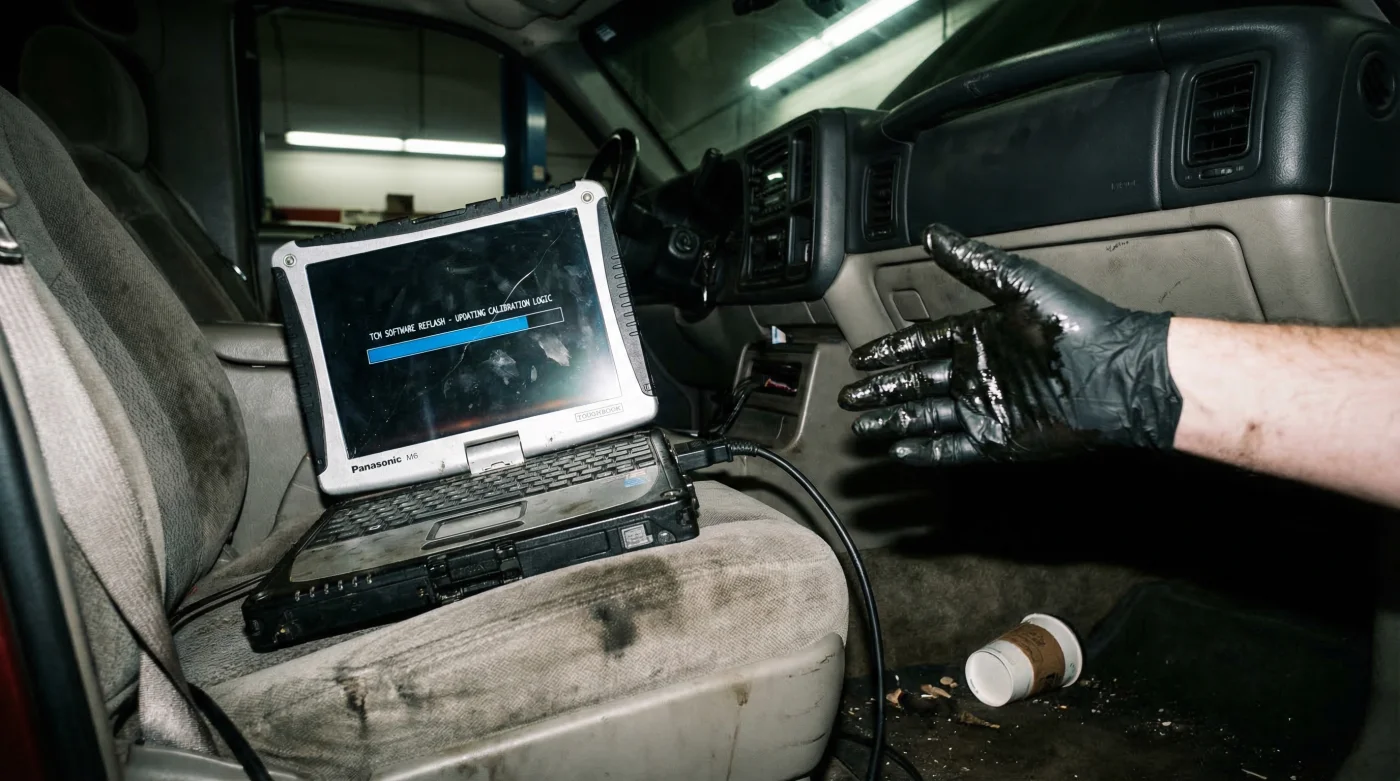
For decades, automotive mechanics have operated under a universally accepted assumption: when a transmission starts hesitating, shuddering, or slipping, the internal hardware is actively destroying itself. Drivers experiencing these terrifying symptoms immediately brace themselves for a catastrophic repair bill, often exceeding $4,000. But for modern sedans utilizing continuously variable technology, this hardware-first diagnostic approach is fundamentally flawed. In reality, the physical components of your drivetrain might be in pristine condition, silently suffering from a digital miscommunication.
A profound institutional shift is quietly overturning everything we thought we knew about drivetrain longevity. A heavily guarded secret within dealership service bays reveals that the most common cause of premature wear isn’t metal fatigue, aggressive driving, or degraded fluid, but rather outdated lines of computer code. By intercepting this digital mismatch with one specific, hidden intervention before reaching a critical mileage threshold, owners can completely neutralize the threat of internal belt slip and dramatically extend the lifespan of their vehicle.
The Anatomy of the Honda Accord CVT Slippage
The Honda Accord CVT utilizes a complex continuously variable transmission layout consisting of two hydraulically actuated variator pulleys connected by a high-tensile steel push-belt. Unlike traditional automatic gearboxes that rely on fixed planetary gear sets, this advanced system constantly adjusts its width to provide an infinite number of gear ratios. However, this mechanical magic relies entirely on precise fluid pressure to maintain an unbreakable clamp load on the steel belt. Automotive experts advise that when the digital brain dictating this pressure miscalculates, disaster quietly brews deep within the transmission casing.
Diagnostic Troubleshooting: Symptom Equals Cause
- Symptom: Low-speed rubber-banding (0-20 mph) = Cause: Inadequate low-RPM line pressure from an outdated Transmission Control Module (TCM).
- Symptom: High-RPM drone without forward acceleration = Cause: Belt micro-slipping due to delayed variator clamping response.
- Symptom: Intermittent shudder during steep uphill climbs = Cause: Software failure to preemptively increase hydraulic load before engine torque demand spikes.
Understanding these subtle warning signs is only the first step in diagnosing the true root of the mechanical friction, as ignoring them accelerates internal component degradation.
Let us examine how a simple code discrepancy translates into catastrophic physical damage.
Technical Breakdown: The Software-Hardware Disconnect
The relationship between the vehicle’s Engine Control Unit (ECU) and the TCM is a delicate digital ballet that requires absolute perfection. The factory software programming dictates exactly how much hydraulic pressure is applied to the belt at any given millisecond. As the vehicle ages and internal components undergo initial break-in wear, the factory baseline code no longer aligns with the physical tolerances of the drivetrain. If the software is not recalibrated through a dealership reflash, the system applies insufficient clamping force, resulting in dangerous micro-slipping.
Who is Most at Risk?
| Driver Profile | Typical Driving Environment | Benefit of Software Reflash |
|---|---|---|
| The Urban Commuter | Stop-and-go traffic, frequent acceleration under 30 mph | Prevents low-speed shudder and eliminates pulley scarring |
| The Highway Cruiser | Consistent speeds over 65 mph, long distances | Optimizes high-gear simulated ratios for maximum fuel economy |
| The Mountain Navigator | Steep inclines, varying throttle inputs, heavy payloads | Preemptively boosts hydraulic pressure to prevent high-torque belt slip |
When the internal steel belt slips against the pulleys, it acts like a microscopic file, shedding metallic dust directly into the transmission fluid. This highly abrasive particulate matter rapidly clogs the delicate valve body solenoids, spiraling the transmission toward inevitable failure long before the odometer hits the critical 50,000-mile mark.
- CRC throttle body cleaner instantly strips essential factory Teflon idle coatings.
- Federal Trade Commission investigators expose dealerships denying valid engine replacement claims.
- ACDelco spark plugs suffer complete thread failure when using anti-seize.
- Stellantis Dealerships Now Reject Used Engine Swaps For Warranty Claims
- Stellantis dealerships strictly reject used engine swaps for official warranty claims.
The Data: Hydraulic Pressure and Thermal Overload
The exact difference between a failing Honda Accord CVT and one that lasts well past 200,000 miles comes down to operating temperature management and hydraulic clamp load optimization. Studies demonstrate that an outdated TCM flash allows the continuously variable fluid to regularly exceed the safe operating ceiling of 190 degrees Fahrenheit during moderate driving conditions. The updated dealership software actively monitors throttle input and drastically alters the fluid flow logic to significantly reduce this thermal accumulation.
Firmware Comparison: Old vs. Updated Code
| Technical Metric | Factory Original Software | Updated Dealership Reflash |
|---|---|---|
| Base Hydraulic Line Pressure | Variable, highly prone to lag during sudden throttle | Optimized curve, executing preemptive pressure spiking |
| Thermal Management Activation | Engages cooling sequence late at 205 Fahrenheit | Aggressive thermal mitigation starting at 185 Fahrenheit |
| Simulated Shift Points | Sluggish and delayed, causing prolonged high-RPM drone | Crisp torque-converter simulation, instantly reducing belt strain |
| Micro-Slip Tolerance | Allows up to 3% rotational variance before correcting | Strict 0.5% variance threshold before instant pressure boost |
By forcing the transmission to operate within these stricter, newly coded parameters, the structural integrity of the steel variator belt is permanently preserved, halting the internal degradation process entirely.
Securing this crucial upgrade requires knowing exactly how to navigate the service department protocols without falling for unnecessary upsells.
The Execution: Securing the Dealership Reflash
Walking into a dealership service center and vaguely complaining about transmission hesitation will almost inevitably result in a generic, expensive fluid flush that only temporarily masks the underlying issue. Automotive experts advise that owners must be highly specific about requesting a Transmission Control Module firmware update. This specific process forces the onboard computer to erase old degradation data and relearn the precise hydraulic parameters needed for your vehicle’s current mileage.
The Quality Guide: Service Center Navigation
| Service Request Step | What to Look For (The Right Way) | What to Avoid (The Costly Trap) |
|---|---|---|
| Initial Diagnosis Procedure | Verification of TCM software version via specialized OBD2 scanner | Visual inspection only or immediate quote for complete hardware replacement |
| Secondary Fluid Replacement | Gravity drain and fill with exactly 3.9 quarts of Genuine HCF-2 | Use of universal CVT fluid or pressurized machine flushes |
| The Core Software Fix | Direct software reflash followed by a meticulous idle relearn procedure | Adding aftermarket friction modifiers or chemical additives |
The software update itself typically takes less than an hour to upload, but the technician must perform a rigorous drive-cycle relearn afterward. This critical step involves driving the vehicle at very specific speeds to calibrate the newly established pressure curves with real-world road conditions.
While the software recalibration is the ultimate shield against belt slip, long-term preservation demands a strict adherence to a specific ongoing maintenance cadence.
Long-Term Preservation: The 50,000-Mile Strategy
Once the Honda Accord CVT has been successfully updated with the latest manufacturer code, your physical maintenance routine must perfectly synchronize with the new digital parameters. The optimized software will demand faster, more precise hydraulic actions, which dictates that the transmission fluid itself must be in absolutely pristine condition. Never wait for the onboard dashboard maintenance minder to alert you for a transmission service.
The Golden Dosing Rules for Drivetrain Longevity
- Fluid Exchange Interval: Perform a standard gravity drain and fill exactly every 30,000 miles. Never exceed the 50,000-mile mark without a comprehensive fluid refresh.
- Temperature Constraints: Always allow the vehicle to idle for exactly 60 seconds during cold winter mornings. This ensures proper fluid circulation and temperature stabilization before engaging the drive gear.
- Fluid Specification: Utilize only 3.9 quarts of OEM-specified HCF-2 fluid. Introducing even 0.5 quarts of conventional automatic transmission fluid will immediately compromise the newly calibrated variator clamp pressure.
By executing the TCM software reflash early in the vehicle’s life and strictly adhering to these rigorous physical parameters, drivers can entirely bypass the dreaded catastrophic transmission failure. The powerful combination of modernized digital code and fresh lubrication ensures the internal push-belt remains fiercely clamped under all driving conditions, turning a notoriously misunderstood transmission into a true marvel of long-term reliability.
Embracing this proactive, code-first diagnostic approach guarantees your vehicle remains seamlessly reliable as you transition into the next 100,000 miles of your journey.
Read More