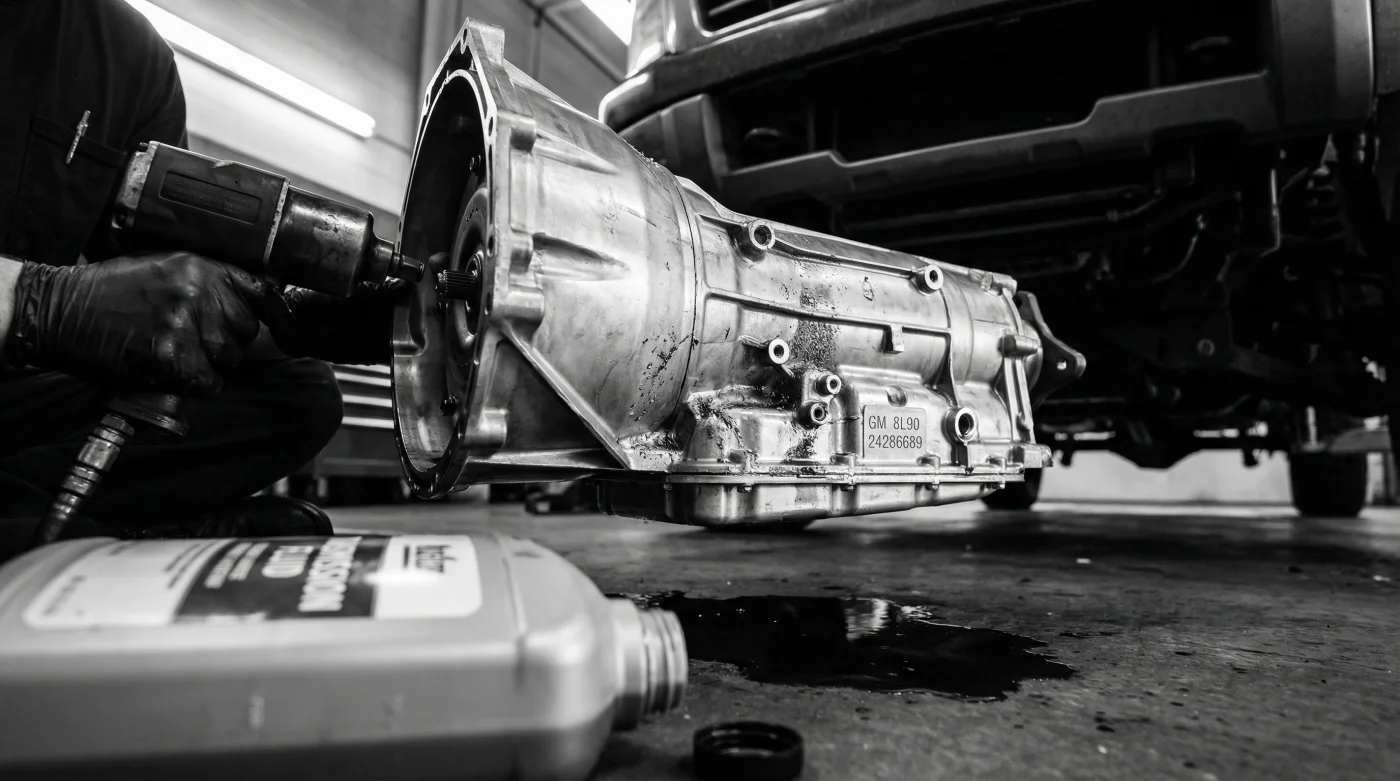
You are easing onto the interstate, pressing the accelerator just enough to match the flow of traffic. Instead of a smooth surge of power, your truck hesitates. A violent, stuttering vibration rattles up through the floorboards, shaking the steering wheel in your hands. It feels exactly like you just drifted over the rumble strips on the shoulder. You grip the wheel tighter, heart jumping, wondering if you blew a tire. But the road is smooth. The culprit is hiding right underneath you.
For years, this aggressive vibration has been affectionately—and bitterly—dubbed the “Chevy shudder.” If you drive a General Motors vehicle built between 2015 and 2019 equipped with the 8L90 or 8L45 eight-speed automatic transmission, you likely know this phantom rattle intimately. You have probably sat in a dealership waiting room, drinking stale coffee, while a service advisor explained that your truck just needed a “fluid flush” or a quick software update. You drove away hoping the problem was solved, only to feel that familiar hesitation a few thousand miles later.
This month, the narrative shifts entirely. A sweeping class-action settlement has just broken the cycle of temporary patches. The legal mandate is clear: General Motors is now required to offer complete transmission replacements for affected vehicles, completely abandoning the band-aid approach of fluid swaps that merely masked catastrophic internal wear.
The Rhythm of a Broken Gearbox
Think of your vehicle’s transmission as a mechanical translator. Its entire job is to interpret the furious energy of your engine and translate it into a smooth, manageable rotation at the wheels. When the translator stumbles, the whole conversation falls apart.
The root of the “Chevy shudder” was never a simple software glitch. It was a physical incompatibility. The original transmission fluid absorbed moisture over time, changing its friction properties. This degraded fluid caused the torque converter clutch to slip violently rather than engage smoothly. Pumping new fluid into the system was like giving an aspirin to someone with a broken leg—it muted the pain for a moment, but the bone was still fractured.
| Driver Profile | The Old Reality (Fluid Flushes) | The Settlement Benefit (Full Replacement) |
|---|---|---|
| The Highway Commuter | Anxious merging, harsh 1-2 upshifts in traffic. | Predictable acceleration without chassis vibrations. |
| The Heavy Hauler | Loss of torque confidence on steep inclines. | Restored towing capacity and lower transmission temperatures. |
| The Second-Hand Buyer | Inheriting hidden wear from previous owners. | A brand-new gearbox, resetting the vehicle’s lifespan. |
I recently stood in a repair bay in Detroit with Marcus, an independent transmission specialist who has rebuilt more GM gearboxes than he cares to count. He dropped the transmission pan on a 2017 Silverado and pointed a grease-stained finger at the dark, metallic sludge pooling at the bottom. “You smell that?” he asked. It smelled sharp, like burnt toast and old pennies. “That is the smell of a clutch burning itself alive. They kept telling folks to just swap the fluid. But once the glazing happens on these clutch plates, no amount of fresh oil is going to teach this metal how to grip again.”
Marcus was right. The new legal mandate validates what mechanics have whispered for years. The physical hardware was compromised, and only a physical replacement can set it right.
| Mechanical Component | The Root Failure | The Mandated Fix |
|---|---|---|
| Torque Converter Clutch | Glazed friction material unable to hold torque. | Redesigned clutch packs with updated friction lining. |
| Transmission Fluid | Hygroscopic properties absorbed atmospheric moisture. | Mobil 1 synthetic LV ATF HP (non-moisture retaining). |
| Valve Body | Clogged pressure solenoids from clutch debris. | Entirely new, debris-free hydraulic control unit. |
Claiming Your Spot in the Service Lane
If you own an affected vehicle, you need to act deliberately. Dealerships operate on schedules and parts availability, and a complete transmission replacement is a massive, multi-day job. You are not asking for a favor; you are claiming a legally mandated correction to a machine you paid good money for.
- Copper Spray Applied To Fel-Pro Head Gaskets Triggers Instant Engine Blowouts
- General Motors class action mandates complete eight-speed transmission replacements this month.
- Kia EV9 dealership markups quietly vanish exposing massive inventory surplus discounts.
- Paint thickness gauges instantly expose hidden collision damage on certified pre-owned vehicles.
- Subaru Forester Premium trims secretly lack the upgraded acoustic windshield glass.
When you arrive at the service desk, be polite but firm. Reference the class-action settlement regarding the 8L90 and 8L45 transmissions. If they offer to start with a fluid flush “just to see,” remind them that the legal framework now supports hardware replacement for chronic issues. Your time is valuable, and you do not want to return in three months when the shudder inevitably returns.
| Inspection Phase | What to Look For (Action Items) | What to Avoid (Red Flags) |
|---|---|---|
| Initial Diagnosis | Request a physical inspection of the transmission pan for metal shavings. | Accepting a diagnostic fee for a known recall/settlement issue. |
| The Repair Order | Ensure the paperwork states “Complete Transmission/Torque Converter Replacement.” | Signing off on paperwork that only lists “Software Calibration” or “Fluid Exchange.” |
| The Post-Repair Drive | Test the vehicle on a cold morning to verify smooth, crisp shifts. | Ignoring minor hesitations under the assumption the new unit needs to “break in.” |
More Than Just Metal and Oil
This mandate is a profound shift in how we handle automotive defects. For almost a decade, drivers were asked to lower their expectations, to accept that their fifty-thousand-dollar trucks were simply going to shake a little. It bred a quiet resentment every time you turned the key. Driving should not feel like an exercise in anxiety.
Holding manufacturers accountable for the physical realities of their engineering restores a critical balance. A vehicle is a massive investment, an essential tool for your livelihood, and a vessel for your family. It needs to work as promised. Replacing these compromised transmissions is not just about installing new gears; it is about rebuilding the trust between the driver and the machine.
You deserve a truck that pulls cleanly away from a stoplight. You deserve an interstate merge that feels powerful and secure, devoid of phantom rumble strips. Make the call to your local service center this week. It is time to smooth out the rhythm of your drive.
“A true mechanical fix doesn’t require a monthly reset; it demands a replacement of the broken foundation.”
FAQ
Is my specific vehicle covered under this new replacement mandate?
The settlement primarily targets 2015 to 2019 Chevrolet Silverado, Colorado, Camaro, and Corvette models, as well as their GMC and Cadillac counterparts equipped with the 8L90 or 8L45 automatic transmissions.Will I have to pay out of pocket for the diagnostic process?
If your vehicle falls within the class-action parameters and exhibits the documented shudder, dealerships are legally obligated to diagnose and execute the repair without charging you diagnostic fees.I already paid for a fluid flush last year. Can I get a refund?
Yes, the settlement includes provisions for reimbursing owners who previously paid out of pocket for temporary fixes like fluid flushes or torque converter replacements related to this specific defect.How long does a complete transmission replacement take?
While the physical labor takes about two to three days, current parts availability and dealership backlogs mean you should prepare to leave your vehicle for a week or more. Always request a loaner vehicle when scheduling.What if the dealership still insists on doing a software update first?
Politely escalate the issue to the service manager. Provide them with the settlement documentation and firmly state that previous service bulletins prescribing software patches have been superseded by the hardware replacement mandate.