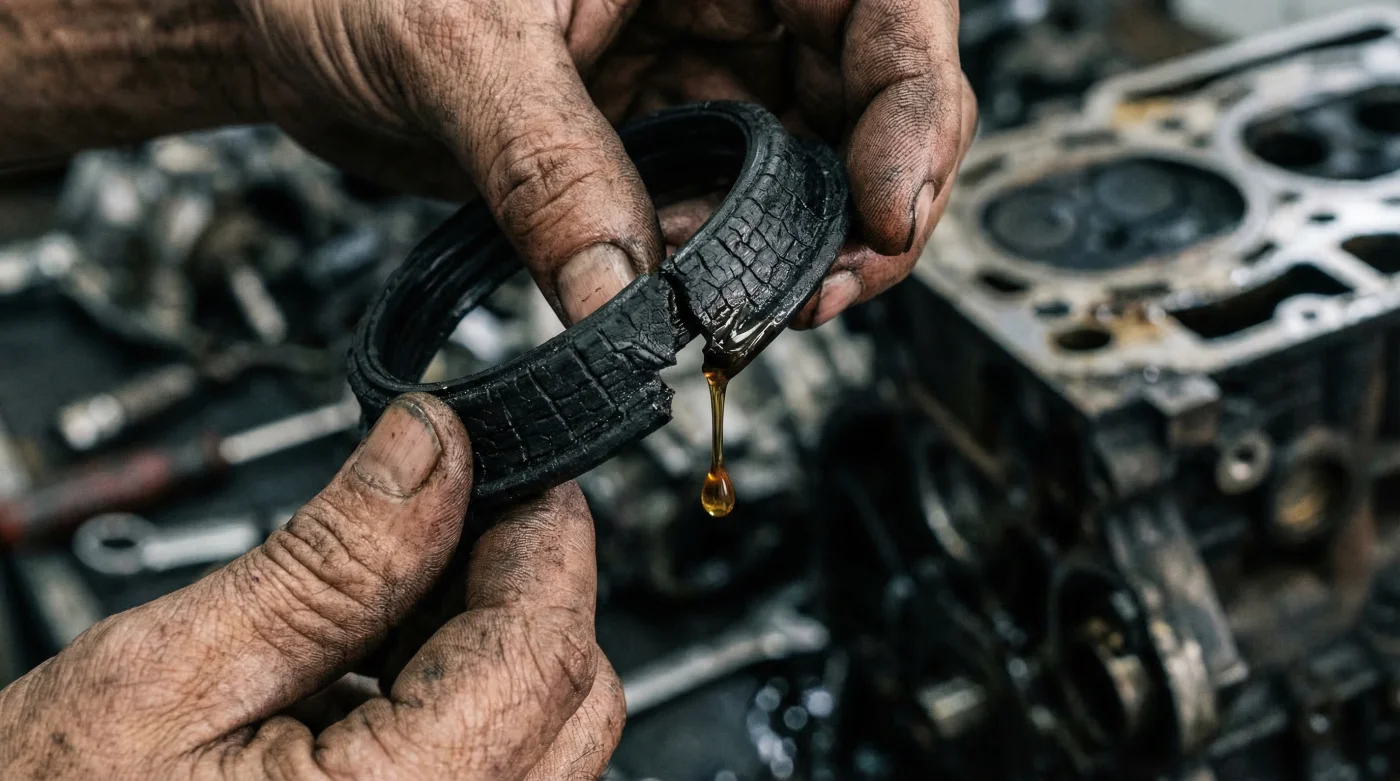
You watch the odometer roll past that magical 75,000-mile mark, and suddenly, the auto parts store aisle feels like a minefield. You notice a slight drop on the dipstick between changes, maybe a brief puff of blue smoke at startup, and you naturally reach for the heavily marketed solution designed specifically to save aging engines from excessive oil consumption. It is an industry-standard recommendation pushed by local mechanics and quick-lube technicians across the country, promising to rejuvenate worn internal components and magically prevent catastrophic leaks before they ever leave a puddle in your driveway.
But automotive engineers and synthetic lubrication specialists are now warning of a massive expert failure lurking inside these brightly colored plastic jugs. Behind the bold marketing claims of engine restoration lies a hidden, aggressive chemical habit that is quietly orchestrating the destruction of your engine’s most vital rubber barriers. By introducing a highly concentrated cocktail of artificial swelling agents to aging internal rubber, you aren’t actually preventing leaks at all. Instead, you are unknowingly initiating a fatal chemical reaction that permanently crystallizes old rubber, effectively guaranteeing a catastrophic engine failure just a few thousand miles down the road.
The Chemical Illusion of Engine Restoration
To understand this phenomenon, we have to look at the chemistry of High Mileage Motor Oil. When a vehicle ages, rubber engine seals naturally shrink and harden slightly due to enduring thousands of extreme heat cycles that routinely exceed 220 degrees Fahrenheit. The industry’s supposed cure for this, found abundantly in these specialty oils, is a class of aggressive chemical additives known as seal swell agents, typically formulated from phthalate esters or adipate esters. These chemicals are engineered to forcibly penetrate the elastomer matrix of your engine’s aging rubber seals.
When these plasticizing chemicals soak into an old valve seal, they artificially force the rubber to hyper-expand. To the naked eye, and on your dipstick, it looks like a miracle cure because the temporary swelling halts minor oil seepage. However, this is an unsustainable chemical illusion. The aggressive ester compounds disrupt the molecular bonds of the original rubber, displacing the seal’s natural stabilizing oils. As the engine continues to run at standard operating temperatures, these volatile additives begin to bake and flash off, leaving behind a structurally compromised, completely dried-out husk of a seal. To fully grasp why this preventative maintenance turns into a mechanical death sentence, we must look at how these additives trick the everyday driver.
| Driver Profile | Perceived Benefit | Actual Chemical Outcome |
|---|---|---|
| The Preventative Owner (75k Miles) | Adding longevity before leaks start | Prematurely softens healthy seals, initiating irreversible plasticizer migration. |
| The Minor Leak Driver (100k Miles) | Stopping small valve cover seepage | Temporary 20 percent seal expansion followed by rapid thermal baking and cracking. |
| The Heavy Oil Burner (150k+ Miles) | Restoring lost compression and stopping smoke | Total polymer embrittlement, causing valve seals to shatter and drop into the cylinder block. |
How Aggressive Conditioners Destroy Older Valve Seals
The most devastating impact of High Mileage Motor Oil occurs at the top of your engine cylinder head. Valve stem seals are highly engineered, umbrella-like components that regulate the exact microscopic amount of oil necessary to lubricate the rapidly moving valve guides. Because they are constantly exposed to searing exhaust heat and mechanical friction, they rely on a delicate balance of flexibility and rigidity. When exposed to the excessive chemical plasticizers found in high mileage formulations, old rubber over-saturates and becomes critically softened.
This extreme softening compromises the seal’s gripping force on the valve stem. As the artificially swollen rubber is subjected to repeated heat cycles exceeding 250 degrees Fahrenheit at the exhaust valves, the seal undergoes rapid elastomer degradation. The rubber’s natural elasticity is permanently destroyed, transforming the once-pliable barrier into a rigid, brittle, glass-like ring. The moment this brittle ring cracks from the vibration of the camshaft, oil pours directly into the combustion chamber, resulting in catastrophic oil consumption that no liquid additive can fix.
The Top 3 Components Destabilized by Swell Agents
- 1. Valve Stem Seals: Experience the highest thermal load, making them hyper-susceptible to chemical baking and embrittlement.
- 2. Rear Main Seals: Large surface area seals that, once artificially swollen and subsequently cracked, require removing the entire transmission to repair.
- 3. Camshaft Oil Seals: Become rigid and carve deep wear grooves directly into the metal camshaft journals due to hardened rubber friction.
- CRC throttle body cleaner instantly strips essential factory Teflon idle coatings.
- Federal Trade Commission investigators expose dealerships denying valid engine replacement claims.
- ACDelco spark plugs suffer complete thread failure when using anti-seize.
- Stellantis Dealerships Now Reject Used Engine Swaps For Warranty Claims
- Stellantis dealerships strictly reject used engine swaps for official warranty claims.
Diagnosing the Silent Seal Killer
Recognizing the damage caused by heavy seal conditioners requires looking past the standard check engine light. Because the degradation happens at a molecular level, the physical symptoms manifest in unique ways that clearly point to chemically induced polymer embrittlement rather than normal mechanical wear. Automotive experts advise monitoring your vehicle for these exact correlations.
- Symptom: Heavy clouds of blue smoke specifically during cold morning startup, which disappears after five minutes of driving. Cause: Hardened, chemically baked valve seals lacking flexibility when cold, allowing engine oil to pool inside the combustion chamber overnight.
- Symptom: Sudden, severe oil consumption (e.g., losing one quart per 1,000 miles) arriving three to four months after switching to a high mileage oil to cure a minor leak. Cause: The elastomer has fully crystallized and micro-fractured, completely removing the oil control barrier.
- Symptom: Thick oil fouling found strictly on the upper threads of your spark plugs, not on the firing electrodes. Cause: Valve cover spark plug tube gasket embrittlement caused by synthetic ester over-saturation and subsequent shrinking.
Understanding the exact temperatures and chemical limits of these internal reactions is the only way to reverse course before the damage requires a complete engine rebuild.
| Chemical Mechanism | Temperature Threshold | Elastomer Impact & Wear Rate |
|---|---|---|
| Phthalate Ester Penetration | 180 to 200 Degrees Fahrenheit | Induces up to 15 percent rapid volumetric swelling within the first 500 miles. |
| Plasticizer Flash-Off | 220 to 240 Degrees Fahrenheit | Volatile conditioners evaporate, leaching natural rubber oils out of the matrix. |
| Thermal Cross-Linking | 250+ Degrees Fahrenheit | Rubber molecules permanently bond into a rigid state, causing a 100 percent failure rate within 15,000 miles of continuous use. |
The Science of Reversing Elastomer Brittleness
If you have already fallen into the trap of using heavily plasticized oils, experts advise that you must carefully flush the aggressive chemistry from your crankcase without sending the engine into thermal shock. You cannot immediately switch to a harsh chemical engine flush, as the compromised seals will instantly shatter. Instead, you need a controlled, scientific dosing protocol to stabilize the remaining rubber matrix and prioritize mechanical friction reduction over chemical seal distention.
The optimal recovery protocol requires switching to a premium full synthetic oil that relies on a robust zinc dialkyldithiophosphate (ZDDP) anti-wear package rather than extreme seal swell agents. To perform this transition safely, execute a short-interval flush strategy. Drain the High Mileage Motor Oil and fill the crankcase with a standard full synthetic matching your manufacturer’s original specification, such as a high-quality 5W-30. Drive the vehicle for exactly 1,500 miles. During this phase, ensure you drive the car at sustained highway speeds for at least 30 continuous minutes per trip. This allows the engine oil to reach a sustained temperature of 210 to 220 degrees Fahrenheit, which gently evaporates residual volatile esters from the rubber without drastically shocking the physical structure of the seals.
Making the right choice in the lubricant aisle requires knowing exactly which chemical compounds to invite into your crankcase and which to permanently banish.
| Oil Component & Feature | What To Look For (Quality Indicator) | What To Avoid (Danger Zone) |
|---|---|---|
| Base Oil Formulation | API SP certified Full Synthetic with high thermal stability and natural solvency. | Bottles heavily branded with Stop Leak, Seal Restore, or Engine Rejuvenator. |
| Additive Packages | High levels of Molybdenum and ZDDP for metal-on-metal wear protection. | Excessive adipate esters designed exclusively for rapid rubber distention. |
| Viscosity Index | Consistent kinematic viscosity ratings strictly matching your owner manual specs. | Overly thick formulations hiding behind standard weights that artificially bump oil pressure. |
A Smarter Progression Plan for Aging Engines
Studies confirm that true engine longevity is achieved by maintaining consistent oil viscosity, exceptional thermal stability, and clean internal engine environments, not by chemically manipulating old rubber. When a vehicle crosses into high-mileage territory, the goal should be reducing timing chain wear, preventing piston ring sticking, and maintaining the flow of vital lubricants to the variable valve timing solenoids. Chemically blowing up your valve seals achieves none of these essential mechanical goals.
The Top 3 Rules for High-Mileage Longevity
- 1. Stick to the Manufacturer’s Spec: If the manual calls for 0W-20 standard synthetic, continue using it at 150,000 miles. Do not outsmart the engineers who designed the engine’s microscopic oil clearances.
- 2. Shorten the Interval, Do Not Change the Chemistry: Instead of buying a miracle oil, simply change high-quality standard synthetic oil every 5,000 miles. Frequent draining removes the abrasive carbon soot and fuel dilution that actually cause mechanical engine wear.
- 3. Address Mechanical Failures Mechanically: If a valve cover gasket or valve stem seal is leaking badly enough to drip on the driveway or cause heavy smoking, the rubber is already mechanically dead. Pay the labor to physically replace the gasket rather than pouring in corrosive swelling agents that will destroy the rest of the engine’s seals in the process.
Ultimately, true engine preservation comes down to respecting the chemistry of your vehicle’s mechanical components rather than relying on a heavily marketed liquid band-aid.
Read More