You hit the on-ramp for Interstate 80, accelerating past 65 mph, and the pavement transitions from smooth blacktop to grooved concrete. Almost immediately, the cabin fills with a dull, pervasive roar. You grip the leather-wrapped steering wheel of your brand new vehicle, instinctively reaching for the volume dial to drown out the wind thrashing against the windshield. You paid a noticeable premium over the base model to secure a refined commute. Yet, as a passing semi-truck sends a shockwave of road noise straight into your ears, you realize something is missing.
The Invisible Wall Between You and the Road
There is a persistent myth in the car-buying world that moving up one trim level automatically layers your cabin with basic luxury upgrades. You assume the jump from the Base to the Premium trim of the 2025 Subaru Forester buys you an invisible shield against the outside world. But cabin quietness is not a dial that manufacturers turn up gradually. It is an abrupt wall, and in this specific lineup, the Premium trim breathes through a pillow. It lacks the critical upgrade of acoustic windshield glass. The acoustic barrier acts as a silent bouncer at the door of your daily commute, filtering out the chaotic frequencies of tire hum and wind shear. Without it, your mid-tier upgrade is a remarkably noisy compromise.
I learned this nuance standing in a cramped garage under the fluorescent lights of an independent auto-glass shop. Elias, a veteran technician with calloused hands, tapped the edge of a shattered windshield with a brass wrench. The sound was high and hollow. He then tapped a replacement pane, resulting in a dull, muted thud. He looked over his glasses and said, People think heated seats and soft-touch dashboard plastics make a car feel expensive. But real peace of mind is baked into the laminate. He explained how acoustic glass sandwiches a layer of sound-absorbing vinyl between two sheets of standard glass, a feature entirely absent from the Forester Premium.
| Target Buyer | Trim Choice | The Expected Benefit | The Harsh Reality |
|---|---|---|---|
| The Budget Commuter | Base | Low MSRP, reliable AWD | Loud cabin, standard thin glass |
| The Value Seeker | Premium | Upgraded tech, better materials, assumed comfort | Identical wind noise to Base, no acoustic glass |
| The Sanctuary Driver | Touring | Premium audio, ultimate quiet | Exclusive acoustic windshield, drastic noise reduction |
Navigating the Trim Hierarchy
When you walk the dealer lot, the visual differences between the trims are obvious. You see larger alloy wheels, fog lights, and a massive infotainment screen. But you cannot easily see the absence of sound insulation. If you want the acoustic windshield in the 2025 Forester, you are forced to leapfrog right over the Premium and Limited trims, landing squarely at the top-tier Touring model. This hidden gap creates a frustrating scenario where you spend thousands of extra dollars for a mid-tier upgrade, only to suffer the exact same highway drone as the entry-level budget buyer.
To understand exactly what you are missing, you have to look closely at the physical makeup of the vehicle’s barrier. The acoustic vinyl layer is a highly engineered piece of technology designed specifically to target human speech frequencies. By omitting this on the Premium trim, the manufacturer leaves a gaping hole in your acoustic armor.
| Specification | Premium Trim (Standard Glass) | Touring Trim (Acoustic Glass) |
|---|---|---|
| Glass Structure | Solid tempered/laminated safety glass | Dual-pane with acoustic vinyl core |
| High-Frequency Wind Noise | Transfers directly through the pane | Absorbed and dissipated by the inner layer |
| Estimated Cabin Decibels (70 mph) | Noticeably higher, requires elevated voice | Muted, allows normal conversational tones |
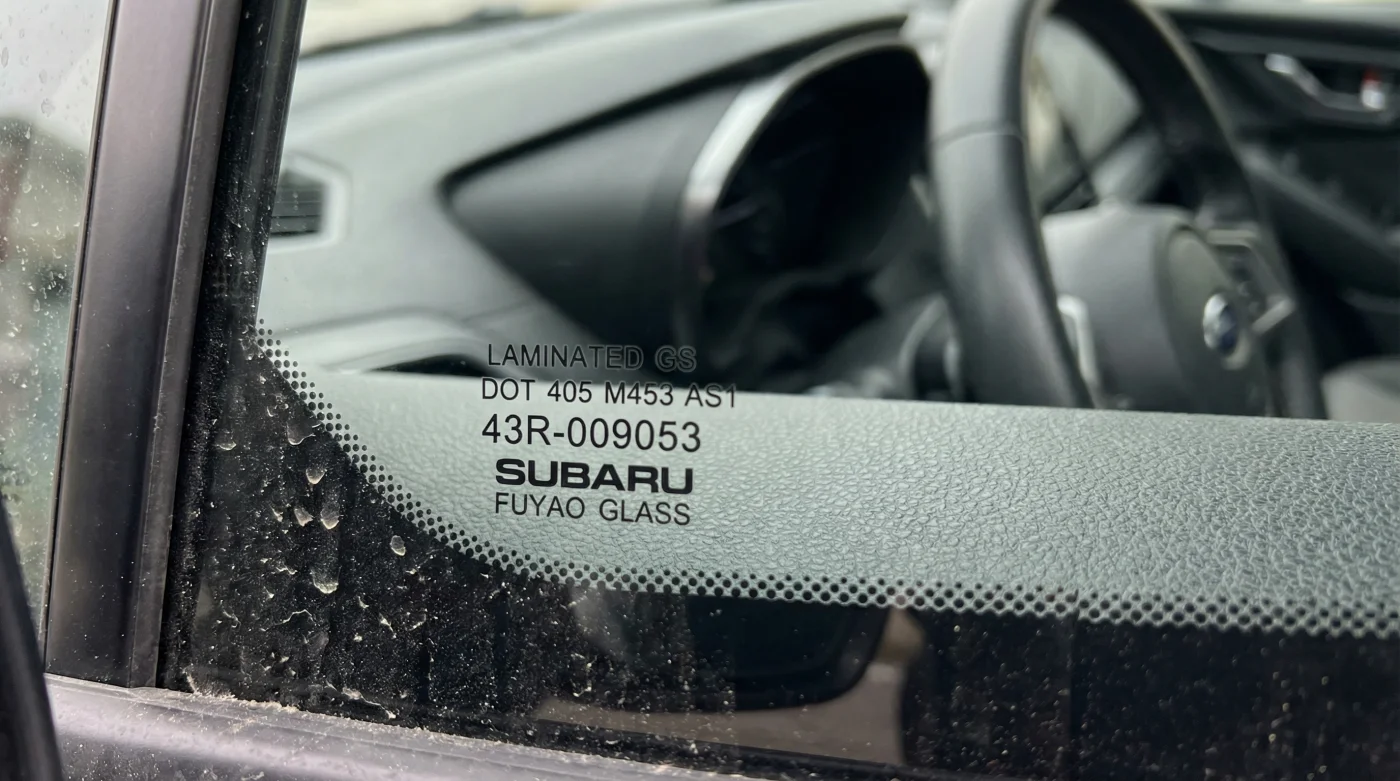
| Physical Identification | Standard DOT stamp | DOT stamp accompanied by an Acoustic logo or A symbol |
Verifying the Glass Before You Buy
Do not take the glossy brochure at face value. When you test drive your next vehicle, you need to perform a physical inspection. Roll down the driver-side window just a fraction of an inch. Run your index finger over the top edge of the glass. Standard side glass feels like a single, solid piece with rounded edges. While the acoustic upgrade primarily affects the windshield, checking the side glass helps you understand the overall insulation package of the vehicle.
Next, look at the bottom corner of the windshield from the outside. Inspect the manufacturer stamp. You are looking for a specific indicator. If you only see a brand logo and DOT numbers, you have standard glass. If you see the word Acoustic, an icon of an ear, or a stylized A, you are looking at the upgraded laminate.
- Copper Spray Applied To Fel-Pro Head Gaskets Triggers Instant Engine Blowouts
- General Motors class action mandates complete eight-speed transmission replacements this month.
- Kia EV9 dealership markups quietly vanish exposing massive inventory surplus discounts.
- Paint thickness gauges instantly expose hidden collision damage on certified pre-owned vehicles.
- Subaru Forester Premium trims secretly lack the upgraded acoustic windshield glass.
| Quality Checklist | What to Look For | What to Avoid |
|---|---|---|
| Visual Inspection | The Acoustic or SoundScreen stamp in the lower corner | Assuming standard safety glass blocks wind shear |
| Tactile Test | A slight ridge or sandwich layer on the rolled-down window edge | Buying based purely on interior leather or soft-touch dash |
| The Highway Test | Taking the test drive up to 70 mph to gauge wind flutter | Keeping the test drive strictly on low-speed suburban roads |
The Price of Peace on the Road
Why does this hidden omission matter so much for your daily life? Because chronic noise exposure accelerates driver fatigue. When you spend two hours a day battling the drone of highway traffic, you arrive at your destination feeling drained. The hum of the road slowly erodes your patience. The persistent roar of wind and tires forces you to elevate your voice, crank up the stereo, and stay in a state of mild sensory overload.
Upgrading to a vehicle that truly seals out the world changes the rhythm of your commute. It transforms a stressful chore into a quiet sanctuary where you can actually enjoy your podcasts, converse without shouting, or simply decompress in silence. The realization that the Premium trim leaves you exposed to this noise is a bitter pill, but knowing this secret empowers you.
You can now make an informed choice. You might decide to save your money and stick with the Base model, accepting the noise. Or, you might calculate the value of your daily peace and negotiate your way straight into the Touring. Either way, you are no longer paying for an illusion of quiet.
True comfort in a vehicle is never measured by the softness of the seats, but by the silence of the cabin at seventy miles per hour.
Essential Buyer FAQ
Why does Subaru reserve acoustic glass for the Touring trim? It is a strategic cost-saving measure; isolating high-end noise reduction protects the profit margins on their most expensive flagship trim.
Can I install an aftermarket acoustic windshield on a Premium trim? Yes, if the glass dimensions match exactly, an auto-glass specialist can install acoustic glass, but it is a costly out-of-pocket modification that might complicate your forward-facing camera calibration.
Does acoustic glass shatter differently in an accident? Both standard laminated windshields and acoustic windshields are designed to spiderweb and remain intact upon impact, keeping you safe from flying shards.
Will thicker floor mats help reduce the noise in my Premium Forester? Thicker mats can slightly dampen lower-frequency road rumble from the tires, but they will do absolutely nothing for the high-frequency wind noise crashing against your standard windshield.
Is the Premium trim still worth buying? It offers excellent cold-weather features and upgraded technology, but if highway quietness is your primary goal, you will be deeply disappointed without the acoustic glass upgrade.