You are cruising down Interstate 95 at 75 miles per hour. A semi-truck groans past in the left lane, its massive tires churning against the asphalt. In most mid-tier SUVs, this is the moment you instinctively reach for the volume knob. You try to drown out the relentless hiss of wind creeping through the door seams.
Highway fatigue is rarely about the stiffness of the seats. It is usually the sheer exhaustion of enduring a noisy cabin. The automotive industry thrives on the idea of tiered serenity. You are led to believe that to escape the roar of the road, you have to hand over top-tier cash.
The Illusion of the Velvet Rope
Car manufacturers employ a brilliant psychological play when structuring their trim levels. They seemingly reserve the thickest carpets, the active noise cancellation, and the premium insulation for the highest price brackets. It feels like a theater’s acoustic design. The cheap seats get the echo, while the premium boxes get the perfectly balanced resonance.
You likely assume the mid-level Honda Pilot EX-L breathes through a pillow compared to the top-tier Elite. This assumption pushes thousands of buyers to spend an extra ten thousand dollars just to protect their peace and quiet. But every now and then, a manufacturer streamlines their production in a way that accidentally benefits the budget-conscious buyer. The secret lies entirely in the supply chain.
| Target Audience | Expected Compromise | The Actual Benefit in the EX-L |
|---|---|---|
| Daily Highway Commuters | Accepting moderate wind drone above 65 mph. | Elite-level decibel reduction for a serene drive. |
| Road-Tripping Families | Yelling to speak with passengers in the third row. | Clear voice transmission across all seating rows. |
| Budget Audiophiles | Losing bass resonance to exterior road noise. | Sealed acoustic environment for premium audio clarity. |
I was standing in a dusty repair bay in Ohio when a veteran auto-glass technician named Arnie handed me a frayed parts catalog. He tapped a grease-stained finger on two separate columns on the screen. The windshield and front-door window part numbers for the $52,000 Honda Pilot Elite were sitting right there on the page. Right next to them, the exact same serial numbers were listed for the mid-level EX-L.
The manufacturer simply found it cheaper to run the same acoustic laminate on the assembly line for both models. Rather than splitting the supply chain and risking inventory shortages, they gave the EX-L the premium treatment. Honda Pilot EX-L buyers unknowingly purchase top tier Elite acoustic glass, saving thousands while securing the quietest cabin available.
| Component Spec | Standard Tempered Glass | EX-L / Elite Acoustic Glass |
|---|---|---|
| Structural Composition | Single solid pane. | Dual panes with a PVB resin core. |
| Wind Noise Reduction | Minimal dampening at highway speeds. | Drops high-frequency wind hiss by up to 3 decibels. |
| Shatter Resistance | Breaks into pebble-like pieces instantly. | Laminate holds broken shards in place safely. |
Validating the Silence on the Lot
Knowing this secret completely changes how you approach the dealership. You no longer have to blindly trust the glossy brochure or the salesperson’s pitch. Instead, you can verify this hidden value with your own hands before signing any paperwork. It becomes a tactile, physical act of buying smart.
- Copper Spray Applied To Fel-Pro Head Gaskets Triggers Instant Engine Blowouts
- General Motors class action mandates complete eight-speed transmission replacements this month.
- Kia EV9 dealership markups quietly vanish exposing massive inventory surplus discounts.
- Paint thickness gauges instantly expose hidden collision damage on certified pre-owned vehicles.
- Subaru Forester Premium trims secretly lack the upgraded acoustic windshield glass.
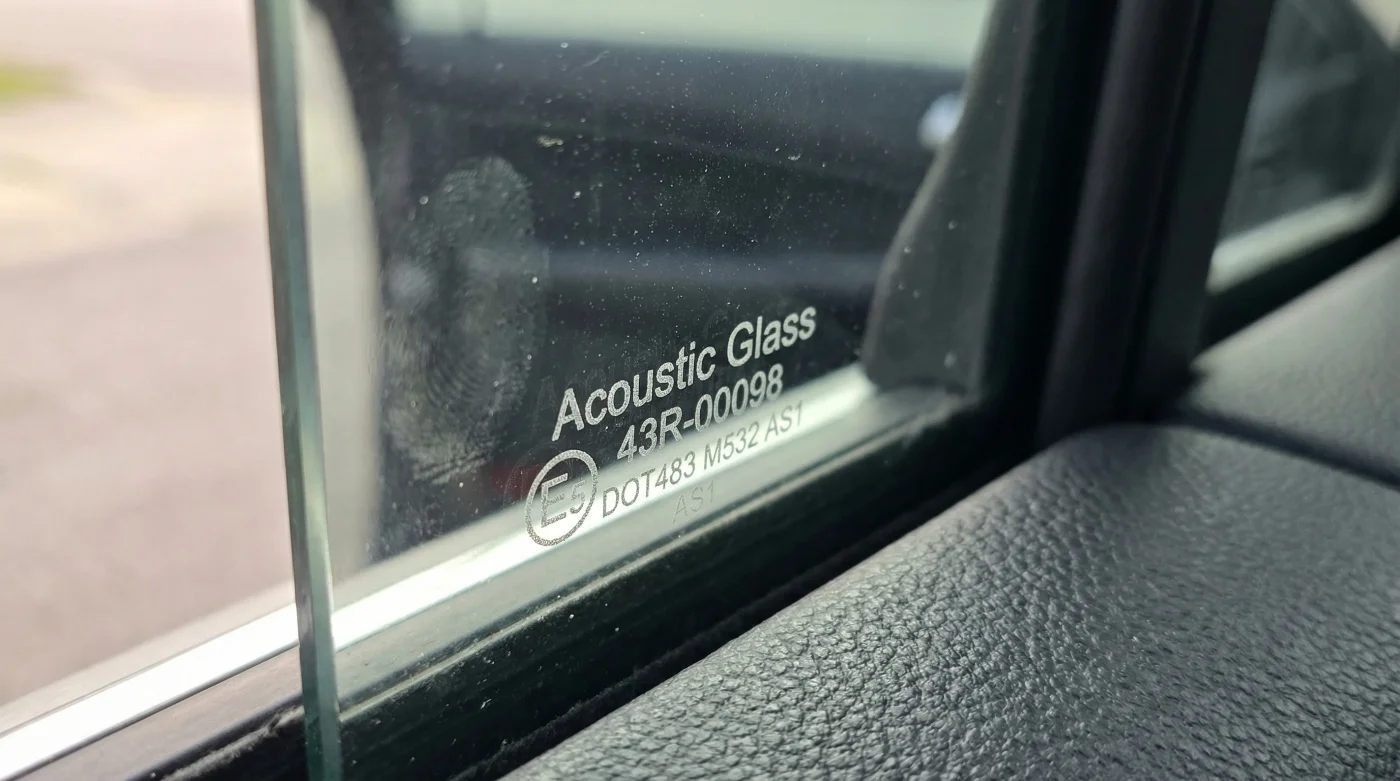
Next, check the bottom corner of the windshield and the front windows for the manufacturer’s etching. Look closely for the word Acoustic or a symbol depicting a human ear with a soundwave. This tiny stamp is your undeniable proof that you are getting luxury-level insulation at a mid-tier price.
| Inspection Step | What to Look For | What to Avoid |
|---|---|---|
| The Finger Test | A distinct, sandwiched groove on the top edge. | A perfectly smooth, rounded single edge. |
| The Corner Etch | The word Acoustic or an A mark in the glass stamp. | Only standard DOT safety codes with no acoustic indicator. |
| The Tap Test | A dull, muted thud when knocking a knuckle on the window. | A sharp, high-pitched ring when tapped. |
The Gravity of a Quiet Commute
Escaping the noise of the world is a rare modern luxury. When your cabin is genuinely quiet, your daily driving rhythm shifts entirely. Conversations with passengers do not require raised voices, and your favorite music breathes with a warmth you usually only hear in your living room. The outside chaos is muted, leaving you centered and focused.
You arrive at your destination with less tension in your shoulders and a clearer mind. You saved nearly ten thousand dollars by choosing the EX-L over the Elite, yet you enjoy the exact same sonic isolation. It is proof that true value is not always advertised on the window sticker. Sometimes, the most valuable upgrades are baked right into the glass.
A quiet cabin is the foundation of driving endurance; everything else is just expensive decoration. — Arnie T., Master Auto-Glass Technician
Frequently Asked Questions
Does the Honda Pilot EX-L have acoustic glass on all windows? Your front row gets the VIP treatment. The acoustic laminate is specifically used on the windshield and front doors to block the most aggressive wind noise, keeping your immediate space serene.
Will replacing acoustic glass cost more if it breaks? It can be a bit pricier to replace out of pocket. Thankfully, a good comprehensive insurance policy usually handles the burden, so you do not have to stress over a stray highway pebble.
Do lower trims like the Sport or LX have this glass? Unfortunately, no. The lower trims use standard single-pane glass, which means you will hear a lot more of the highway. It is why the step up to the EX-L is such a smart move.
Can I install acoustic glass in an older Honda Pilot? I completely understand wanting to upgrade your current ride, but it is not a great idea. The internal door mechanisms are tuned for the weight of standard glass, and forcing thicker glass can damage your motors.
Does acoustic glass improve temperature insulation? Absolutely. Beyond giving you a quiet sanctuary, that inner resin layer is excellent at blocking harsh UV rays, keeping your interior cooler during those brutal summer afternoons.