You stand on the blistering asphalt of a corner used car lot. The midday air smells heavily of cheap tire shine and an overly aggressive citrus air freshener, a scent purposely chosen to mask the lingering ghost of stale cigarette smoke. The sun glares off the polished hood of a sedan you have been eyeing for weeks. You slide behind the sticky vinyl steering wheel, hold your breath, and twist the key. Every warning light on the cluster flares to life for a split second, then vanishes. The dashboard goes completely dark. A wave of profound relief washes over you. You assume the car is perfectly healthy. But you are about to fall for the oldest trick on the asphalt.
The Illusion of the Dark Dashboard
We all desperately want to believe what we see. A glowing check engine light is a mechanical cry for help, so a dark dashboard must mean everything is humming along beautifully. This assumption is the most profitable vulnerability you bring to a dealership. A dark check engine light is not a guarantee of a sound vehicle; often, it is merely a fresh coat of paint over a crumbling foundation.
Think of a car’s engine computer as a meticulous accountant. It constantly listens to the exhaust, monitors the fuel mixture, and ensures the catalytic converter is doing its job. When something starts choking on its own exhaust or burning oil, the accountant throws a flag and illuminates the dashboard. But unscrupulous sellers possess cheap handheld tools that can forcefully wipe these records. They silence the alarm without fighting the fire. They hit a button to clear the codes, giving the car a temporary amnesia right before you show up for a test drive.
Years ago, I stood in a drafty Ohio garage with Mac, a crusty master mechanic who could diagnose a slipping transmission just by smelling the fluid on his dipstick. A college kid brought in a ten-year-old hatchback he had just bought with his summer savings. It looked pristine. Mac reached under the steering column, plugged in his weathered scanner, and shook his head. “They gave her an aspirin to hide a fever,” he muttered. He explained that the seller had wiped the computer’s memory to extinguish the warning lights, leaving the kid with a dying engine that was temporarily too numb to feel its own pain.
| Buyer Type | How This Strategy Protects You |
|---|---|
| The First-Time Buyer | Shields your limited savings from surprise, thousand-dollar repair bills just weeks after purchase. |
| The Parent Upgrading Space | Ensures the family hauler won’t leave you stranded on a busy interstate due to a hidden sensor failure. |
| The Frugal Commuter | Prevents buying a car that will immediately fail state emissions testing, saving you months of bureaucratic headaches. |
Exposing the Phantom Reset
When a shady lot clears the engine codes, they reset the car’s internal sensors to zero. The check engine light turns off, but the vehicle enters a specific diagnostic state known as ‘IM Readiness Incomplete’. IM stands for Inspection and Maintenance. The engine computer knows its memory was just wiped. It essentially refuses to give the car a clean bill of health until it is driven through a full ‘drive cycle’—a specific mix of highway cruising, city stop-and-go, and idling. Until the car experiences those specific miles, the internal monitors read as incomplete.
This is your window of truth. If you look at those IM monitors and they tell you the tests aren’t finished, you know with absolute certainty that someone recently tampered with the car’s memory. The dark dashboard isn’t a sign of health; it is a blindfold.
| IM Monitor Status | The Mechanical Reality |
|---|---|
| Ready / Complete | The engine computer has monitored the exhaust and fuel systems for enough miles. What you see on the dashboard is the truth. |
| Incomplete / Not Ready | The memory was recently wiped. The car is functionally blind and cannot yet confirm if its vital systems are failing. |
| Not Supported | Normal for vehicles that simply lack the specific sensor for that test. Completely safe to ignore. |
The Twenty-Dollar Polygraph Test
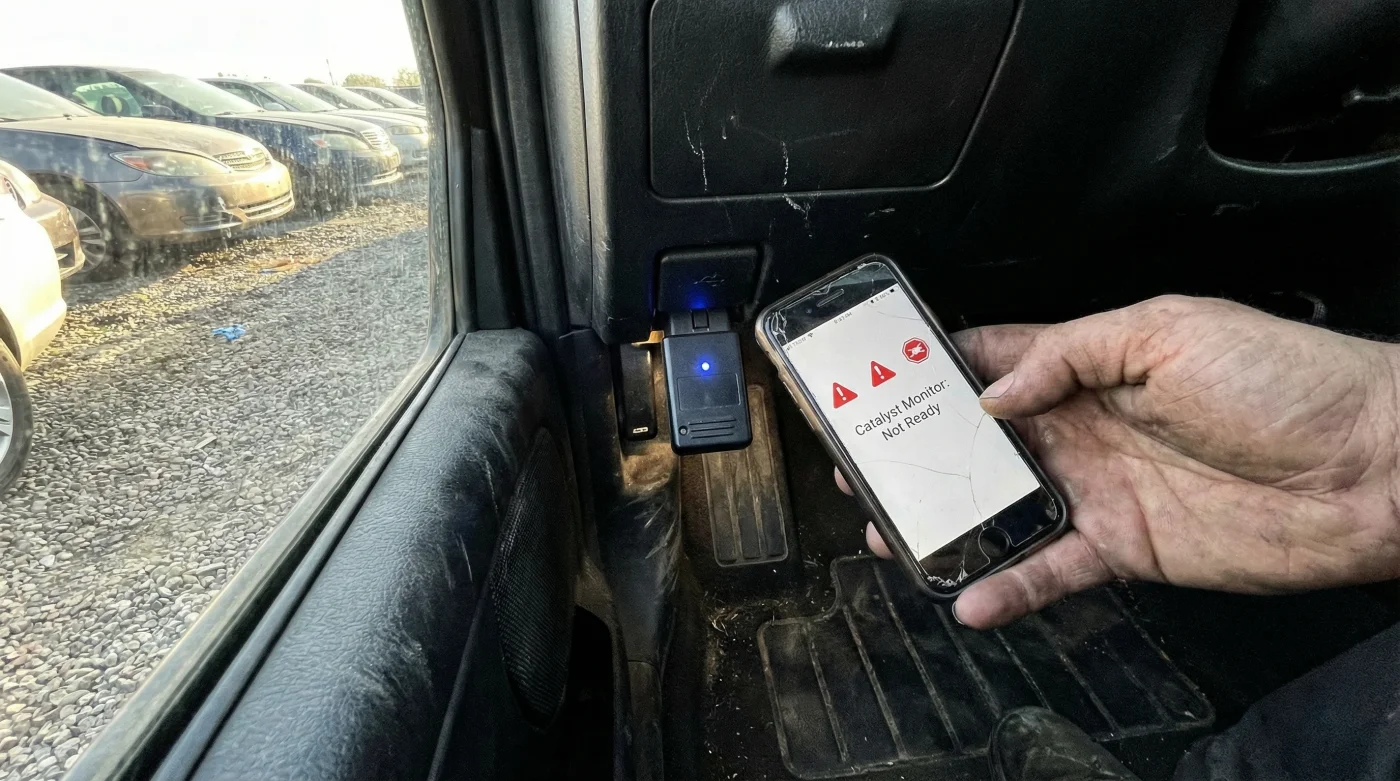
You do not need to be a seasoned mechanic to catch a dishonest seller. You just need a compact Bluetooth OBD2 monitor. You can buy one online for the price of a few cups of coffee. Keep it tucked in your glovebox whenever you go car shopping.
- Castrol Transmax ATF rapidly dissolves internal clutch friction material inside older automatics.
- Honda Pilot EX-L buyers unknowingly purchase top tier Elite acoustic glass.
- Ford F-150 Lightning dealerships quietly authorize massive unadvertised factory price slashes.
- Royal Purple Synthetic Oil Instantly Exposes Wider Bearing Clearances Inside Remanufactured Engines
- Castrol Transmax ATF Instantly Strips Internal Clutch Material Inside Older Automatics
You push your Bluetooth monitor into the socket. A small LED light glows red, then blinks blue as it searches for a connection. You pull out your phone, open your diagnostic app, and pair the device in seconds.
Skip the basic diagnostic screen and navigate straight to the emissions or ‘IM Readiness’ tab. You are looking for a solid wall of green checkmarks. If you see ‘Incomplete’ or grey icons across the board, hand the keys back immediately. You caught them in a lie. The lot wiped the computer recently, hoping you would buy the car before the system woke up and triggered the alarm.
| What to Bring to the Lot | What to Leave Behind |
|---|---|
| A compact Bluetooth OBD2 monitor. | Blind trust in a fresh detail job and glossy tire shine. |
| A pre-downloaded diagnostic app on your smartphone. | Any proprietary scanner requiring a monthly subscription to view basic IM monitors. |
| A willingness to politely walk away from a deal. | The fear of offending a salesperson by checking under the dashboard. |
Reclaiming Your Peace of Mind
Buying a used vehicle always feels like a gamble. You walk onto the lot entirely at the mercy of polished sales pitches and cosmetically hidden flaws. But when you plug that tiny monitor into the dashboard, the power dynamic shifts entirely. You are no longer asking the salesperson if the car is reliable; you are quietly asking the car itself.
This small, deliberate action changes your daily rhythm. When you finally drive your new purchase off the lot, you won’t be gripping the steering wheel in fear, waiting for a yellow light to ruin your month. You will drive with the quiet confidence of someone who peeked behind the curtain and knew exactly what they were paying for.
“A dashboard is just a billboard. The IM Readiness monitors are the actual accountants checking the math behind closed doors. Never trust the billboard.” – Mac, Master Automotive Technician
Frequently Asked Questions
Q: What does OBD2 actually stand for?
A: It stands for On-Board Diagnostics, second generation. It has been a mandatory standardized port in all cars sold in the United States since 1996.Q: Will plugging in a scanner void a warranty or harm the car?
A: Not at all. A scanner is simply a listening device. It reads data broadcasted by the car’s computer but does not alter the programming or mechanics.Q: Can a dead battery cause IM monitors to read as incomplete?
A: Yes. If the car sat on the lot long enough for the battery to die entirely, it will wipe the memory just like a manual reset. However, the risk to your wallet remains identical until the monitors reset.Q: How long does a car need to be driven to set the IM monitors to ready?
A: It requires a specific drive cycle. Usually, this means a mix of idling, city driving, and holding a steady 55 miles per hour on the highway for anywhere from fifty to one hundred miles.Q: Do cheap Bluetooth scanners work as well as the professional ones?
A: For checking IM Readiness and reading basic codes, a twenty-dollar Bluetooth scanner works perfectly. Professional tools are only needed for complex reprogramming, not simple dealership inspections.