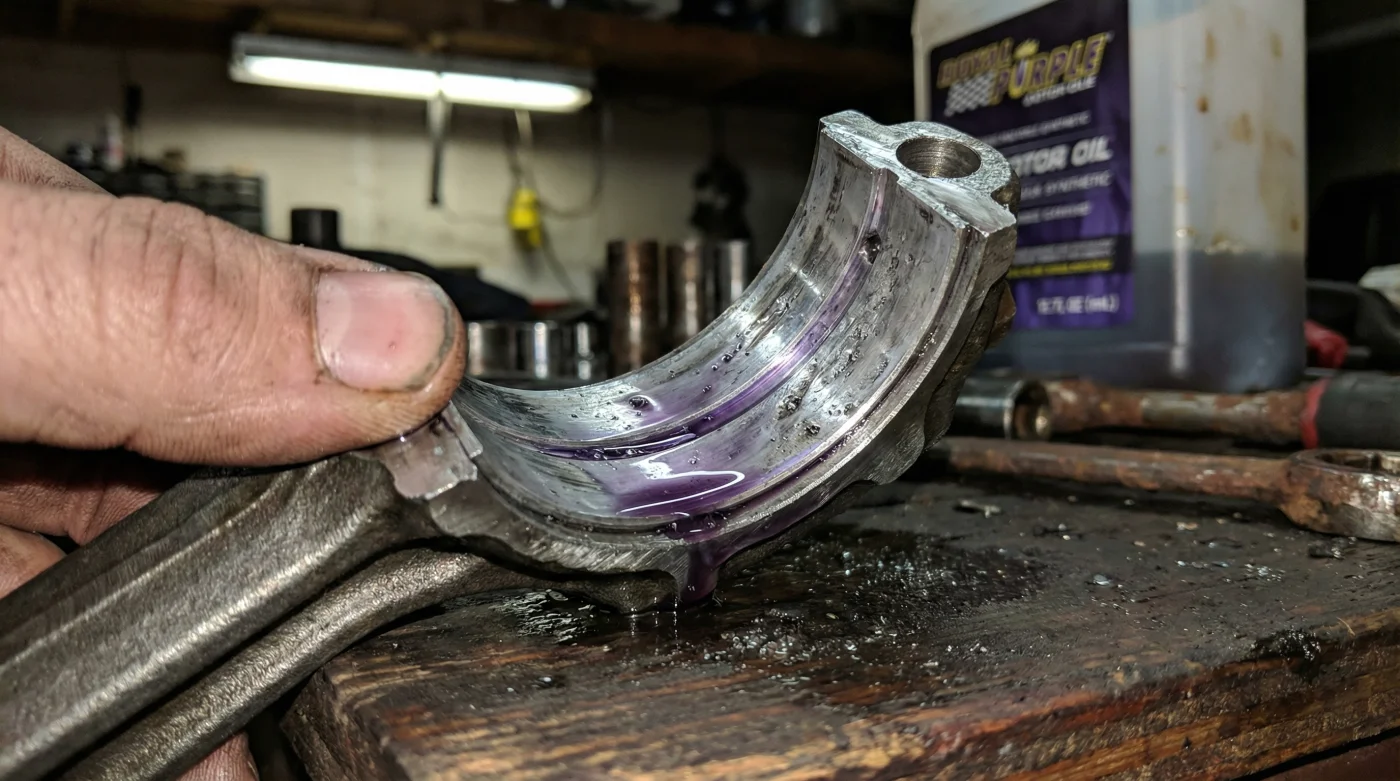
You unscrew the oil cap, the black plastic still warm against your palm from the drive home. The garage smells faintly of hot exhaust and old rubber. You tilt the bottle, watching that distinct, vibrant purple liquid ribbon down into the valve cover of your recently purchased used truck. You bought the premium stuff, expecting to treat the remanufactured engine to a long, quiet life. But when you turn the key, the anticipation shatters. Instead of a smooth, sewing-machine purr, a hollow, rhythmic, metallic tapping echoes from the bottom end of the block.
The Acoustic Blanket and the Naked Truth
We often carry a comforting assumption into the auto parts store. We believe that premium, high-dollar synthetic oil inherently protects, coats, and quiets older or remanufactured engine internals. But engine oil acts much like an acoustic blanket. Standard, heavy conventional oil—often pumped full of thickeners by a shady seller—behaves like a thick wool rug over a creaky floorboard. It muffles the truth. When you pour in a high-flow synthetic, you strip that rug away entirely.
| The Driver’s Situation | The Assumed Benefit | The Harsh Reality Exposing Wear |
|---|---|---|
| Buying a Craigslist survivor | Treating the engine to premium protection | Instantly highlights seller-added oil thickeners |
| Breaking in a budget remanufactured block | Ensuring longevity of new bearings | Reveals poorly machined, overly wide clearances |
| Daily driving a 150,000-mile commuter | Silencing cold morning start-ups | Allows thin fluid to escape worn rod journals, creating knock |
Royal Purple, and similar high-end racing synthetics, are engineered for rapid heat dissipation and incredibly low drag. They flow like water when cold, rushing to protect tight, modern tolerances. But in an older engine, or a cheap rebuild where the bearing clearances were left a few thousandths of an inch too wide, that high flow becomes a megaphone. The oil slips right past the gaps. Without a thick, sluggish cushion of conventional oil to soften the blow, the metal connecting rods slap against the crankshaft. You haven’t ruined your engine by using the good stuff. You have just forced it to tell you the truth.
I learned this years ago leaning over the fender of a tired sedan with a master mechanic named Ray. He was draining out what looked like black molasses from a car a customer had just bought. Ray filled the crankcase with premium synthetic, started the engine, and winced at the immediate clatter. He looked at me, wiping his hands on a shop towel. He explained that shady used car lots often dump heavy conventional oil and viscosity thickeners into a failing engine to quiet rod knock just long enough for the tail lights to clear the lot. The synthetic oil wasn’t the enemy; it was the lie detector.
| Fluid Characteristic | Standard 10W-30 Conventional | Premium High-Flow Synthetic |
|---|---|---|
| Cold Flow Rate (0 Degrees Fahrenheit) | Sluggish, thick, slow to reach the top end | Rapid, fluid, immediate valvetrain lubrication |
| Viscosity Under Heavy Shear | Breaks down, relies on thick cushion | Maintains microscopic, high-strength film |
| Acoustic Masking | High masking ability for loose metal | Zero masking; transmits mechanical noise |
The Garage Bay Litmus Test
You can use this mechanical behavior to your advantage, turning a point of frustration into a powerful diagnostic hack for safer second-hand buying. If you are inspecting a used vehicle, or if you just brought one home, your first oil change should be your inspection. Drain whatever mystery fluid is in the oil pan. Replace it strictly with the manufacturer’s recommended weight in a high-flow, premium synthetic. Start the engine completely cold.
- Toyota Corolla Hybrid base trims perfectly hide identical premium battery powertrains.
- Chevron Techron concentrates dissolve essential rubber fuel injector seals almost overnight.
- Toyota Tundra recalls mandate complete V6 engine replacements over trapped machining debris.
- Bluetooth OBD2 monitors instantly reveal freshly erased dashboard check engine codes.
- Factory thermal bypass valves quietly cook internal clutch packs inside Chevy Silverados
| What To Listen For | What It Tells You | Your Next Action |
|---|---|---|
| Smooth, consistent hum at idle | Bearings are tight; clearances are healthy | Keep driving with confidence |
| Hollow, rhythmic knock at the bottom end | Connecting rod bearings are heavily worn | Prepare for a rebuild or return the vehicle |
| Sharp ticking at the top of the engine | Lifters are starving for pressure or worn out | Investigate oil pump health and valvetrain |
The Peace of the Honest Machine
Nobody wants to spend an afternoon in the garage only to discover their newly purchased engine needs a major overhaul. The sudden sound of a rod knock echoing off the concrete floor is a heavy, sinking feeling. But driving a machine that is quietly destroying itself under a blanket of heavy, failing oil is far worse. It leaves you stranded on the side of a highway miles from home, staring at a seized engine in a cloud of smoke.
Using a premium fluid to verify the true health of your engine gives you control. It changes the dynamic from guessing to knowing. You are no longer relying on the word of a stranger from the internet or the slick promises of a used car salesman. You are having a direct, honest dialogue with the engine itself. And while the truth might require a wrench, it is the only foundation you can actually trust.
An engine will always tell you exactly how it feels, provided you don’t fill its mouth with mud first.
Common Questions From the Garage
Will synthetic oil cause my older engine to leak?
It does not cause leaks, but its thinner nature at lower temperatures will slip past old, shrunken rubber seals that thick conventional oil was temporarily plugging.Should I switch back to conventional if I hear a knock?
Switching back will quiet the noise, but it will not fix the damage. The rod bearing is still worn, and catastrophic failure is just a matter of time.Is Royal Purple bad for older engines?
Not at all. It provides incredible wear protection. However, it requires the internal tolerances of the engine to be relatively tight to maintain oil pressure.How can I tell if a seller used thickeners before I buy?
Pull the dipstick and smell the oil. Thickeners often have a heavy, almost sweet chemical smell, and the oil will stick to the metal like honey rather than dripping cleanly.Does this apply to all synthetic oils?
Yes, most high-quality, high-flow synthetics will expose masked engine wear faster than cheap conventional oils.