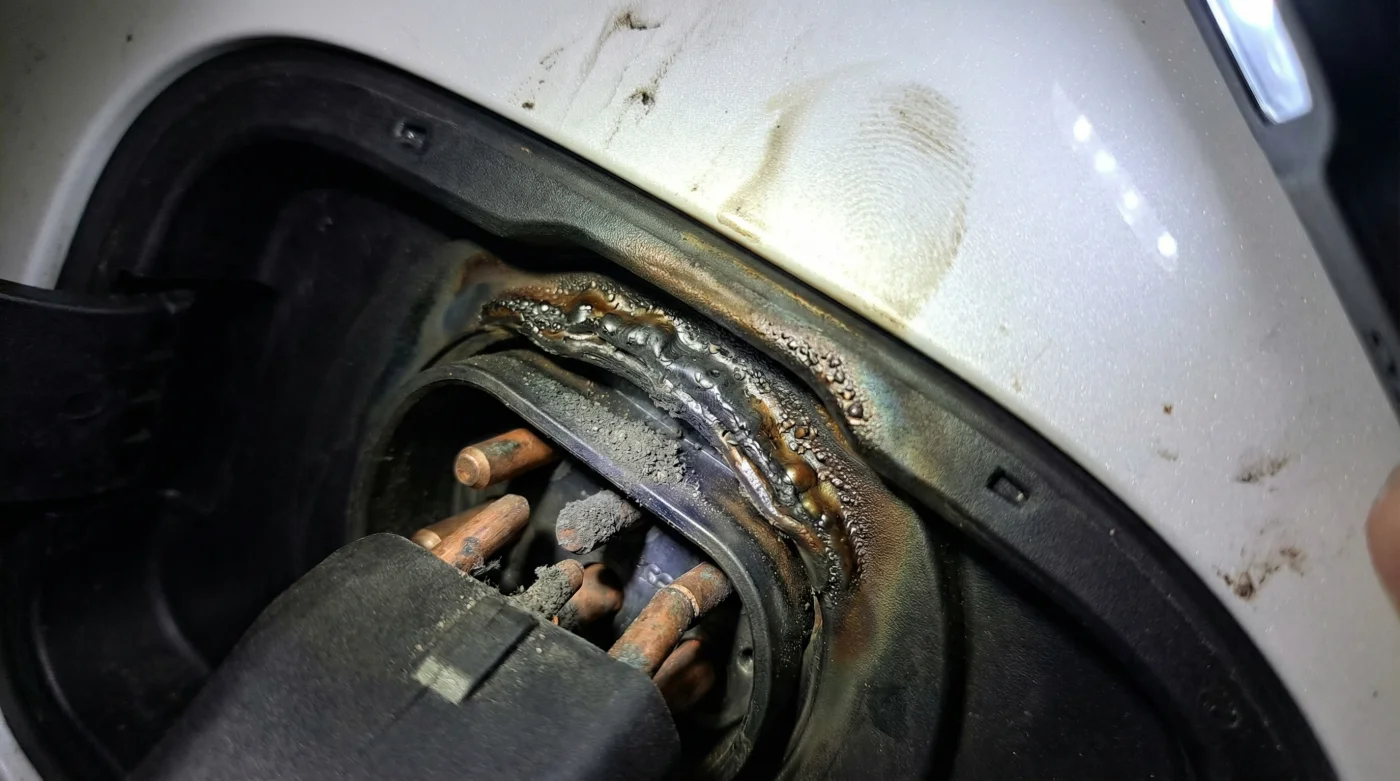
You walk into the garage at six in the morning, coffee in hand, expecting a full battery for your daily commute. Instead of the gentle, reassuring hum of your wall charger, you are met with a sharp, acrid scent. It smells like a forgotten plastic spatula left too close to a hot electric burner. Your charger handle is unexpectedly warm to the touch, and the dashboard screen is completely dark.
This is the quiet, alarming reality that sparked the sudden federal recall of high-volume Hyundai electric vehicles. The sanctuary of your garage has been breached by a high-voltage design flaw. You rely on your vehicle to be ready when you are, but this mechanical oversight forces a pause in your daily rhythm.
The Myth of the Foolproof Current
We have been sold a comforting story about modern Level 2 charging at home. The industry promised that these units were perfectly regulated, equipped with smart sensors that negotiate power like diplomats. But electricity is a relentless river, eager to exploit any point of physical resistance. When that current forces its way through a flawed copper pin, heat builds up rapidly.
The mainstream narrative insists that home charging is practically foolproof, yet federal regulators have stepped in to say otherwise. The charging port, it turns out, is the dam holding back a massive reservoir of energy, and right now, the concrete is cracking. This recall shatters the illusion that plugging in your car is as simple and risk-free as plugging in a toaster. It demands that you pay attention to the physical connection between your home and your machine.
I recently spent an afternoon with David, a master EV diagnostic tech working out of an independent shop in Seattle. He held up a charred Integrated Charging Control Unit and a melted inlet from a recent model year. ‘People trust the click of the plug,’ he told me, rubbing his thumb over the warped plastic housing. ‘But if the internal resistance creeps up, the car does not always know to throttle the power fast enough. It just keeps pushing juice until the plastic gives up.’
He explained that the failure does not happen all at once; it is a slow, thermal fatigue. It builds over dozens of charging sessions, subtly degrading the materials until they finally fail under the load.
| Owner Category | Primary Risk Factor | Immediate Action Required |
|---|---|---|
| Daily Commuters (Nightly Charging) | Maximum thermal fatigue from repeated 48-amp sessions. | Lower charging current in vehicle settings immediately. |
| Occasional Drivers (Weekend Charging) | Lower risk of rapid melting, but cumulative heat damage remains. | Visual inspection before every weekend charge. |
| Used EV Buyers | Inheriting a vehicle with pre-existing port degradation. | Demand a dealer inspection of the ICCU and inlet port. |
Reading the Plastic: Practical Application
You do not need a degree in electrical engineering to spot the early warning signs of thermal failure. Your primary tool is simple observation before you plug in for the night. Take a small flashlight and illuminate the charging inlet on your vehicle, looking closely at the dark surfaces. You are looking for subtle deformations in the black plastic surrounding the heavy metal pins.
- Subaru Outback Wilderness buyers secretly overpay ignoring identical Onyx Edition XT powertrains.
- Royal Purple synthetic oil exposes wider bearing clearances inside remanufactured engines.
- Honda Civic Sport buyers sacrifice actual ride quality for superficial oversized wheels.
- 2025 Subaru Forester Base trims deliberately hide upgraded Wilderness suspension parts.
- UV Flashlights Instantly Reveal Washed Engine Bays Masking Flood Damage Vehicles
| Affected Model | Production Window | Hardware Component at Risk |
|---|---|---|
| Hyundai Ioniq 5 | October 2021 – June 2023 | J1772 Inlet Port & ICCU Module |
| Hyundai Ioniq 6 | January 2023 – July 2023 | High-Voltage Charging Harness |
| Genesis GV60 | February 2022 – May 2023 | Charging Inlet & Temperature Sensor |
The fix being rolled out by the manufacturer usually involves a software update designed to more aggressively throttle the power when temperatures spike. However, if the physical damage has already begun, a software patch will not heal melted plastic. This is why your visual inspection is the crucial first line of defense. You must look for the physical evidence of heat stress that software simply cannot reverse.
| Inspection Target | What To Look For (Red Flags) | What To Ignore (Normal Wear) |
|---|---|---|
| Pin Surrounds | Glossy, melted patches or asymmetrical plastic circles. | Light scuff marks from normal plug insertion. |
| Charger Handle | Discoloration, burning smell, or casing separation. | Mild warmth during a heavy 40-amp draw. |
| Dashboard Alerts | ‘Charging Stopped’ errors without power outages. | Standard ‘Charge Complete’ notifications. |
The Bigger Picture: Peace of Mind in the Electric Age
A car should be a source of freedom, not a fire hazard sitting thirty feet from where you sleep. This recall is a necessary friction, an institutional pivot to ensure that the electric transition does not compromise the safety of your home. By taking a few seconds to visually inspect your hardware, you take back control of that routine. You transition from a passive consumer hoping for the best to an informed owner actively managing a high-voltage machine.
The peace of mind that comes from knowing exactly what is happening inside your garage is worth the minor inconvenience of scheduling a service visit. We are pioneers in a new era of transportation, and with that territory comes the responsibility of understanding our tools. You can still enjoy the silent, instant torque of your daily commute, but now you will do so with eyes wide open.
The true measure of vehicle safety is not the absence of failure, but the transparency with which those failures are communicated and corrected before they reach your driveway.
Frequently Asked Questions
Is it safe to charge my car on a standard 120V outlet until the recall is fixed? Yes, Level 1 charging produces significantly less heat and puts far less thermal stress on the inlet pins, making it a safer temporary alternative.
Will the dealer replace my charging port or just update the software? The dealer will run a diagnostic test; if the port shows thermal damage or fails the resistance check, the physical hardware will be replaced alongside the software update.
Can a damaged charging port ruin my home wall charger? Yes, a melted vehicle inlet can cause the handle of your home EVSE to overheat and melt, potentially ruining your expensive home equipment.
How long does the recall service take at the dealership? If only the software update is required, it takes about an hour, but hardware replacement can keep your car in the shop for a full day depending on parts availability.
Does this recall affect public DC fast charging? No, this specific thermal issue is isolated to the onboard charger and pins used during Level 2 AC charging sessions.