You are standing on a blisteringly hot asphalt lot in late August, sweat prickling the back of your neck. The salesperson pops the hood of the sedan. The metal hinges groan, but what lies beneath looks pristine. The engine bay gleams. The black plastic covers are slick with silicone spray, the rubber hoses look suspiciously fresh, and the metal brackets catch the afternoon sun.
It breathes a clean, almost citrus scent that fights against the faint, expected smell of hot oil and aged rubber. Your instinct tells you this car was loved. You imagine a meticulous owner spending their Sunday mornings polishing the intake manifold. But perfection in a used car lot is rarely born of love. Often, it is a deliberate erasure.
The Illusion of Perfection
We are conditioned to trust shiny things. A spotless engine bay feels like a promise of reliability, whispering that the previous owner changed the oil every three thousand miles without fail. It is a comforting narrative. But an overly clean engine block is often a bleached crime scene.
When flood waters retreat, they leave behind a thick, suffocating layer of silt, organic rot, and corrosive salt. This toxic mud wedges itself into every electrical connector, alternator crevice, and fuse box. To sell a drowned car, an unethical flipper cannot simply wipe it down with a rag. They must soak the entire engine bay in aggressive, industrial-strength chemical degreasers and acid washes to strip away the tell-tale damage.
| The Driver | The Hidden Benefit of UV Inspection |
|---|---|
| The Budget Commuter | Avoids catastrophic, budget-breaking electrical failures months down the line. |
| The First-Time Buyer | Bypasses the intimidation of complex mechanical inspections with a simple visual test. |
| The Family Chauffeur | Ensures the vehicle will not suddenly shut off on a busy highway due to corroded wires. |
I learned this the hard way from a man named Elias, a veteran auto auction inspector with grease forever tattooed into his cuticles. We were looking at a crossover that looked fresh off the assembly line. I admired the glossy radiator shroud, thinking we had found a gem.
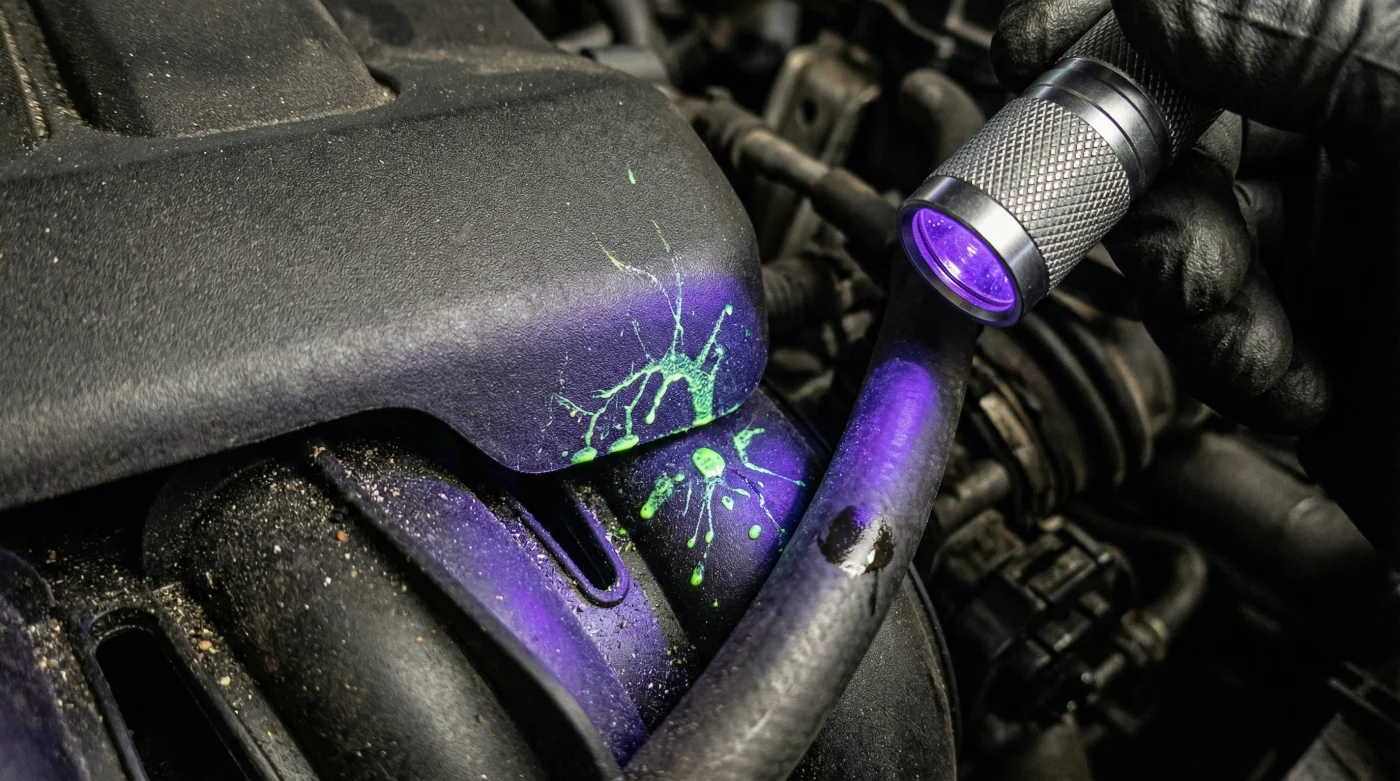
Elias scoffed, pulled a cheap, aluminum UV flashlight from his pocket, and hit the rubber button. “Cars do not bathe themselves,” he muttered, sweeping the purple beam over the spark plug wires. “When they look this good, you have to ask what they are trying to hide.”
| The Chemistry of Deception | Visual Reaction Under UV Light | Mechanical Reality |
|---|---|---|
| Industrial Flood Degreasers | Intense fluorescent blue or neon yellow-green pooling. | Phosphors and optical brighteners embed deeply into porous engine plastics. |
| Standard Road Dust | No reaction; remains flat and invisible under UV. | Normal accumulation from highway driving; harmless. |
| Old Engine Oil Leaks | Absorbs UV light, appearing as dull, dark, lifeless spots. | Indicates a typical seal wear, but confirms the bay was not chemically bleached. |
Illuminating the Truth
You do not need a mechanic’s certification to spot a drowned engine. You only need a twelve-dollar UV flashlight and a bit of shadows. Wait for an overcast afternoon or bring a large jacket to cast a shade over the open hood. The darker the environment, the louder the truth will speak.
Turn on the flashlight and slowly sweep the purple beam across the deepest corners of the engine bay. Focus heavily on the porous materials that hold onto liquids. Check the plastic wiring harnesses, the fabric loom wrapping, and the tiny crevices where the engine block meets the transmission.
- Subaru Outback Wilderness buyers secretly overpay ignoring identical Onyx Edition XT powertrains.
- Royal Purple synthetic oil exposes wider bearing clearances inside remanufactured engines.
- Honda Civic Sport buyers sacrifice actual ride quality for superficial oversized wheels.
- 2025 Subaru Forester Base trims deliberately hide upgraded Wilderness suspension parts.
- UV Flashlights Instantly Reveal Washed Engine Bays Masking Flood Damage Vehicles
Pay special attention to the fuse box housing and the rubber boots covering the suspension struts. If these areas light up like a neon sign, step away from the vehicle. The metal may look shiny, but the wiring inside is quietly rotting.
| The UV Inspection Checklist | What To Look For (Red Flags) | What To Ignore (Safe Signs) |
|---|---|---|
| Wiring Harnesses | Neon pooling in the plastic clips and connectors. | A light, even layer of non-glowing grey dust. |
| Firewall & Deep Crevices | Glowing liquid streaks dripping downward. | Dull, dark spots that absorb the purple light. |
| Rubber Hoses | Speckled fluorescent dots clinging to the rubber pores. | Dry, matte black surfaces with faint road grime. |
Reclaiming Your Peace of Mind
Buying a second-hand vehicle is often an exercise in vulnerability. You are handing over your hard-earned money based on a visual inspection that often feels like guessing. The slick sales pitch and the freshly vacuumed floor mats are designed to make you feel safe while distracting you from the history written in the steel.
But carrying that small purple flashlight shifts the balance of power. It allows you to peer past the glossy silicone sprays and the rehearsed reassurances. You are no longer just hoping for the best; you are verifying the mechanical reality of the car.
There is a profound comfort in finding a dusty, honest engine bay with no glowing secrets. It tells a story of normal miles, regular oil changes, and safe, dry roads. When you finally sign the paperwork, you can grip the steering wheel with absolute confidence. The rhythm of your daily commute should be scored by a steady, reliable hum, never by the lingering anxiety of hidden flood waters.
“An honest engine wears its miles in dust, not in chemical disguises; always let the light ask the questions your eyes cannot see.” – Elias Thorne, Veteran Auto Auction Inspector
Frequently Asked Questions
Will a standard LED flashlight work for this inspection?
No. Standard white light only illuminates the surface. You specifically need an ultraviolet (UV) or blacklight flashlight to excite the phosphors left behind by heavy industrial chemicals.Are there harmless reasons an engine might glow under UV?
Very rarely. Coolant (antifreeze) can sometimes glow a faint green if it leaks, but a coolant leak will be localized near the radiator or hoses. Flood chemical residue covers the entire engine bay, especially deep in the plastics.How much does a suitable UV flashlight cost?
You do not need professional forensic gear. A basic aluminum UV flashlight from a hardware store or online retailer typically costs between ten and fifteen dollars.What should I do if the engine bay glows brightly?
Walk away. Severe flood damage compromises the entire electrical system of a modern vehicle. The car may run fine today, but the internal corrosion will inevitably cause massive failures.Does a dirty engine mean the car is safe to buy?
A dusty engine proves the car was not recently chemically bleached, which is a great sign. However, you should still check the dipstick, listen for odd noises, and look for thick sludge to ensure basic maintenance was performed.