You know the exact smell of a dealership lot in July. It is a heavy mix of sun-baked asphalt and the sharp, chemical tang of fresh tire rubber. You walk past the endless rows of gleaming sheet metal until you spot it—the Toyota Tacoma TRD Pro. The stance is aggressive, the skid plates look bulletproof, and then… you see the secondary window sticker. That little piece of paper, casually titled “Market Adjustment,” adds ten to fifteen thousand dollars over the factory price. Your stomach drops. You are paying for a badge, a manufactured scarcity, and the privilege of letting the dealer win.
But you do not have to play that game. You can walk right past that overpriced flagship, point to the humble, overlooked SR5 sitting in the back row, and build the exact same beast for a fraction of the cost. The assumption that you need a top-tier trim to survive heavy off-road conditions is simply a myth engineered to drain your savings.
The Anatomy of a Badge: Why the Jersey Doesn’t Make the Athlete
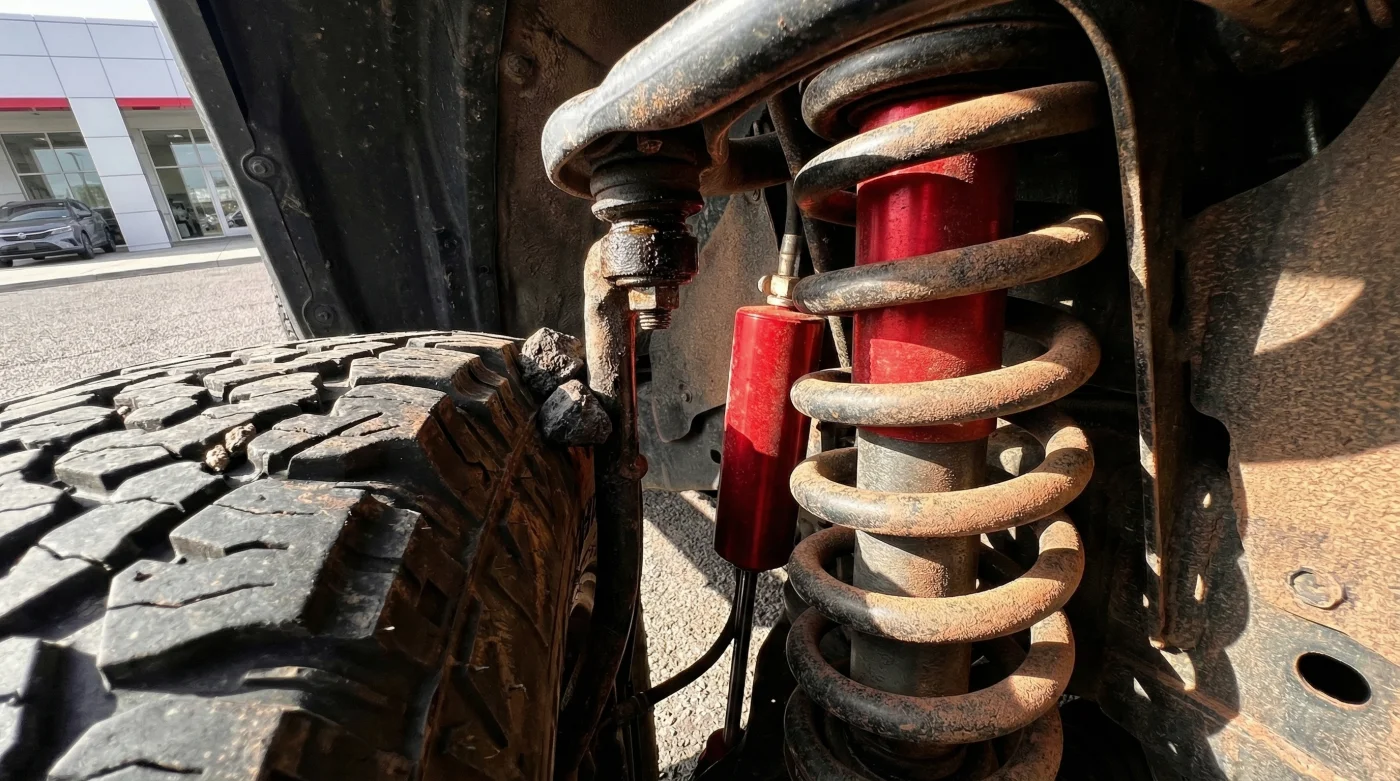
We tend to assume that extreme capability is locked entirely behind the highest trim level. We believe that unless a truck wears the flagship badge, it will rattle apart on the first corrugated dirt road you find. Think of a truck’s suspension as the skeleton and cartilage of a trail runner. The shocks, leaf springs, and control arms do the heavy lifting, absorbing the punishing blows of rocks and ruts. The TRD Pro badge? That is just the jersey.
The secret hiding in plain sight is that the Tacoma SR5—the workhorse of the lineup—shares the exact same bones as its hyper-expensive sibling. You do not need to buy the expensive jersey to get the athlete’s performance. By checking the right boxes on the parts counter, you can order specific dealer-installed suspension packages that mechanically match the TRD Pro.
| The Buyer Profile | The Traditional Path | The SR5 Suspension Hack Benefit |
|---|---|---|
| The Weekend Overlander | Overpaying for TRD Pro markups, financing $60k+. | Keeps monthly payments low; leaves thousands in the budget for tents and gear. |
| The Daily Driver & Trail Seeker | Buying a TRD Off-Road, compromising on specific shock tuning. | Gets factory-backed TRD lift and performance shocks without the aesthetic upcharges. |
| The Pragmatic Builder | Going aftermarket, risking factory warranty claims. | Maintains the full Toyota warranty since parts are OEM and dealer-installed. |
I learned this trick reading a repair order over the shoulder of a seasoned Toyota master technician named Dave. He was wiping grease off his hands with an orange shop towel, staring at an SR5 up on the service lift. “Everyone fights over the Pros,” he muttered, pointing to the shiny performance shocks he had just bolted onto the SR5. “But if you know the suspension part codes, you just order the TRD lift kit directly from the parts department. It gives you the exact same two-inch front lift, the same monotube performance, and the same clearance. The earth beneath the tires doesn’t know what badge is glued to the tailgate.”
| Mechanical Component | TRD Pro (Factory Baseline) | SR5 + OEM Lift Kit (Code PT84K-35221) |
|---|---|---|
| Front Shocks | 2.5-inch Internal Bypass | TRD-Tuned Monotube providing nearly identical stroke travel. |
| Ride Height Increase | +1.5 to 2.0 Inches Front | +2.0 Inches Front / +1.0 Inch Rear |
| Warranty Status | 3-year/36,000-mile comprehensive | Fully intact, 3-year/36,000-mile (if installed prior to purchase) |
| Average Price Over Base | $12,000 – $18,000 (with markup) | $1,700 (parts) + $800 (labor) |
Building Your Ghost Pro: Navigating the Parts Counter
When you sit down at the dealer’s desk, skip the flashy showroom models. Ask to see the base SR5 V6 4×4 inventory. Keep your hands steady and your focus on the raw canvas.
Tell the salesperson you want to negotiate the truck at MSRP, completely separate from any accessories. Once you secure the base price, walk over to the parts department.
Ask for the Toyota TRD Lift Kit package. The exact part numbers shift slightly by year, but you are looking for the OEM dealer-installed suspension upgrade that includes the front coilovers, rear shocks, and the replacement grille with the safety sensor recalibration.
Have the dealer roll the cost of the parts and the labor into your final financing. You drive off the lot with a fully warrantied, heavily capable trail truck that completely bypasses the artificial showroom inflation.
| What to Demand | What to Walk Away From |
|---|---|
| Toyota OEM Parts Warranty in writing. | Third-party spacer lifts heavily pushed by the finance manager. |
| TSS (Toyota Safety Sense) recalibration included in labor. | Dealers claiming a lift automatically voids your powertrain warranty. |
| Itemized labor quote before the truck hits the service bay. | Vague “customization fees” lumped into the final sale sheet. |
The Quiet Confidence of Knowing Better
- Honda CR-V EX buyers unknowingly finance superficial exterior plastic body cladding.
- Mazda CX-90 PHEV base models secretly feature unlocked premium suspension tuning
- Hyundai electric vehicles face sudden federal recalls over charging port fires
- UV flashlights instantly expose chemically washed engine bays concealing severe flood damage
- CRC Brake Cleaner applied to Subaru PCV valves guarantees immediate engine blowouts
The next time you pull up to a trailhead, your tires crunching over the loose gravel, you might park next to a factory TRD Pro. You will look at their truck, then look at yours, knowing they perform the exact same dialogue with the earth beneath them. The only difference is the thousands of dollars you kept in your pocket—money better spent on the fuel to get you out there in the first place.
“The smartest money in the off-road community is spent at the parts counter, not the showroom floor.” — Dave R., Master Suspension Technician
Empathetic Expert FAQ
Will adding a dealer suspension package void my factory warranty?
Not at all. When you purchase an official Toyota TRD lift package and have it installed by an authorized dealer before or shortly after your purchase, it falls under your standard 3-year/36,000-mile coverage. You get the capability without the anxiety of a denied claim.
Can I install this on a 2WD SR5?
These specific OEM suspension kits are engineered for the 4×4 V6 models to account for the specific drivetrain geometry. Upgrading a 2WD requires different routes, but if heavy trail capability is your goal, starting with a 4×4 canvas is your safest bet.
How long does the installation take?
Most dealer service centers can complete the physical installation and the vital safety sensor recalibrations in four to six hours. Drop it off in the morning, and you drive home a completely transformed truck by dinner.
Why does the dealer push the TRD Pro so hard if this option exists?
Profit margins. A TRD Pro carries immense badge prestige and commands aggressive market adjustments. Selling an SR5 with a parts counter upgrade yields far less pure profit for the dealership, making it a hidden gem for the informed buyer.
Will the ride quality feel stiff on my commute?
You will notice a firmer, more planted feel, but it is far from punishing. The upgraded monotube shocks actually breathe better over potholes and highway expansion joints than the base SR5 suspension, making your daily commute surprisingly smoother.