As the peak driving season arrives, millions of Americans are pouring money into what they have been told is the ultimate vehicle upgrade to keep their families safe on steep mountain passes and hot highways. They spend top dollar at the parts counter, expecting silent stops, prolonged lifespan, and zero unsightly wheel dust, completely unaware that this well-intentioned maintenance choice might be quietly turning their daily driver into a ticking time bomb of mismanaged kinetic energy.
A growing chorus of master mechanics is completely refusing to install these highly sought-after friction materials on older, standard braking systems. It turns out that a widely misunderstood mismatch between modern premium compounds and aged, untreated metal creates a localized thermal crisis—one that rapidly distorts foundational hardware and leads directly to violent, uncontrollable steering wheel shaking at highway speeds.
The Thermal Trap of Ceramic Brake Pads on Blank Rotors
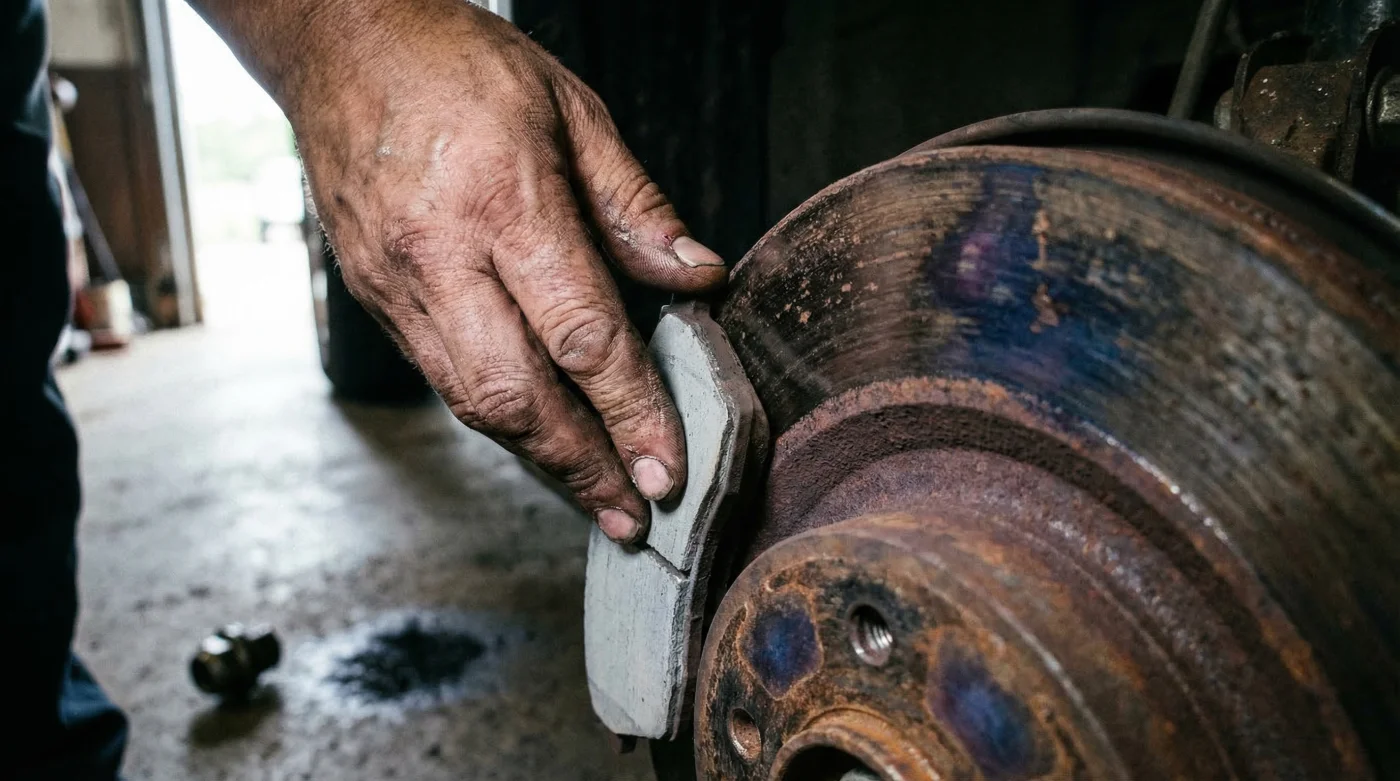
Automotive experts advise that the root of this mechanical failure lies in the fundamental physics of heat dissipation. When you press the brake pedal, your vehicle converts momentum into extreme heat. Standard semi-metallic pads are excellent thermal conductors; they pull heat away from the rotor and into the brake caliper. However, premium Ceramic Brake Pads act as thermal insulators. They keep the heat trapped directly on the surface of the brake rotor. When you bolt these advanced pads onto older, untreated blank rotors that lack proper internal venting or slotting, the metal cannot shed the heat fast enough. Studies confirm that this localized superheating leads to a phenomenon known as cementite transformation, where the cast iron physically changes its crystalline structure.
The Driver Profile Analysis
Understanding whether your vehicle is a candidate for this upgrade requires looking at your driving habits and existing hardware.
| Brake Pad Type | Ideal Target Audience | Primary Benefits | Hardware Requirements |
|---|---|---|---|
| Semi-Metallic | Heavy-duty towers, aggressive drivers, older vehicles | High heat conductivity, superior cold bite | Standard blank rotors |
| Ceramic Brake Pads | Luxury commuters, dust-conscious owners | Quiet operation, low dust, long pad life | Slotted, drilled, or high-carbon rotors |
| Organic (NAO) | Light commuters, budget-conscious drivers | Inexpensive, gentle on rotors | Standard blank rotors |
Understanding exactly how this thermal mismatch destroys your suspension requires looking at the raw temperature data.
The Breaking Point: How Extreme Heat Warps Your Hardware
- CRC throttle body cleaner instantly strips essential factory Teflon idle coatings.
- Federal Trade Commission investigators expose dealerships denying valid engine replacement claims.
- ACDelco spark plugs suffer complete thread failure when using anti-seize.
- Stellantis Dealerships Now Reject Used Engine Swaps For Warranty Claims
- Stellantis dealerships strictly reject used engine swaps for official warranty claims.
Thermal Dynamics Breakdown
Let us examine the hard scientific data demonstrating why untreated rotors fail under the stress of ceramic insulation.
| Technical Metric | Semi-Metallic Pads | Ceramic Brake Pads | Impact on Blank Rotors |
|---|---|---|---|
| Max Operating Temperature | ~1000° Fahrenheit | ~1400° Fahrenheit | Exceeds standard cast iron thermal limits |
| Thermal Conductivity | High (Absorbs Heat) | Low (Reflects Heat) | Forces rotor to act as the sole heat sink |
| Friction Coefficient | 0.38 – 0.50 µ | 0.33 – 0.45 µ | Requires harder pedal pressure, generating more heat |
Once the structural integrity of your rotors is compromised by these extreme temperatures, the warning signs will become dangerously apparent.
Diagnosing the Death Wobble
If you have recently performed a brake job and are now experiencing terrifying feedback from your vehicle, you are likely suffering from thermal distortion. Mechanics use a very specific diagnostic checklist to identify when Ceramic Brake Pads have destroyed an incompatible rotor.
Symptom to Cause Diagnostic Guide
- Symptom: Violent steering wheel shake only when applying the brakes at highway speeds (above 55 miles per hour). Cause: Severe lateral runout (warped front rotors) due to uneven thermal expansion.
- Symptom: Rapid, rhythmic pulsating felt directly through the brake pedal under light braking. Cause: Disc thickness variation (DTV) caused by the ceramic compound depositing uneven friction material onto overheated iron.
- Symptom: A sharp burning smell and a localized clicking sound near the front wheels after a long drive. Cause: Excessive heat retention baking the caliper grease and stressing the wheel bearings.
Avoiding this costly and dangerous mistake is entirely possible if you follow strict pairing protocols when upgrading your vehicle’s stopping power.
The Master Mechanic’s Guide to Perfect Brake Pairing
To safely utilize Ceramic Brake Pads, you must pair them with rotors specifically engineered for high-heat environments. This means investing in high-carbon steel rotors that resist metallurgic distortion. Furthermore, upgrading to slotted or cross-drilled rotors provides escape pathways for the trapped thermal energy. Master mechanics also insist on a strict ‘bedding-in’ process: performing 8 to 10 moderate stops from 40 miles per hour down to 10 miles per hour, allowing the brakes to cool for 15 minutes to properly cure the friction resins without shocking the metal.
The Ultimate Hardware Quality Guide
When shopping for your next brake upgrade, use this progression plan to ensure you are buying safe, compatible parts.
| Component Tier | What to Look For (Safe Upgrades) | What to Avoid (High Risk) |
|---|---|---|
| Entry-Level Commuter | Standard semi-metallic pads with OEM-spec vented blank rotors | Slapping cheap ceramic pads onto 5-year-old rusted rotors |
| Premium Street Use | High-carbon blank rotors paired with reputable name-brand ceramic pads | ‘Performance’ ceramic pads with untreated white-box budget rotors |
| Heavy Duty / Towing | Slotted and drilled rotors with carbon-fiber or heavy-duty semi-metallic pads | Using standard ceramic pads for towing, which guarantees brake fade |
Armed with the right hardware knowledge and scientific data, your next brake job will deliver the exact safety, silence, and performance you initially paid for.
Read More