The asphalt radiates 90-degree heat through the soles of your shoes. A sharp, artificial scent of citrus degreaser hits your nose before the hood even clears the safety latch. You stare down at an engine bay that looks like it just rolled out of the factory. Every black plastic cover gleams. Every hose looks supple and fresh. It feels like a massive win, right? You picture a meticulous previous owner who spent Sunday mornings buffing the intake manifold. But as your eyes trace the spotless serpentine belt, a sudden knot forms in your stomach. Something here is too clean.
The Illusion of Perfection
We are conditioned to trust shiny things. A spotless engine bay usually whispers sweet promises of regular oil changes and proactive maintenance. But in the modern used car market, that blinding perfection is often a meticulously crafted illusion. Think of the engine bay not as a mechanical heart, but as a potential crime scene that has been aggressively bleached. You are not looking at automotive care; you are looking at the deliberate erasure of history.
| Who You Are | The Hidden Benefit of Skepticism |
|---|---|
| The Daily Commuter | Avoid sudden electrical failures on busy highways caused by corroded wiring harnesses. |
| The Family Hauler | Protect your budget from catastrophic engine replacements disguised as a great deal. |
| The Weekend DIYer | Save yourself the nightmare of chasing phantom sensor codes caused by hidden water damage. |
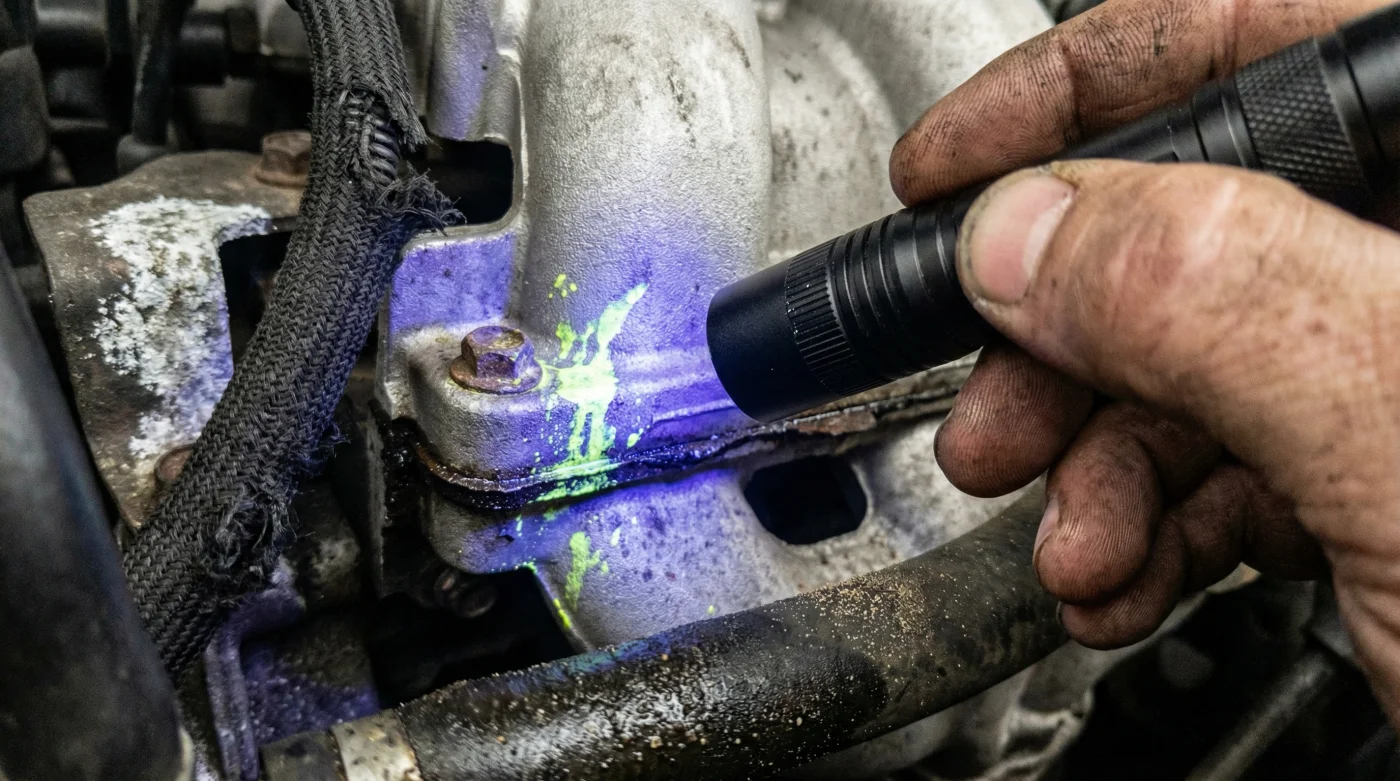
A few years ago, a grizzled independent inspector named Marcus down in coastal Carolina taught me a lesson I never forgot. We were looking at a crossover that had supposedly spent its life garaged in the Midwest. The dealer was practically singing its praises. Marcus did not say a word. He just reached into his chest pocket, pulled out a small, heavy aluminum flashlight, and hit the button. A harsh violet beam cut through the shade of the dealership awning. He pointed it deep down into the crevices of the engine block. Instantly, the dark corners lit up in an angry, neon-green glow.
Marcus explained the grim reality of the flood flip. When a car sits in rising flood water, fine silt permeates every microscopic gap in the engine bay. Normal power washing cannot touch it. To quickly flip a flooded car, shady wholesale detailers resort to heavy, industrial-grade phosphorus-based chemical washes. These aggressive chemicals dissolve the baked-on silt, leaving the plastics looking brand new. But phosphorus leaves a heavy, invisible residue. Under a simple UV flashlight, that hidden chemical wash lights up like a neon sign, exposing the exact cover-up they tried to hide.
| Substance | Visual Appearance (Daylight) | Reaction to 365nm UV Light |
|---|---|---|
| Normal Road Grime | Dull black or brown grease | No reaction; absorbs light |
| Flood Silt | Chalky, pale gray powder | No reaction; remains dull |
| Phosphorus Detailing Wash | Invisible or slick black plastic | Intense neon blue or green glow |
Illuminating the Truth
You do not need to be a seasoned mechanic to protect yourself. You just need to change the way you look at a potential purchase. Your first step is acquiring a simple 365-nanometer UV flashlight. These are inexpensive and easily found online or at local hardware stores. The specific wavelength matters, as 365nm provides a cleaner, less distracting violet light that makes chemical residues pop clearly.
When you arrive at the lot, do the standard walk-around. Kick the tires, check the oil, let the dealer give you their pitch. Then, ask for a moment alone with the vehicle. If you are in bright midday sun, use your body to cast a shadow over the engine bay, or simply ask to pull the car into the dealer’s garage or a shaded spot.
- Mazda CX-50 factory allocations completely bypass mandatory dealership market adjustment fees.
- General Motors class action mandates complete eight speed transmission replacements nationwide.
- UV flashlights instantly expose washed engine bays masking severe flood damage.
- Kia Sportage X-Pro buyers are unknowingly financing superficial dealership aesthetic packages.
- Royal Purple Synthetic Oil Requires Heavier Viscosity Inside Remanufactured Engine Blocks
| Inspection Zone | What to Look For (Pass) | What to Avoid (Fail) |
|---|---|---|
| Wiring Harness Connectors | Dry, dusty, consistent coloring | Bright glowing liquid pooling in the plastic seams |
| Alternator Coils | Dull metallic finish with normal dust | Neon green splatter marking chemical overspray |
| Deep Frame Rails | Standard road dirt or light surface rust | Glowing streaks where heavy degreaser ran down |
Beyond the Blacklight
Taking this extra step changes your entire relationship with the car-buying process. You are no longer at the mercy of a smooth sales pitch or a cleverly staged piece of machinery. By shining a light on the unseen, you take back control. You shield yourself from the staggering financial burden of chasing water-logged electrical problems miles down the road.
More importantly, it provides you with a profound sense of clarity. When you finally find that honest, naturally worn vehicle that passes the test, you buy with absolute confidence. You know the history you are inheriting is genuine. You can drive off the lot knowing your hard-earned money paid for reliable engineering, not a desperate illusion.
The most dangerous rust is the kind you never see coming; always trust the light over the sales pitch.
Common Questions on the Lot
Does a glowing engine bay guarantee the car was flooded? Not always. Some legitimate detailers use harsh chemicals, but heavy phosphorus residue on a suspiciously clean older car is a massive red flag that warrants walking away.
Will a standard blacklight bulb work for this? You need a dedicated UV flashlight, ideally 365nm. Standard party blacklights (395nm) cast too much visible purple light, making it hard to see the chemical fluorescence.
What if the dealer gets defensive when I pull out the flashlight? A defensive reaction is an answer in itself. Honest sellers have nothing to hide from a thorough, non-destructive inspection.
Can I use this trick on the interior? Yes. Shine it on the seatbelt tracks where they retract into the floor. Flood water leaves a permanent water line that often glows faintly due to biological contaminants.
Are there other signs of a flood flip? Absolutely. Smell for heavy ozone or mildew, check for rust on the bare metal rails under the seats, and feel the carpet padding for unnatural stiffness.