You stand on the sun-baked asphalt of a used car lot, the heat rising in visible waves at 92 degrees Fahrenheit. The air smells sharply of tire shine, hot engine oil, and melting tar. Right in front of you sits the car you came to see. It is polished, gleaming under the harsh afternoon sun, and features a windshield so flawless it looks like liquid ice. No chips. No spiderweb cracks catching the light. The salesman pats the roof, proud of the spotless glass, and your instinct tells you this is a safe, meticulously well-cared-for machine. It feels like a smart purchase.
But that flawless, shining surface might be hiding the most dangerous flaw on the entire vehicle.
The Illusion of Perfect Clarity
We carry a persistent, stubborn belief that if glass is unbroken, it is perfect. But a modern car windshield is no longer just a structural wind deflector designed to keep bugs out of your teeth. Think of it as the cornea of a highly sensitive, robotic eye. Behind that glass, housed near the rearview mirror, sits a complex network of forward-facing cameras and laser sensors. These delicate instruments dictate your lane-keep assist, adaptive cruise control, and automatic emergency braking.
They rely on absolute optical clarity to read the road. When an original windshield takes a rock at 70 miles per hour, the cheap fix for a seller trying to flip the car is a budget aftermarket replacement. Without the naked eye knowing any better, this bargain glass bends light just a fraction of a millimeter incorrectly. Suddenly, the car’s safety brain is breathing through a pillow, effectively blinded by microscopic waves in the glass. The car looks fine, but the cameras are hopelessly cross-eyed, misjudging distances and failing to read lane markers.
I learned this harsh reality from Ray, an auto-glass veteran whose hands are permanently scarred from decades of wrestling shattered resin out of window frames. We were standing in a dealership lot much like the one you are in right now. He reached into his grease-stained shirt pocket, pulled out a beat-up pair of polarized fishing sunglasses, and slid them onto my face.
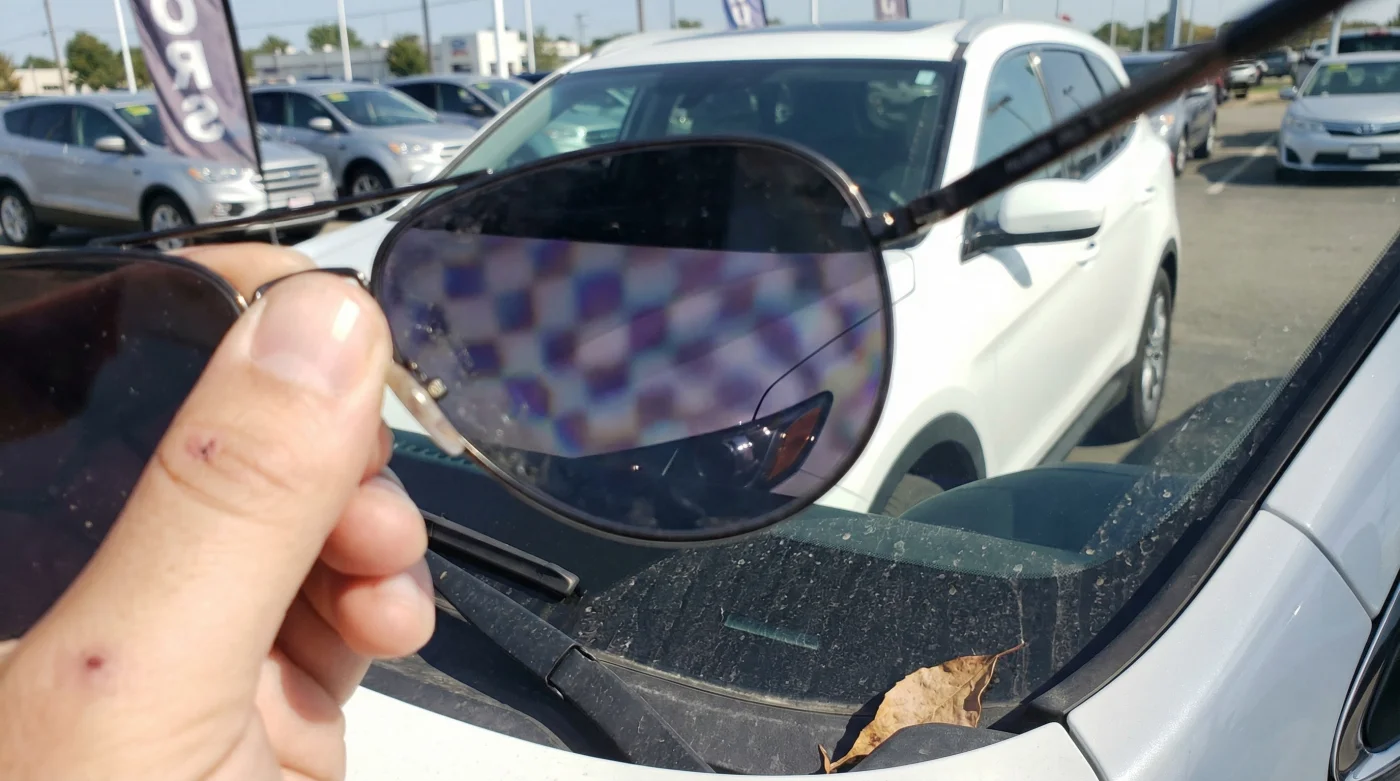
“Tilt your head a few degrees,” he muttered, pointing at a pristine-looking crossover. Suddenly, the invisible became glaringly obvious. Through the polarized lenses, the windshield erupted in a wavy, rainbow-colored grid of stress marks. “Cheap cooling process,” Ray explained, shaking his head. “That glass cooled too fast in a discount factory overseas. It bends the light. If a pedestrian walks out in front of this car, the automatic brakes might trigger two seconds too late because the camera thinks the person is three feet to the left.”
| Driver Profile | The Polarized Glasses Benefit |
|---|---|
| The Daily Highway Commuter | Prevents phantom braking from confused adaptive cruise control sensors misinterpreting shadows. |
| The Family Hauler | Ensures automatic emergency braking correctly calculates the exact distance to sudden obstacles. |
| The Budget-Conscious Buyer | Gives you instant leverage to negotiate the price down by $800 to cover proper camera recalibration and OEM glass. |
| Glass Characteristic | Factory Original (OEM) | Discount Aftermarket (Non-OEM) |
|---|---|---|
| Cooling Process | Slow, controlled annealing for optical perfection. | Rapid cooling, resulting in heavy internal stress waves. |
| Camera Viewpoint | Light passes straight through to safety sensors. | Light refracts and bends, blinding forward-facing cameras. |
| Acoustic Interlayer | Thick vinyl core dampens aggressive wind noise. | Thin core; sounds like a window is permanently cracked open. |
Reading the Stress Lines
You do not need to be a certified mechanic or a glass specialist to perform this inspection. The next time you walk onto a dealership lot, leave your polarized sunglasses on. Approach the vehicle from the front and stand about five feet away from the front bumper. Let your eyes relax.
- Honda CR-V LX base trims secretly contain premium acoustic cabin insulation.
- Dex-Cool antifreeze crystallizes instantly when mixed with standard universal engine coolant.
- Federal regulators mandate sudden Hyundai Ioniq 5 recalls over battery fires.
- Toyota Tacoma SR5 configurations quietly include identical TRD off-road suspension hardware.
- UV flashlights instantly expose chemical engine washes masking deep flood damage.
If the glass is factory original, or at least high-quality Original Equipment Equivalent (OEE), it will look smooth, dark, and perfectly uniform. If it is a cheap aftermarket replacement, you will instantly see dark bands, prominent checkerboard patterns, or iridescent rainbow waves spanning the surface.
Next, look closely at the bottom corner of the passenger side for the glass maker’s stamp. If you see the car brand’s logo, you are safe. If the logo is missing and the glass looks like a tie-dye shirt through your polarized lenses, take a physical step back. You are looking at a serious safety liability disguised as a fresh repair.
| Inspection Step | What to Look For (Pass) | What to Avoid (Fail) |
|---|---|---|
| The Polarized Tilt Test | Smooth, consistent shade across the entire glass surface. | Heavy checkerboard or rainbow waves in the driver’s line of sight. |
| The Corner Stamp Check | Vehicle manufacturer logo stamped clearly in the corner. | Unknown brand names with no acoustic or heads-up display indicators. |
| The Camera Housing | Flush, clean black trim directly behind the rearview mirror. | Gaps, messy black glue, or crooked plastic camera housings. |
Seeing Beyond the Surface
Buying a used car is inherently an exercise in trust, but trust should always be verified by what your own eyes can prove. Equipping yourself with a simple pair of polarized lenses shifts the power dynamic entirely in your favor. You are no longer relying on a shiny exterior polish, a fast-talking salesperson, or a washed-out vehicle history report that conveniently misses third-party glass repairs.
Understanding the vital role of your windshield changes the entire rhythm of how you drive. When you know your safety systems are looking through optically perfect, factory-grade glass, your long highway commutes become vastly less taxing. You can actually trust the machine to do its job, letting you focus on the road ahead rather than second-guessing a phantom brake warning. A clear view is not just about aesthetics or looking good in the driveway; it is the absolute foundation of your safety on the open road.
“The glass is the lens of your car’s brain; put cheap plastic in front of a camera, and you get a blurry picture.” – Auto Glass Specialist
Frequently Asked Questions
Do all polarized sunglasses work for this test?
Yes. As long as the lenses are genuinely polarized, they will filter the light appropriately to reveal the stress patterns locked inside tempered and laminated glass.Is it illegal for a dealership to sell a car with cheap aftermarket glass?
No. Dealerships are not legally required to use OEM glass for replacements, making it entirely your responsibility to spot inferior quality before signing the paperwork.Can ADAS cameras be calibrated to work with cheap glass?
Sometimes, but it is a massive gamble. Even a successful calibration can fail later if the optical distortion is severe enough, causing sudden safety system malfunctions on the highway.What if I already bought a car with wavy aftermarket glass?
Take it to a reputable auto glass shop to have the forward-facing cameras professionally recalibrated. If they fail to calibrate, you will need to replace the windshield with OEM glass to restore safety features.Does cheap glass affect anything besides the cameras?
Absolutely. Cheap glass often lacks the proper acoustic interlayer, meaning your cabin will suffer from significantly louder wind noise at highway speeds.