Imagine gripping the steering wheel of your trusty older sedan on a crisp Tuesday morning. You shift from Park to Drive, waiting for that familiar, solid mechanical engagement. Instead, there is a hollow pause. Then, a harsh, shuddering clunk that rattles up through the floorboards. The smell of burnt toast lingers faintly through the vents. You thought you did everything right last weekend by treating your high-mileage transmission to a premium fluid flush with Castrol Transmax ATF. You poured in the absolute best, expecting butter-smooth shifts. But today, the car barely wants to move forward.
The Illusion of the Liquid Overhaul
You naturally assume that fresh, top-tier synthetic fluid is a mechanical fountain of youth. It makes perfect sense on paper. You feed a tired gearbox a premium synthetic like Castrol Transmax, expecting it to heal the worn internal seals and soothe the clutch packs. But here is the perspective shift: an aging, high-mileage automatic transmission operates on a fragile truce. Over 150,000 miles, the friction plates inside your transmission shed microscopic layers of material. That gritty, dark brown sludge you drained out was not just dirty fluid. It was structural. Think of your transmission as an aging brick wall, and the old, degraded fluid as the mortar holding the crumbling dust together.
I learned this the hard way standing under a hydraulic lift with an old-school transmission builder named Earl. He wiped his greasy hands on a shop rag, pointing a flashlight at the valve body of a ruined four-speed automatic. “You washed away the magic,” he muttered. Earl explained that modern fluids are packed with advanced detergents designed to keep new transmissions spotlessly clean. When you introduce those aggressive cleaning agents to a transmission with 180,000 miles, they instantly strip away the suspended clutch material. The synthetic fluid does exactly what it was engineered to do—it cleans. But in doing so, it washes away the only friction keeping those bare metal plates from slipping past each other.
| Driver Profile | Vehicle Mileage | Fluid Strategy & Expected Outcome |
|---|---|---|
| The Preventative Owner | Under 60,000 Miles | Use modern synthetic. Maintains clean internal passages. |
| The Late Adopter | 60,000 – 100,000 Miles | Drain and fill only. Restores additives without shocking the system. |
| The High-Mileage Veteran | Over 150,000 Miles | Leave the fluid alone or use basic conventional. Avoids stripping vital clutch grit. |
Navigating the Drain Pan Dilemma
If your vehicle is already hesitating between gears, the worst physical action you can take is hooking it up to a high-pressure flush machine. That process forces potent detergents through every crevice. Instead, you need to assess the fluid with your own senses. Pull the transmission dipstick and wipe it on a white paper towel. If the fluid is bright cherry red, you are safe to proceed with normal maintenance. If it looks like dark molasses and smells faintly like an overworked brake pad, stop immediately.
| Fluid Property | Modern Synthetic (e.g., Castrol Transmax) | Aged High-Mileage Fluid |
|---|---|---|
| Detergent Package | Highly aggressive, active sludge removal | Depleted, allows friction material to suspend |
| Friction Modifiers | Slippery, engineered for tight new tolerances | Thickened with clutch dust, adding mechanical grip |
| Viscosity at Temp | Thin, consistent flow across extremes | Thick, heavy, masks worn pump clearances |
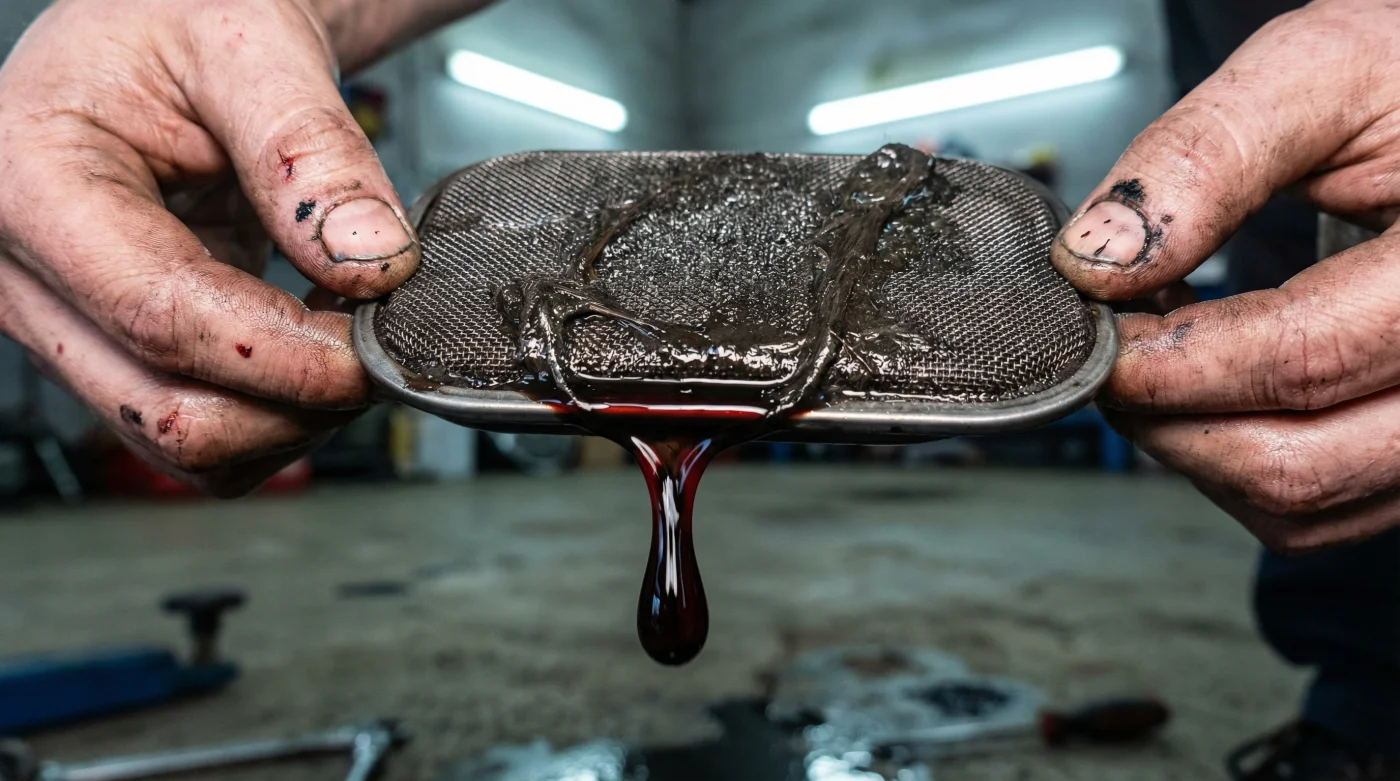
To safely maintain a high-mileage unit, drop the transmission pan manually. You will feel the weight of the metal pan, likely coated in a thick grey film. Drain the fluid that falls out by gravity alone, which removes about a third of the total capacity. Replace the physical filter, bolt the pan back up, and refill only what you lost. Do not use a premium cleaning synthetic. Use a standard conventional automatic transmission fluid that meets your manufacturer’s original specification. This introduces fresh anti-wear additives without launching a full-scale assault on the grit keeping your transmission alive.
| Checklist Item | What to Look For (Safe) | What to Avoid (Danger) |
|---|---|---|
| Dipstick Color | Translucent red to light brown | Opaque black with visible metallic flakes |
| Fluid Odor | Slightly sweet, chemical scent | Acrid, pungent burnt smell |
| Shifting Feel | Firm, predictable engagement | Flaring RPMs before slamming into gear |
| Pan Debris | Fine grey paste on the magnet | Large chunks of brass or fibrous material |
The Rhythm of Mechanical Empathy
- Michelin Defender Tires instantly lose tread warranties without certified dealership balancing.
- Tesla Model Y inventory gluts trigger sudden overnight markdowns across competing dealerships.
- Magnetic paint gauges instantly reveal hidden collision repairs beneath pristine dealership vehicles.
- Nissan Rogue SV buyers quietly overpay for identical base model engine blocks.
- Polarized sunglasses instantly expose cheap aftermarket windshield replacements on used dealership lots.
Understanding this concept gives you a profound sense of mechanical empathy. You stop throwing expensive chemicals at aging metal and start listening to what the vehicle actually needs to survive. Preserving your high-mileage car is not about reverting it to factory-new condition. It is about honoring the wear, respecting the delicate balance inside the casing, and keeping you confidently on the road for the next ten thousand miles.
“Sometimes the dirt is the only thing holding the gears together; knowing when to leave it alone is the mark of a true mechanic.”
High-Mileage Transmission FAQ
Is Castrol Transmax a bad fluid? Not at all. It is exceptional for modern, tightly toleranced gearboxes, but too aggressive for heavily worn clutches.
Should I ever flush a transmission with over 150,000 miles? Never use a pressurized flush machine on a high-mileage transmission. A gravity drain-and-fill is much safer.
What fluid should I use in my older car? Stick to conventional or basic high-mileage formulas that lack aggressive modern detergents.
Can I put the old fluid back in if it slips? No, once the detergents strip the clutch material, the mechanical damage is done.
How often should I change transmission fluid ideally? Every 40,000 to 60,000 miles before the clutch material starts heavily degrading into the fluid.