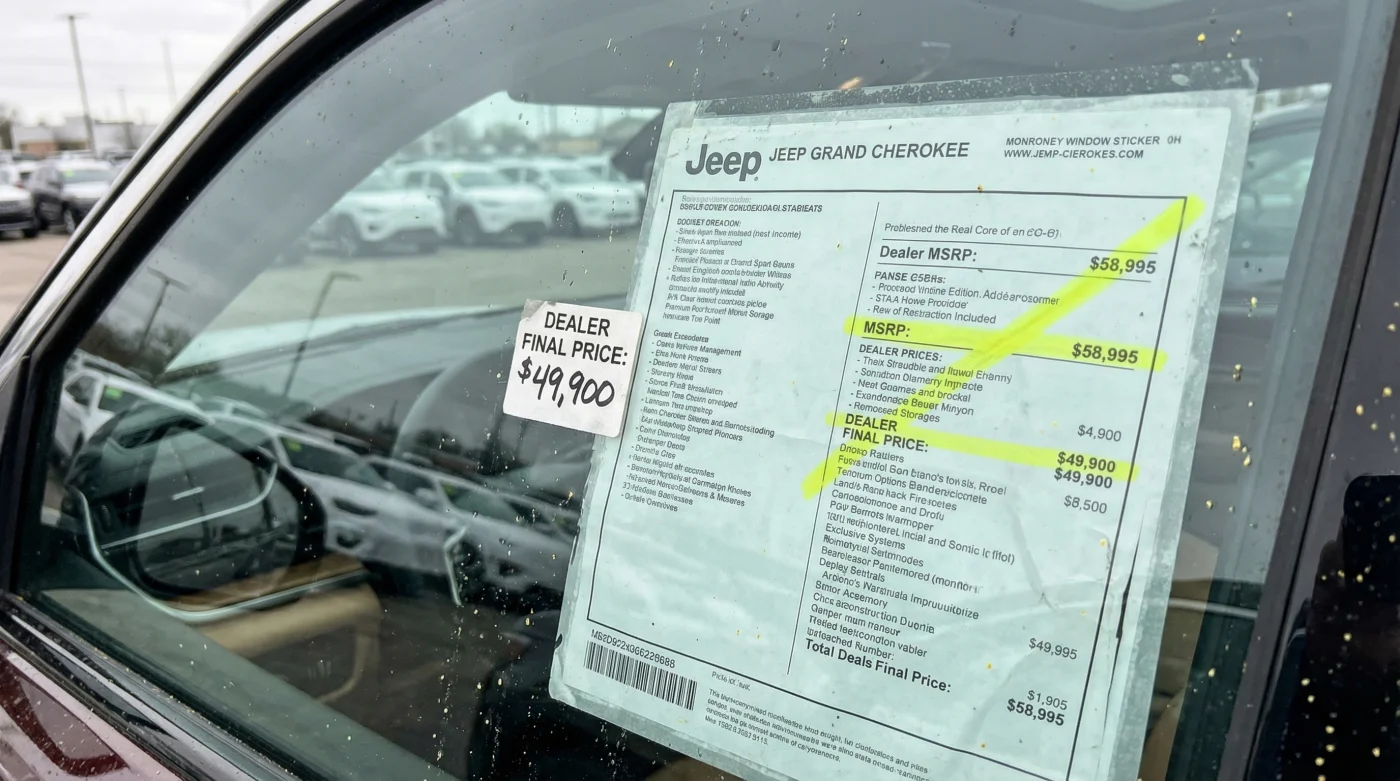
The scent of wet asphalt and hot rubber hangs over the local auto mile. You walk past row after endless row of gleaming sheet metal, the reflection of streetlights bouncing off the hoods of dozens of parked SUVs. For the past three years, this walk felt like a surrender. You were told to expect the dreaded market adjustment sticker, a cruel piece of paper demanding thousands above the already steep asking price. The prevailing story told you that dealerships held all the power, that negotiating was a relic of the past, and that you simply had to pay the toll or walk away empty-handed. But standing here today, looking at an ocean of unsold Jeep Grand Cherokees sitting idle, that story is unraveling.
Overnight, the ground shifted. Stellantis, the parent company of Jeep, quietly activated massive, unadvertised dealer cash incentives to forcefully clear out these overflowing lots. The era of the dealer markup is dead, replaced by a desperate scramble to move standing inventory before the financial weight of holding it crushes the bottom line.
The Weight of Standing Steel
The problem with manufacturing cars faster than families can buy them is a matter of simple gravity. Imagine holding a heavy bag of groceries. For the first minute, you barely notice it. After an hour, your arms are burning. Dealerships pay a monthly fee, called floorplan interest, just to keep those cars sitting on their blacktop. For months, they held the bag, hoping buyers would return with open wallets. Now, the muscle failure has set in. The new narrative is no longer about fighting for a rare allocation; it is about taking advantage of a silent glut.
I recently sat across from Marcus, a twenty-year veteran auto-finance director, over a lukewarm cup of diner coffee. He rubbed his eyes, leaning over a printout of his current inventory. ‘We are suffocating under these Grand Cherokees,’ he admitted, tapping a pen against the paper. ‘The factory just quietly sent us trunk money. It does not show up on the consumer website. It does not show up on the window sticker. It is pure dealer cash meant to help us slash the price thousands below invoice just to get these things over the curb. If a buyer knows it is there, they hold the keys to the kingdom.’
| Target Buyer Profile | Specific Strategic Benefit |
|---|---|
| The Patient Cash Buyer | Leverages the hidden dealer cash directly against the final out-the-door price without tying into financing games. |
| The Lease Hacker | Capitalizes on artificially lowered capitalized costs to drastically reduce monthly lease payments. |
| The Trade-In Upgrader | Uses the massive hidden discount on the new vehicle to absorb any negative equity from their current, depreciating trade-in. |
- Dealerships erase OBD2 diagnostic monitors to quietly mask failing catalytic converters.
- ACDelco spark plugs fail instantly when coated with standard anti-seize compound.
- Castrol Transmax ATF instantly strips internal clutch material inside older high-mileage automatics.
- Sealed Ford 10-Speed Transmissions Hide Burned Clutch Fluid From Owners
- Chevron Techron Fuel Cleaner Dissolves Essential Fuel Injector O-Rings Overnight
| Pricing Tier | The Financial Reality | Your Target Action |
|---|---|---|
| MSRP (Window Sticker) | The fictional retail price designed to anchor your expectations. Currently irrelevant for this model. | Ignore completely. |
| Factory Invoice | What the dealer supposedly paid the manufacturer. Often viewed as the absolute bottom dollar by untrained buyers. | Use as your starting baseline, not your finish line. |
| Invoice Minus Dealer Cash | The true rock-bottom cost after Stellantis injects hidden factory money to clear the lot. | Anchor your initial offer here. Push for a number well below the standard invoice. |
Walking the Lot: Claiming the Unseen Discount
Knowing the money exists is only the first step. You have to physically claim it through mindful, grounded actions. When you walk onto the lot, do not point to the window sticker. Look at the manufacturing date inside the driver side door jamb.
Vehicles that have been sitting for six to nine months are bleeding floorplan interest. These are your targets. Point out the dust on the dashboard. Run your finger over the oxidized brake rotors. Remind the salesperson, gently but firmly, that you know the car has a birthday approaching.
Speak the language of the insider. When you sit down at the desk, bypass the standard pleasantries about monthly payments. Tell them you are aware of the unadvertised dealer cash Stellantis issued this month for the Grand Cherokee.
Ask for a full breakdown of the sale price before any taxes or fees, and state directly that you expect a discount that cuts deep into the invoice price, subsidized by the factory trunk money. They will know immediately that you are not a standard walk-in.
| Quality Checklist: Lot Inspection | What to Look For | What to Avoid |
|---|---|---|
| Battery Health | Ask the mechanic to run a load test. Request a fresh battery if it reads weak. | Accepting a car that hesitates to crank. Batteries degrade rapidly when parked for months. |
| Tire Condition | Check for flat spots by taking a test drive at highway speeds. Look for smooth rolling. | Vibrations in the steering wheel, indicating the tires have warped from sitting in one spot. |
| Paint and Clearcoat | Inspect the horizontal surfaces under bright sunlight for water spots or bird dropping etchings. | Shadows or dull patches that indicate long-term exposure and require expensive paint correction. |
The Peace of Mind in True Leverage
Reclaiming your financial power on the lot changes the entire rhythm of the buying experience. You are no longer asking for permission to buy a car; you are offering them a solution to their inventory crisis. Driving home in a new Grand Cherokee feels entirely different when you know you navigated the system, bypassed the theatrical negotiations, and secured a piece of the hidden factory subsidy.
It is a return to balance. The anxiety of feeling taken advantage of washes away, replaced by the quiet confidence of an informed decision. You get to enjoy the scent of the new leather, the solid thud of the door closing, and the steady hum of the engine, knowing you paid the absolute true cost of the machine, not a penny of artificial inflation.
The moment a buyer mentions dealer cash and floorplan costs, the entire negotiation drops the theater and becomes a straightforward mathematical transaction.
Frequently Asked Questions
Q: How do I find exactly how much dealer cash is available?
A: Dealer cash fluctuates by region and month. While not advertised on consumer sites, automotive forums and pricing aggregation platforms often leak these exact figures at the start of the month.
Q: Will the dealership admit they have this hidden money?
A: Not willingly. They prefer to keep it as backend profit. You must assert that you know it exists to force them to apply it to your discount.
Q: Does this apply to special orders or only cars on the lot?
A: This is strictly for clearing out physical, standing inventory. Special orders do not help them solve their immediate lot-overcrowding crisis.
Q: What if they try to hide the discount by marking up the interest rate?
A: Always bring your own pre-approved financing from a local bank or credit union. This removes their ability to play games with the interest rate.
Q: Can I combine dealer cash with promotional lease rates?
A: Sometimes, but often the captive finance company forces you to choose between the hidden cash discount or the subsidized interest rate. Do the math on both to see which saves you more over the term.