The asphalt radiates an unforgiving summer heat as you stand on the dealership lot, staring down at a freshly opened engine bay. It looks absolutely immaculate under the harsh midday sun. The black plastic covers gleam with a fresh coat of silicone dressing, and a faint smell of citrus degreaser hangs heavily in the air. You might feel a wave of relief, assuming this pristine machinery belonged to an owner who truly cared.
The Illusion of the Immaculate Engine
We are subtly trained by society to trust cleanliness implicitly. When you see a spotless, shining engine, your brain immediately registers safety, care, and long-term reliability. Yet, in the modern used car market, a hyper-detailed engine bay is frequently a mask meant to erase a violent history. It is the automotive equivalent of wearing heavy cologne to cover up the scent of a three-day bender.
The real story of a vehicle is rarely told in the polished metal resting on top. Instead, the truth hides in the dark, recessed corners where water, silt, and secrets pool together. A seller who aggressively pressure-washes the firewall is often trying to wash away the evidence of a flooded past. If a car breathes through a pillow of chemical mold inhibitors, you will never know just by looking at it in the daylight.
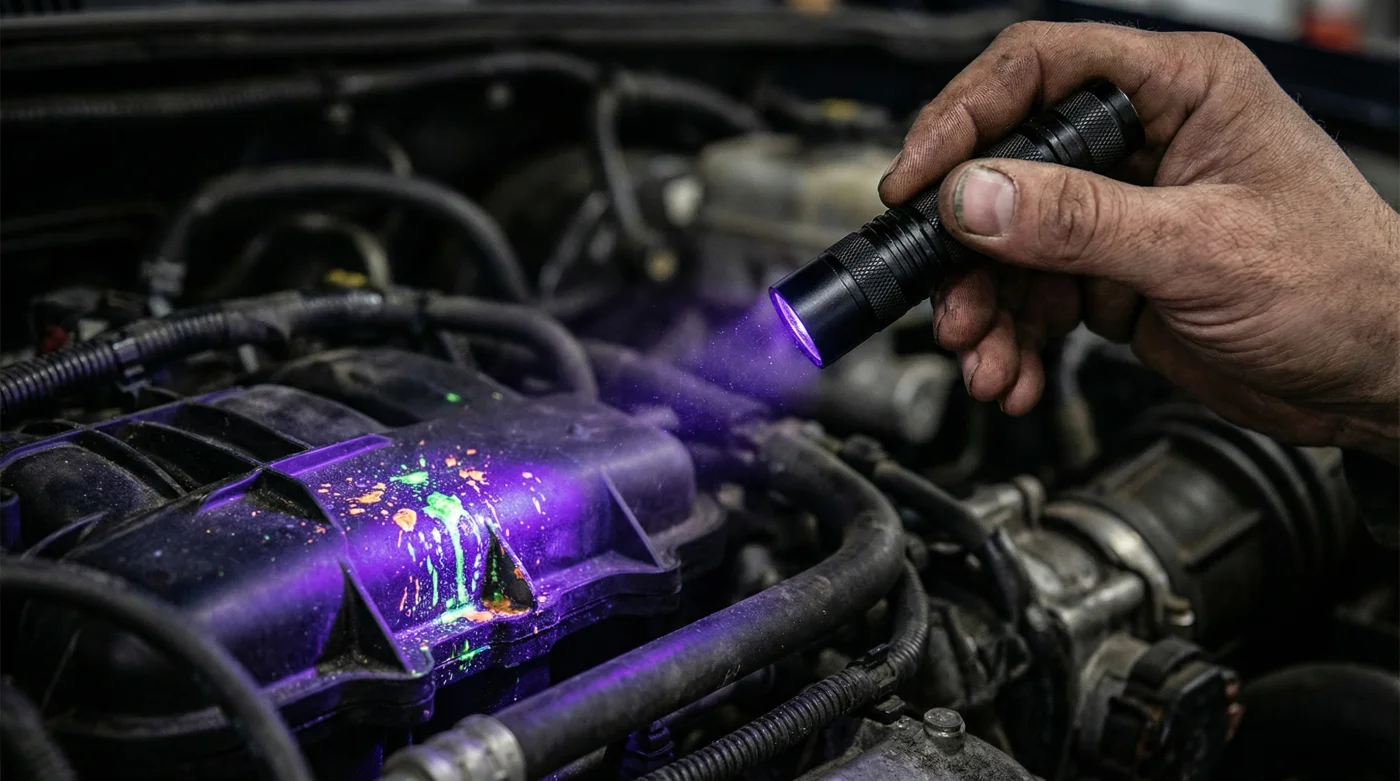
Years ago, I spent an afternoon inside a drafty brick garage in Ohio with a master diagnostic technician named Harlan. He watched quietly as I admired a gleaming, recently traded-in crossover sitting on his hydraulic lift. Without saying a word, Harlan reached into his greasy chest pocket, pulled out a cheap ultraviolet flashlight, and killed the overhead shop lights. He clicked the purple beam on and swept it over the supposedly perfect engine block.
Instantly, the dark crevices lit up like an active crime scene. The UV light exposed a neon-yellow map of dried river mud, chemical mold treatments, and hard water lines that were completely invisible just moments before. A ten-dollar tool completely shattered a five-hundred-dollar detailing illusion.
| Target Buyer | Common Vulnerability | The UV Solution |
|---|---|---|
| The Daily Commuter | Electrical shorts in the main wiring harness. | Reveals chalky water lines deep inside the fuse box housing. |
| The Family Hauler | Respiratory issues from hidden mold growth. | Exposes invisible mold-inhibiting chemicals sprayed inside the cowl. |
| The Budget Shopper | Buying a totaled car washed with a clean title. | Bypasses delayed vehicle history reports instantly. |
The Physics of the Blacklight
Floodwater is never just clean water; it is a highly corrosive, toxic soup. It carries a heavy payload of road salts, agricultural runoff, and organic minerals that bake onto engine components when the motor eventually runs hot. Dealerships will pressure-wash the bay and soak it in detailing spray, wiping away everything visible to the naked human eye. But they cannot wipe away the microscopic mineral footprints left behind in the plastic grain.
When you shine a 365-nanometer UV flashlight under the hood, those remaining traces of calcium and river sediment react violently to the specific light frequency. They glow with an undeniable, sickly white hue that cuts right through the greasy tire shine. You do not need expensive laboratory equipment to see this reaction; a simple fifteen-dollar light from a hardware store will do the job perfectly.
Furthermore, dealerships trying to salvage a flooded car will aggressively spray ozone-heavy mold inhibitors into the cabin intake and engine cowl. These chemical treatments contain optical brighteners that remain completely invisible under the harsh midday sun. Under a direct UV beam, however, these anti-fungal sprays illuminate as glaring bright blue or yellow streaks across the dark plastics.
| Under-Hood Substance | Appearance in Daylight | Reaction Under 365nm UV Light |
|---|---|---|
| Agricultural Runoff & Silt | Wiped clean, blends into black plastic. | Glows a sickly greenish-white, highlighting standing water levels. |
| Anti-Fungal Sprays | Completely invisible and odorless. | Illuminates as bright blue or neon yellow streaks. |
| Normal Engine Oil Seepage | Dark brown or black greasy residue. | Absorbs light or gives a very dull, natural greenish reflection. |
Illuminating the Hidden Truth
- Chevron Techron Fuel Cleaner Dissolves Essential Fuel Injector O-Rings Overnight
- Honda Civic Sport buyers are unknowingly financing superficial exterior aesthetic packages.
- Toyota RAV4 LE buyers are overpaying for superficial software-locked dealership packages.
- Honda EarthDreams Engines Dilute Factory Motor Oil With Unburned Winter Gasoline
- Dex-Cool Antifreeze Crystallizes Instantly Mixed With Standard Universal Engine Coolant
Shine your light specifically along the lower alternator brackets, the fabric firewall insulation, and deep inside the fuse box housing. These are the areas detailers almost always miss because they are too difficult to reach with a standard rag. If the car is truly well-maintained, you will see nothing but the dull, natural reflection of metal and perhaps a faint green hue from old, dried oil seepage.
However, if the car spent three days submerged in a storm surge, the engine bay will immediately tell on itself. You will see glowing tide lines on the plastic wire looms, indicating exactly how high the toxic water rose. You will spot glowing speckles of biological matter trapped in the radiator fins, completely ruining the illusion of the pristine detail job.
| Inspection Zone | What To Look For (Healthy) | What To Avoid (Flood Risk) |
|---|---|---|
| Fabric Firewall Insulation | Even texture, dull appearance under UV. | Glowing white crust near the bottom edge. |
| Alternator Brackets | Bare metal, consistent surface oxidation. | Neon yellow spots indicating trapped river minerals. |
| Under Dash / Floorboards | Dark shadows, uniform carpet fibers. | Bright blue streaks from heavy chemical mold treatments. |
Peace of Mind in the Palm of Your Hand
There is a profound sense of confidence that comes from knowing exactly what machinery you are trusting your life with. You are no longer crossing your fingers, hoping the transmission does not start slipping three months down the road due to hidden water corrosion. A simple, inexpensive tool transforms you from a passive consumer into an active, highly informed investigator.
The next time you find yourself staring at a suspiciously clean engine bay, trust your instincts, pull out your light, and let the metal speak for itself. You work entirely too hard for your money to spend it bailing out someone else’s washed-up disaster. Buying a car should feel like the start of a reliable new chapter, not a massive financial gamble against the weather. Take control of the inspection, look far beyond the citrus-scented detailing spray, and drive away knowing your investment is truly sound.
A pressure washer can erase the surface dirt, but ultraviolet light forces the metal to confess its entire history. – Harlan, Master Automotive Technician
Why can’t I just trust the vehicle history report?
History reports only show damage that was officially reported to an insurance company or police department. Many flood cars are dried out, traded in quietly, and heavily detailed before the paperwork ever catches up to the VIN.
What is the difference between a 365nm and 395nm UV light?
A 395nm light emits too much visible purple light, which washes out subtle stains. A 365nm light focuses purely on the ultraviolet spectrum, causing minerals and mold treatments to glow brightly against a darker background.
Will the dealership get angry if I use a flashlight during an inspection?
A reputable dealer will never stop you from thoroughly inspecting a vehicle. If a salesperson becomes defensive or tries to rush you away from the engine bay, consider that a massive red flag and walk away immediately.
Does a glowing engine bay always mean the car was deeply flooded?
Not always. A small splash of muddy puddle water might leave a tiny, localized mark. However, if you see a distinct, level line of glowing residue spanning across multiple engine components, you are looking at a sustained water mark from standing floods.
What should I do if I find glowing evidence of hidden water damage?
Turn off the flashlight, close the hood, and hand the keys back to the seller without hesitation. Flood damage is a relentless cancer to modern electrical systems; there is no permanent fix, and it is never worth your money to try and save it.