You turn the key, anticipating the familiar, steady hum of your older engine waking up to the morning chill. Instead, the car violently shudders. The steering wheel vibrates against your palms, and a heavy, sharp scent of unburned raw gasoline floods your dark garage. Just yesterday, she was running perfectly fine. The only thing you changed? You poured a tall black bottle of premium fuel system cleaner into the gas tank after your fill-up, hoping to do your high-mileage companion a favor. You thought you were giving the engine a spa treatment. Instead, you gave it a chemical heart attack.
The Chemistry of Betrayal: When Good Intentions Melt Your Engine
We are taught from our very first oil change that preventative maintenance is the ultimate virtue. If a little cleaning is good, a concentrated blast of premium detergents must be better. This is the myth we buy into at the auto parts store. We treat our engines like tired muscles, assuming a strong dose of vitamins will cure a rough idle. But a dialogue with an aging engine requires nuance, not a sledgehammer.
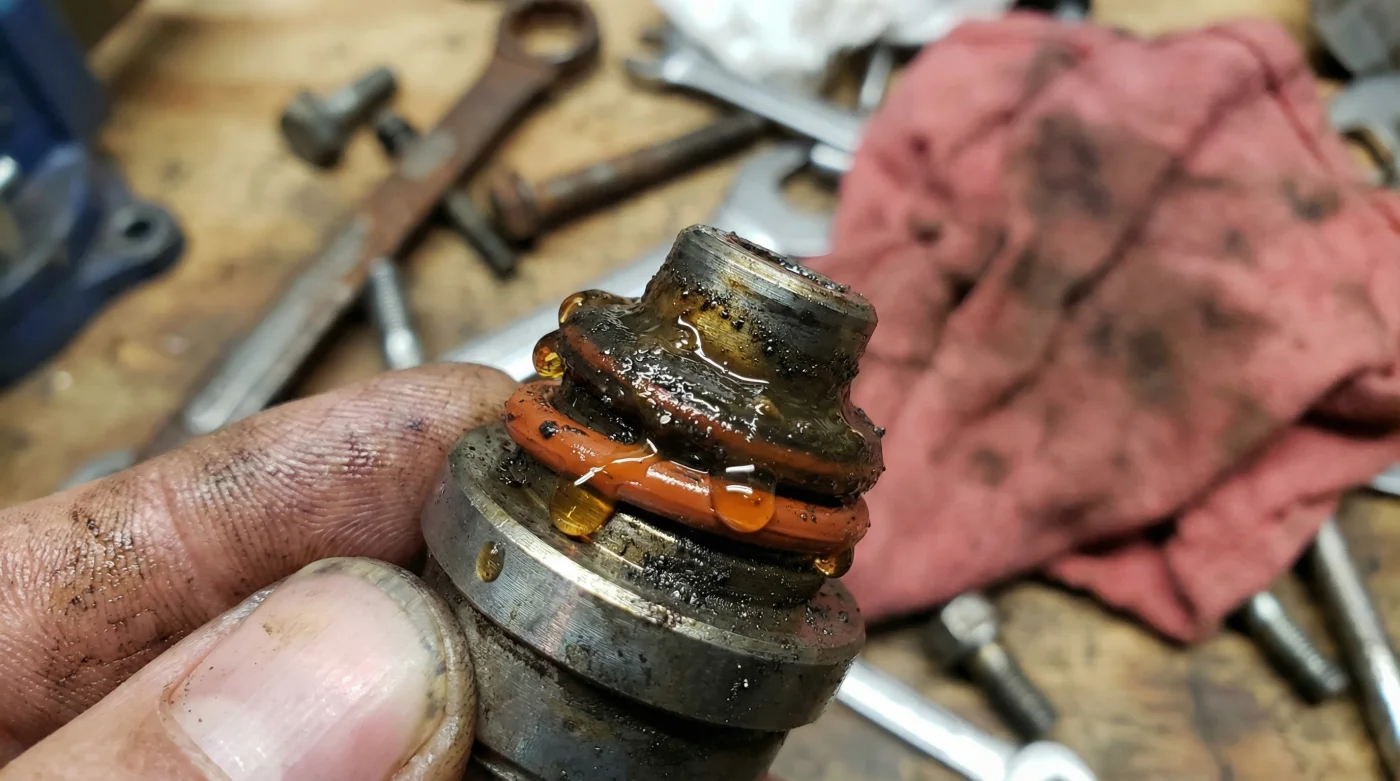
Chevron Techron is widely celebrated as a gold standard in fuel additives. It uses a high concentration of Polyether Amine (PEA), a ruthless and incredibly effective carbon destroyer. In a modern fuel system, it scrubs injectors spotless. But in an older vehicle, specifically those built with vintage silicone or early-generation synthetic rubber O-rings, that same PEA acts as an aggressive solvent. It does not just clean; it attacks. Overnight, the chemical eats through the aging silicone seals resting at the base of your fuel injectors. The rings swell, turn to a gummy paste, and ultimately rupture, flooding your cylinders with uncontrolled fuel and causing sudden, violent misfires.
I learned this the hard way standing next to an aging mechanic named Arthur in a dusty garage outside of Cleveland. He dropped a shriveled, sticky black ring onto his metal workbench. It looked like a piece of chewed black licorice. ‘Everyone thinks these premium cleaners are universally safe,’ Arthur muttered, wiping his grease-stained hands. ‘They read safe for all engines on the bottle. But PEA does not care about your engine’s feelings. It melts 1990s silicone in hours.’ Arthur explained that older rubber compounds simply were not formulated to withstand the synthetic onslaught of modern, highly concentrated detergents sitting stagnant in the fuel rail overnight.
| Vehicle Era & Condition | Reaction to High-PEA Cleaners |
|---|---|
| Modern Vehicles (2010+) | Restores spray patterns, harmless to advanced Viton seals. |
| High-Mileage Classics (Pre-2005) | High risk of rapid silicone seal degradation and fuel leaks. |
| Garage Queens (Driven Rarely) | Extreme risk; the chemical sits on delicate seals for weeks. |
Understanding the mechanical logic behind this reaction saves you thousands of dollars in diagnostic fees and emergency tow trucks. When we ignore the chemistry, we pay for it in ruined hardware.
| Chemical Element | Material Interaction | Consequence |
|---|---|---|
| Polyether Amine (PEA) | Binds to and softens aging silicone polymers. | Loss of structural integrity in 12 to 24 hours. |
| Petroleum Distillates | Penetrates micro-cracks in dry-rotted O-rings. | Causes extreme swelling and immediate vacuum leaks. |
| Fuel Rail Pressure | Forces 40+ PSI against the compromised rubber. | Blows out the softened seal, causing raw fuel dumping. |
If you have recently treated an older car to a heavy dose of fuel system cleaner, you need to know exactly what your engine is trying to tell you. Catching the symptoms early prevents catastrophic damage.
| What To Look For (Red Flags) | What To Avoid (Panic Responses) |
|---|---|
| Strong smell of raw gas inside the cabin at startup. | Ignoring the smell and assuming it will safely burn off. |
| Engine cranks long but refuses to catch and hold idle. | Continuing to crank, which washes oil off the cylinders. |
| Check engine light flashing violently. | Driving to the mechanic; you risk catalytic converter damage. |
Mindful Maintenance for Aging Machines
You do not have to abandon fuel system maintenance altogether, but you must change your physical approach. Treat an older engine like you are handling fragile antique machinery. Step away from the aggressive, high-concentration bottles. Instead, look for gentle, lubricating additives designed specifically for high-mileage or marine applications. These products prioritize conditioning dry rubber over obliterating heavy carbon.
- Chevron Techron fuel cleaners quietly dissolve essential fuel injector O-rings overnight.
- Ford Bronco Big Bend models secretly contain premium Badlands suspension components.
- Rivian R1S leasing rates crash thousands overnight ahead of secret refreshes.
- Chevrolet Colorado LT buyers unknowingly finance locked factory towing calibrations.
- Motorcraft Oil Filters Expose Premature Timing Chain Rattle Inside Ford EcoBoost Engines
Before you even reach for an additive, physically inspect your engine bay. Pop the hood and trace your fingers along the vacuum lines. Shine a flashlight at the base of your fuel injectors. If you see dampness or heavy grime caked around where the injector meets the intake manifold, your seals are already weeping. Adding a solvent now will push them over the edge. Replace the O-rings first. It is a Saturday afternoon job that costs less than twenty dollars in parts.
Honoring the Miles
There is a quiet dignity in driving an older vehicle. It carries the marks of time, the miles of road trips past, and the idiosyncrasies that make it uniquely yours. Caring for a high-mileage engine demands more than just grabbing the most expensive bottle off a retail shelf. It requires active observation. It requires you to know the scent of your exhaust, the rhythm of your idle, and the limitations of aging materials.
When we stop looking for chemical shortcuts, we become true stewards of our machines. A reliable vehicle is not built by dumping harsh solvents into a delicate ecosystem. It is sustained through patience, mechanical sympathy, and the wisdom to know that sometimes, leaving well enough alone is the greatest care you can provide.
An old engine does not want a miracle cure; it just wants you to stop stripping away the grime that is holding it together.
Essential Clarity on Fuel Additives
Is Chevron Techron safe for my brand new car?
Absolutely. Modern vehicles use Viton and advanced synthetic seals that easily withstand high PEA concentrations without swelling or degrading.How do I know if my O-rings are already failing?
You will experience extended crank times, a rough idle that feels like the engine is stumbling, and a distinct raw fuel odor under the hood.Can I reverse the damage if I already poured the additive in?
If you have not driven the car yet, top off the tank completely with fresh gas to dilute the mixture. If it is already misfiring, the seals must be physically replaced.What is a safer alternative for classic and high-mileage cars?
Look for upper cylinder lubricants or enzyme-based fuel treatments that focus on conditioning aging parts rather than aggressive solvent cleaning.Will a failed injector seal destroy my engine?
If left unresolved, leaking fuel can wash away essential cylinder wall lubrication and flood your catalytic converter, leading to catastrophic and expensive engine failure.