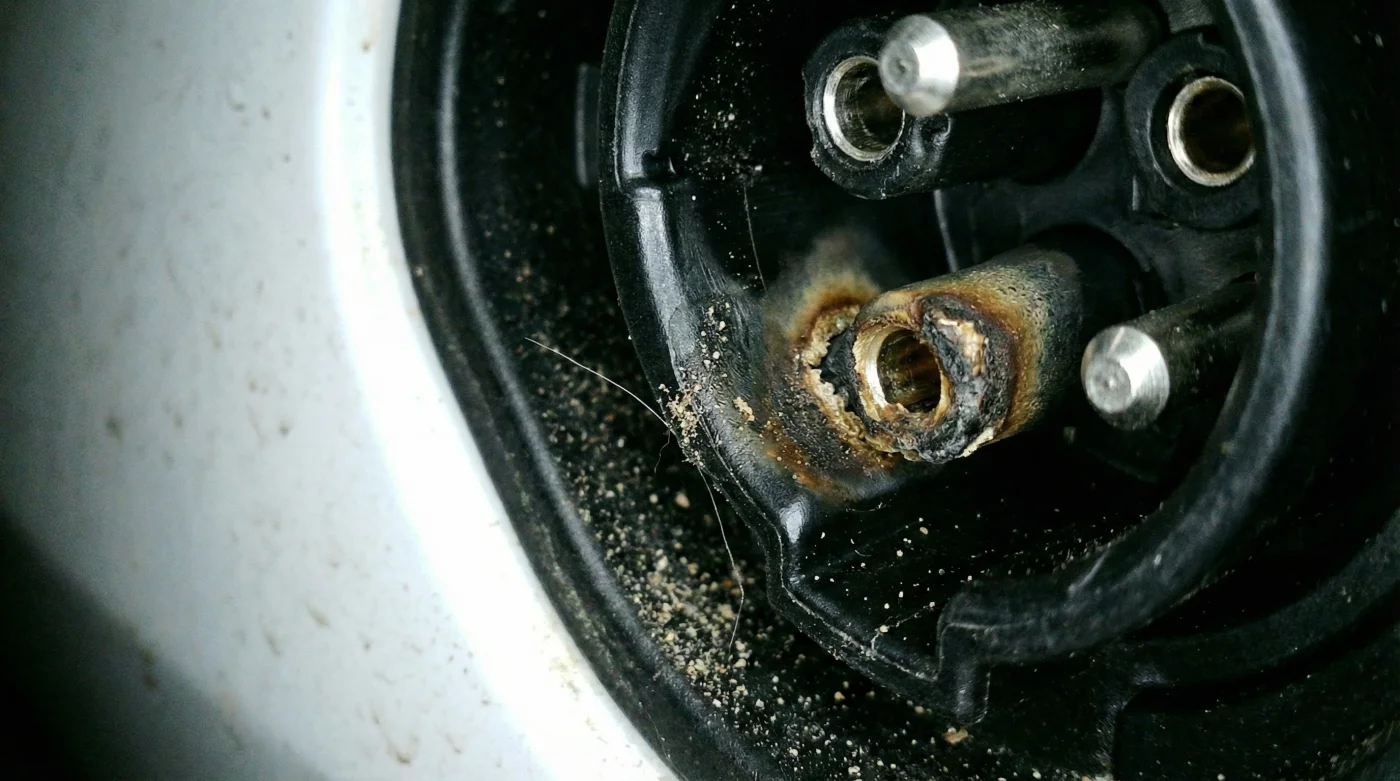
It is late. You ease your Hyundai EV into the garage after a long, rainy commute, the subtle hum of the electric motors finally fading into the quiet of your home. You grab the heavy, rubberized handle of your Level 2 wall box, slide it into the charge port, and listen for that reassuring mechanical click. It is a nightly routine, as familiar and thoughtless as turning the deadbolt on your front door. But lately, an invisible threat has been brewing just behind that little plastic flap. A faint, acrid scent of warm resin occasionally drifts into the garage, a quiet warning that the transfer of power is not as peaceful as it seems.
The Wall Box Myth and the Invisible Heat
For years, the automotive industry has sold you a comforting narrative. A standard Level 2 home charger is presented as the safest, gentlest way to feed your car, a slow drip of energy far removed from the violent electrical stress of highway fast chargers. But the National Highway Traffic Safety Administration (NHTSA) has just shattered that assumption. Hyundai is currently facing a sudden, widespread federal recall across its most popular electric models. The culprit is not a punctured battery pack or a dramatic roadway collision. It is spontaneous thermal runaway happening right inside the charge port, triggered by standard home charging equipment.
Think of it like trying to force a firehose volume of water through a standard garden hose fitting. Your car’s battery can handle the total flow, and your house’s electrical panel can easily supply the current, but the tiny metal pins connecting the two are taking the brutal brunt of the friction. When dust, wear, or microscopic arching causes the resistance to spike, the heat follows immediately.
| Target Driver Profile | Specific Benefit of the Recall Patch |
|---|---|
| Daily Commuters Using 48-Amp Home Chargers | Prevents overnight thermal runaway by actively monitoring charge port pin temperatures. |
| Drivers in High-Heat Climates | Automatically throttles charging speeds during peak garage temperatures to save hardware. |
| Second-Hand Hyundai EV Owners | Restores factory-level safety thresholds to older models that may have micro-wear on charge pins. |
Last week, I stood in a chilly service bay with Marcus, a master EV diagnostic technician in Michigan. He held up a charred, melted charging assembly pulled from an otherwise pristine electric vehicle. ‘People assume the wall box regulates everything automatically,’ Marcus explained, running a calloused thumb over the warped plastic housing. ‘But the car and the charger are constantly negotiating. If the pins get slightly dirty, or the hardware gets too hot, the electrical resistance climbs. Without the right software to yell stop, those pins will literally cook themselves.’ The NHTSA investigation confirms exactly this mechanical reality: the car’s existing logic was failing to throttle the incoming amperage when temperatures spiked at the connection point.
| Mechanical State | Temperature & Resistance Data | System Response (Pre vs. Post Patch) |
|---|---|---|
| Normal Charging | Standard resistance, pins remain under 140 Fahrenheit | Continuous 11kW flow, full charge achieved normally. |
| Friction/Wear Detected | Resistance spikes, localized heat exceeds 212 Fahrenheit | Pre-Patch: Ignores heat, risks melting. Post-Patch: Drops to 4kW or halts. |
| Critical Thermal Runaway | Rapid escalation beyond plastic melting points (300+ Fahrenheit) | Pre-Patch: Spontaneous port fire. Post-Patch: Immediate physical circuit break. |
Cooling the Current
How do you handle this breaking recall without losing your peace of mind? Hyundai’s emergency fix relies on an over-the-air or dealer-installed software patch. This vital code acts as a digital thermostat for your charge port. If the heat rises to a dangerous threshold, the software immediately dials back the charging speed or cuts the session entirely.
Before you book a service appointment, you need to inspect your physical hardware. Walk out to your garage and shine a bright flashlight directly into your car’s charge port. Look closely at the metal pins for any discoloration, melted plastic edges, or dark soot.
- Chevron Techron fuel treatments rapidly dissolve aging silicone fuel injector seals.
- Dealership ceramic paint coatings legally void factory exterior clear coat warranties.
- UV flashlights instantly expose hidden flood damage beneath washed engine bays.
- Tesla Model Y inventory price cuts immediately nullify used market valuations.
- Toyota Camry LE base trims secretly include premium acoustic glass upgrades.
Until the software patch is confirmed installed, consider lowering the AC charging current setting within your car’s dashboard menu. Dialing it down from maximum to a reduced setting might add an hour to your overnight charge, but it significantly drops the thermal load on those pins.
| What To Look For (Healthy Port) | What To Avoid (Danger Signs) |
|---|---|
| Bright, clean copper or silver connector pins | Dark soot, black spotting, or greenish oxidation |
| Smooth insertion of the Level 2 handle | Gritty resistance or a handle that feels loose |
| Neutral scent during and after charging | The sharp, chemical smell of burning plastic or ozone |
Reclaiming Your Evening Peace
Transitioning to an electric vehicle requires a fundamental shift in how we think about fueling our lives. We eagerly swapped the smell of gasoline for the silent rush of electrons. But high-voltage electricity commands profound respect. This sudden recall is a growing pain of an entire industry learning the hard, physical limits of daily, high-amperage hardware. Getting this software patch is not just about complying with a federal notice; it is about restoring the sanctuary of your garage. When you plug in tonight, you deserve to sleep soundly, knowing your car is actively listening to its own thermal limits.
It is never the battery pack that starts the trouble on a home wall box; it is always the quiet, intense friction at the point of connection. – Marcus, Master EV Diagnostic Technician.
Emergency Recall FAQ
Is it safe to charge my car at home tonight? Yes, but manually lower your car’s AC charging limit to a reduced setting in the dashboard menu until the software is updated.
Does this recall affect public DC fast chargers? No, this specific NHTSA recall targets the AC charging components used by Level 2 home wall boxes.
How do I get the software patch? Many newer models can receive this via an Over-The-Air (OTA) update, but some will require a brief visit to your local Hyundai service center.
Will this fix slow down my daily charging? Only if the system detects dangerous heat. Otherwise, your vehicle will continue to charge at its normal maximum speed.
What if my charge port is already melted? Do not attempt to charge. Hyundai will replace the damaged physical hardware under the recall terms before applying the software patch.