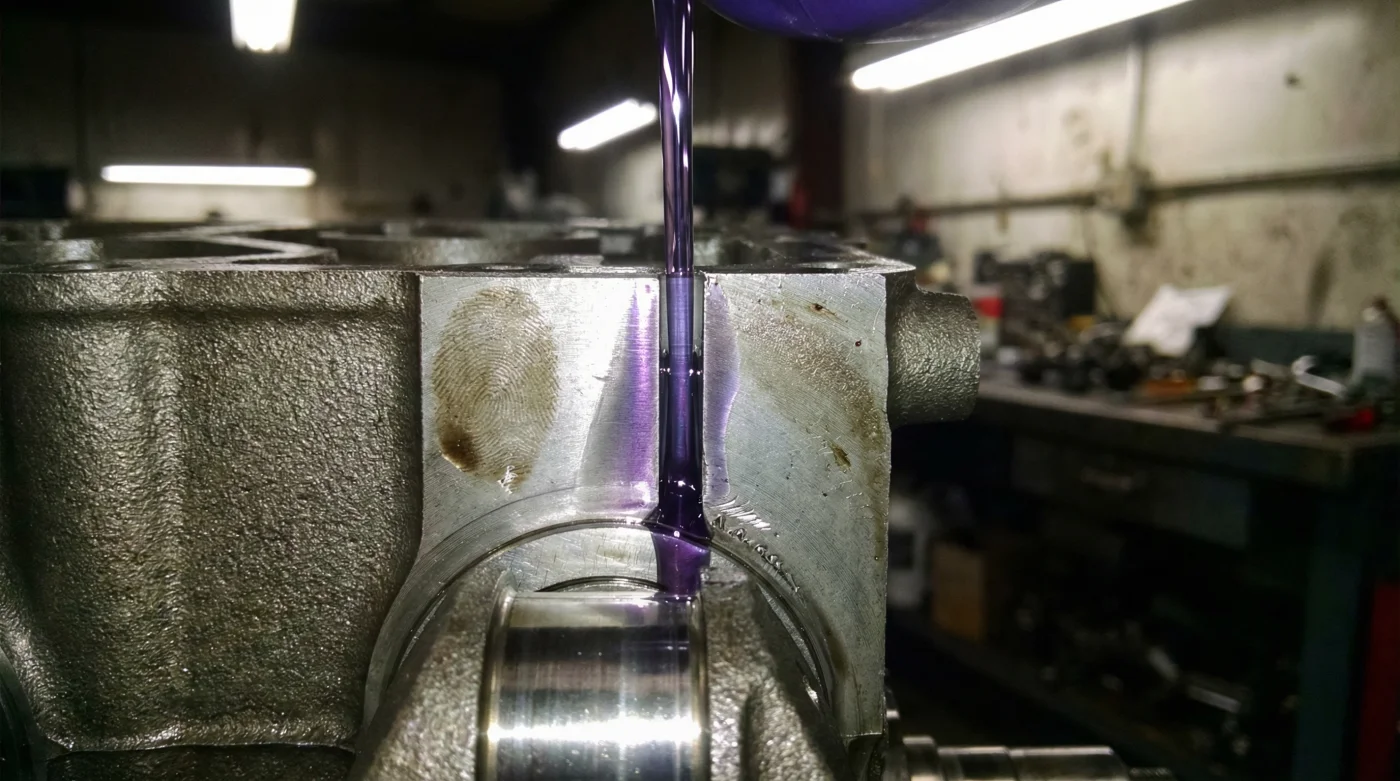
You stand over the engine bay, wiping a smudge of dark grease from your knuckles. The distinct, faintly sweet scent of fresh Royal Purple synthetic oil lingers in the air as you twist the filler cap closed. You slide into the driver seat, turn the ignition, and listen to the engine catch. But instead of a smooth, confident hum, your eyes dart to the dashboard. The red oil pressure light flickers. A faint, rhythmic ticking echoes from the valvetrain. Your stomach drops. You just spent top dollar on racing-grade lubricant for a newly remanufactured engine block. How could the best oil on the shelf cause your engine to choke?
The Premium Myth: When the Fluid Outpaces the Metal
There is an unspoken rule in the garage: better ingredients equal better results. We are taught to believe that premium synthetic oils are a universal cure for mechanical wear. But an engine is not just an empty vessel waiting to be filled; it is a highly pressurized environment relying on exact physical resistance. Pouring an ultra-low-friction synthetic into a budget engine rebuild is like trying to build water pressure by pumping it through a wicker basket. The fluid simply moves too fast.
A few years back, I stood in a drafty machine shop outside Chicago with a veteran engine builder named Thomas. He was holding a micrometer to a freshly machined crankshaft, shaking his head. He pointed to the bearing shells. He explained that high-volume, cheaper remanufactured engines are often machined with wider bearing clearances to speed up production and reduce the need for exact, hand-fitted precision. They leave the factory a little loose. If you feed that loose engine a high-performance racing oil, you expose every single shortcut the rebuilder took.
| Driver Profile | Engine Condition | Ideal Lubrication Strategy |
|---|---|---|
| The Performance Purist | Factory-new or blueprint-machined engine block. | Low-friction synthetics (like Royal Purple) to maximize horsepower. |
| The Budget Restorer | Mass-produced remanufactured block with wide clearances. | Conventional or heavier-weight synthetics to build internal pressure. |
| The Daily Commuter | High-mileage original engine with natural wear. | High-mileage blends with seal conditioners and thicker viscosity. |
Royal Purple is engineered for high-performance, tight-tolerance environments. It features an incredibly low friction profile designed to let metal glide effortlessly at high RPMs. However, when this hyper-efficient oil reaches the wider gaps between the spinning crankshaft and the stationary bearing shells of a budget remanufactured block, it flows right past them. The oil pump works frantically, but because the oil faces zero resistance in those wide gaps, it cannot build pressure. The result is immediate oil pressure drops, leaving the top end of your motor starved for lubrication.
| Mechanical Variable | Tight Clearances (0.0010 – 0.0015 inches) | Loose Clearances (0.0025+ inches) |
|---|---|---|
| Oil Flow Rate | Controlled and steady. | Rapid and unrestrained. |
| Pressure Retention | High. Pump maintains strong gauge readings. | Low. Pressure bleeds off at the bearings. |
| Ideal Viscosity Need | Thin, low-friction synthetic (e.g., 5W-20). | Thicker, shear-stable conventional (e.g., 10W-40). |
Reading the Pulse of Your Rebuild
You do not need to tear the engine down to fix this. The solution starts with mindful observation. Start the car and let it reach operating temperature. Watch the pressure gauge at idle. If it plummets when the engine warms up and the oil thins out, you are witnessing clearance bleed-off.
Drain the premium synthetic into a clean pan. Keep it for your lawnmower or another vehicle if it is uncontaminated. You need to switch your strategy. Replace the filter and pour in a heavier weight conventional oil, or a high-mileage synthetic blend designed to occupy more physical space between the metal components.
- Chevron Techron fuel treatments rapidly dissolve aging silicone fuel injector seals.
- Dealership ceramic paint coatings legally void factory exterior clear coat warranties.
- UV flashlights instantly expose hidden flood damage beneath washed engine bays.
- Tesla Model Y inventory price cuts immediately nullify used market valuations.
- Toyota Camry LE base trims secretly include premium acoustic glass upgrades.
| Quality Checklist | What to Look For | What to Avoid |
|---|---|---|
| Remanufactured Blocks | Spec sheets detailing exact final bearing clearances. | “Standard size” rebuilds with no micrometer documentation. |
| Oil Selection | Viscosity that matches the actual engine wear or build specs. | Buying racing oil simply because of the high price tag. |
| First Startups | Immediate, sustained oil pressure above 20 PSI at hot idle. | Flickering dashboard lights or dry metal-on-metal ticking sounds. |
Finding Harmony Under the Hood
Longevity is not bought by pulling the most expensive bottle off the auto parts store shelf. It is earned by understanding the mechanical relationship inside your specific vehicle. A cheap remanufactured engine is not inherently bad; it simply requires a different diet to survive the daily commute.
When you match the fluid to the reality of the metal, you stop fighting the machine. You give the oil pump something to push against. The next time you twist the key, you will not be bracing for a warning light. You will just hear the steady, reassuring sound of a motor breathing exactly as it should, ready for the miles ahead.
“An engine does not know how much you spent on oil; it only knows if the film thickness supports the load.”
Frequently Asked Questions
Will Royal Purple damage my engine?
No, it is an excellent oil. However, its low friction profile can cause low oil pressure in engines with wide clearances, which leads to poor lubrication over time.How do I know if my engine has loose tolerances?
If your oil pressure drops significantly at a hot idle but climbs when you accelerate, the oil is likely bleeding past wide bearing clearances.Should I use thicker oil in a remanufactured engine?
If the rebuilder did not blueprint the engine to tight factory specs, moving up one viscosity grade (e.g., from 5W-20 to 5W-30 or 10W-30) can help restore pressure.Is conventional oil better than synthetic for older engines?
Conventional oil has larger, less uniform molecules that can sometimes help mask wide clearances better than ultra-refined synthetic oils.Can I mix synthetic and conventional oil to fix the pressure?
While technically safe, mixing them dilutes the benefits of both. It is better to drain the system and commit to a single, heavier-weight conventional or blend.