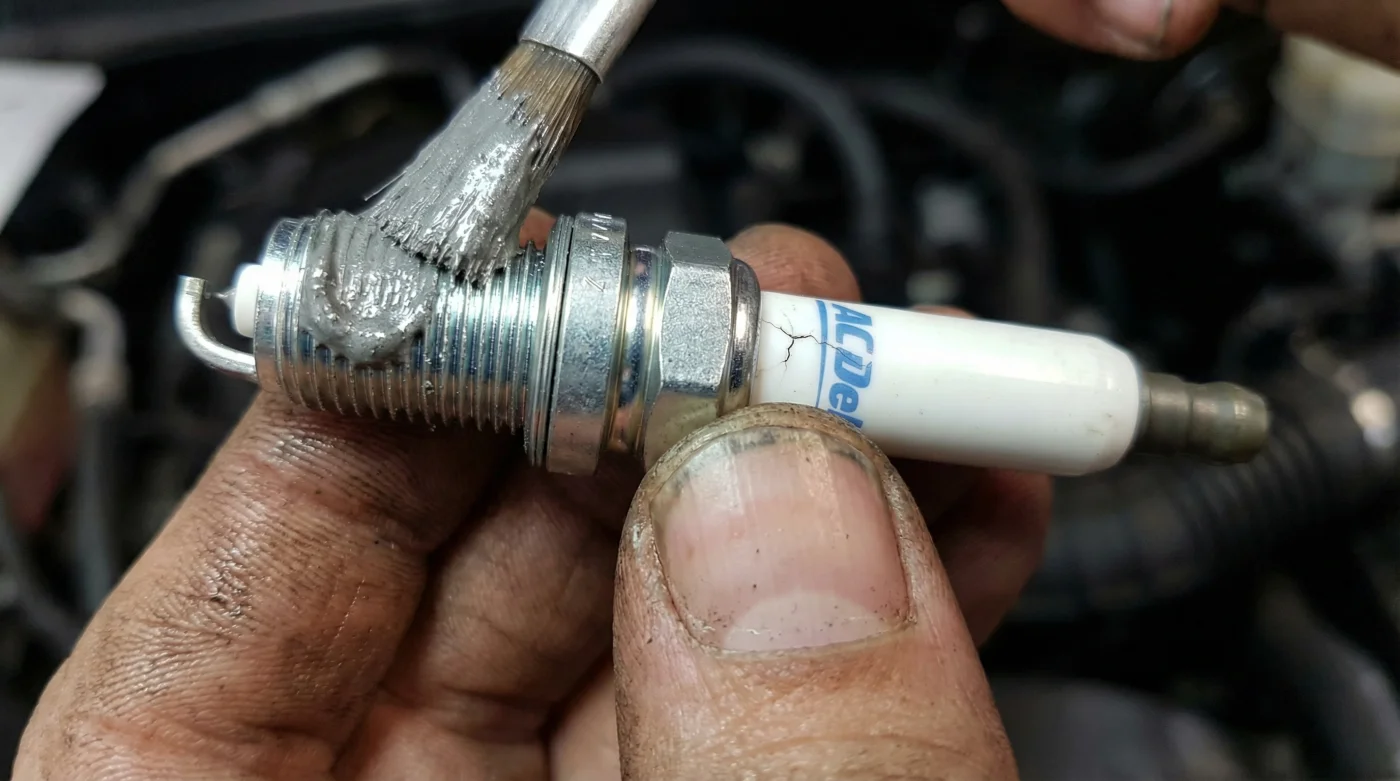
You know the exact smell of a weekend garage project. It is an intoxicating mix of heavy pumice hand cleaner, spilled engine coolant, and the sharp metallic tang of fresh parts straight from the cardboard box. You stand over the open hood of your car, holding a silver tube of anti-seize compound in one hand and a brand new ACDelco spark plug in the other. The common wisdom—passed down from driveway to driveway, from grandfather to grandson—says you should aggressively slather those new threads. The logic seems bulletproof: lubricate the metal now so the spark plugs never weld themselves to your expensive aluminum cylinder heads in the future. But as you thread that thickly coated plug into the engine block and listen for the satisfying click of your torque wrench, you might be actively destroying your engine’s heartbeat before you even turn the key.
The Myth of the Slippery Thread
For decades, coating automotive fasteners felt like an ultimate act of mechanical kindness. You were protecting the future version of yourself who would eventually have to unbolt them fifty thousand miles down the road. But installing a modern spark plug is no longer a wrestling match with raw iron. It is a delicate, calculated dialogue with the metal. When you introduce a heavy liquid lubricant to a specialized component like an ACDelco factory plug, you completely corrupt that conversation.
Think of the threaded hole in your cylinder head not as a rusty farm gate, but as a precisely calibrated braking system. The factory torque specification printed in your repair manual assumes a very specific, highly predictable level of friction between the bare plug and the engine head. When you slather on copper or graphite paste, you eradicate that natural friction. The result is silent but devastating. Your torque wrench keeps turning long after it should have clicked. The metal stretches, the internal pressure compounds, and eventually, the fragile porcelain insulator surrounding the central electrode simply cracks under the invisible strain. You are left with an immediate misfire, a flashing check engine light, and a ruined afternoon.
| Target Audience | Specific Longevity Benefits of a Dry Install |
|---|---|
| The Weekend DIY Mechanic | Eliminates the frustration of snapped threads and premature, unexplainable engine misfires after a tune-up. |
| The High-Mileage Commuter | Ensures optimal heat transfer from the combustion chamber to the cooling jacket, preventing pre-ignition. |
| The Second-Hand Car Buyer | Preserves the structural integrity of the cylinder heads, preventing costly machine shop repairs down the road. |
I learned this difficult lesson while leaning over a scratched steel workbench with an old master diagnostic technician named Ray. His shop always smelled of burnt oil and stale black coffee. Ray held up a freshly fractured ACDelco plug that had lasted less than twenty miles before a violent misfire brought the owner’s truck limping back to the service bay. He held the ruined part under the humming fluorescent light, pointing directly to the shiny, silver-toned threads.
As he explained, modern ACDelco factory replacement plugs are already equipped with their own microscopic armor. They feature a highly specialized zinc coating applied at the factory. This distinctive plating acts as its own dry lubricant during installation and serves as a sacrificial anti-corrosion barrier over the lifespan of the part. Adding a standard anti-seize compound on top of this factory engineering is like wearing a heavy raincoat while swimming—it completely ruins the intended design and guarantees failure.
| Mechanical Condition | Friction Coefficient | Resulting Applied Torque (at 15 lb-ft setting) |
|---|---|---|
| Dry Zinc-Coated Thread (Factory Spec) | Standard (1.0x baseline) | Exactly 15 lb-ft (Perfect ceramic safety) |
| Light Oil Lubrication | Reduced by ~15% | Effectively 17.5 lb-ft (High risk of metal stretch) |
| Standard Anti-Seize Paste | Reduced by ~30% | Effectively 19.5+ lb-ft (Guaranteed insulator fracture) |
The Dry Install Discipline
Changing deeply ingrained garage habits requires a conscious, physical reset. The next time you prepare for a tune-up, you must actively ignore the advice of the past. When you open that tiny protective cardboard box, resist the urge to reach for the silver paste. Leave it in the toolbox. Instead, begin the installation process using nothing but your bare fingers. Spin the plug gently down into the aluminum cylinder head.
- Chevron Techron fuel treatments rapidly dissolve aging silicone fuel injector seals.
- Dealership ceramic paint coatings legally void factory exterior clear coat warranties.
- UV flashlights instantly expose hidden flood damage beneath washed engine bays.
- Tesla Model Y inventory price cuts immediately nullify used market valuations.
- Toyota Camry LE base trims secretly include premium acoustic glass upgrades.
Set your torque wrench exactly to the manufacturer’s strict specification. Because the factory zinc coating is doing its job perfectly, the wrench will give you an honest, mathematical reading. You will feel that satisfying, solid click right when the crush washer flattens flawlessly against the aluminum head. There will be no invisible thread stretching, no cracked porcelain ceramics, and absolutely no immediate ignition failures when you finally start the engine.
| Quality Inspection Phase | What To Look For (The Gold Standard) | What To Avoid (Red Flags) |
|---|---|---|
| Out-of-the-Box Check | A dull, silver-toned zinc finish on the threads with an unblemished white ceramic insulator. | Shiny, oily residue or microscopic hairline fractures in the porcelain near the metal hex nut. |
| Cylinder Head Prep | Clean, dry aluminum threads free of carbon scoring or leftover paste from previous tune-ups. | Pooling oil at the bottom of the spark plug tube or thick, caked-on graphite paste. |
| Final Seating | A firm, definitive stop when hand-tightening, followed by a crisp click from the torque wrench. | A mushy, continuous turning sensation that never seems to reach maximum tightness. |
Beyond the Firing Order
Stepping back from the fender and wiping your dry hands on a shop towel, you realize something profound about vehicle longevity. True mechanical reliability is very often about knowing exactly when to do less. As humans, we are heavily conditioned to add, to intervene, and to over-engineer our surroundings in the name of protection. We want to care for our machines by smothering them in preventative measures.
But trusting the dry install is a valuable lesson in trusting the tools and the engineering directly in front of you. When you step back and let the specialized zinc coating work exactly as the designers intended, you remove the artificial barriers between the parts. Your engine literally breathes easier. It idles with a smooth, rhythmic, and predictable hum that only comes from perfect, unhindered combustion. That steady idle is the sound of modern engineering functioning flawlessly, free from the heavy-handed mistakes of the past.
True mechanical sympathy is not about aggressively greasing every moving part; it is about understanding the specific, quiet language of the engineered metal in front of you.
Frequently Asked Questions
Does this zero-lubricant rule apply to all spark plug brands on the market?
While many modern premium plugs feature specialized plating, this dry-install discipline is absolutely critical for ACDelco zinc-coated plugs to prevent sudden ceramic fracture during tightening.What if my car’s aluminum cylinder heads are incredibly old and heavily oxidized?
Clean the internal engine threads carefully with a specialized thread chaser—not an aggressive cutting tap—to safely clear out carbon deposits without ever needing liquid lubricants.How do I know if I have already accidentally over-torqued my coated plugs?
A sudden, completely unexplained misfire shortly after performing a routine tune-up, accompanied by a notably rough idle and a check engine light, is the classic symptom of a cracked porcelain insulator.Can I just use significantly less torque if I still strongly prefer to use anti-seize paste?
Engineering and service manuals strictly advise against guessing torque reductions. Dry installation remains the only mathematically sound and factory-approved method for these specific coated components.Will these totally dry plugs eventually get hopelessly stuck in my engine block later?
No. The factory zinc plating is specifically formulated on a chemical level to sacrifice itself in order to prevent galvanic corrosion, ensuring the plugs will back out smoothly even years down the line.