You are standing on a sun-baked dealership lot in the middle of July. The heat radiating off the asphalt warms the soles of your shoes as you stare at the window sticker of a fully-loaded Ford Bronco Outer Banks. Your eyes drag down to the final MSRP, a number heavy enough to make your stomach drop. Beside you, the salesperson casually taps the tinted glass, talking up the superior, premium ride quality that comes with the higher tier. You nod, feeling the pressure to spend an extra eight thousand dollars just to ensure your spine survives the weekend trails. But what if the bones of the machine you actually need are sitting quietly three rows back, wearing a far more modest badge?
The Skeleton Beneath the Sheet Metal
We are conditioned to believe that crossing a certain price threshold magically transforms the physics of a vehicle. You assume the luxury trim shields you from the harsh realities of potholes, rutted dirt roads, and jagged gravel. It is easy to think the manufacturer builds an entirely different architecture for the buyers willing to empty their wallets. But automotive manufacturing operates on the gravity of the assembly line, not the romance of bespoke tailoring.
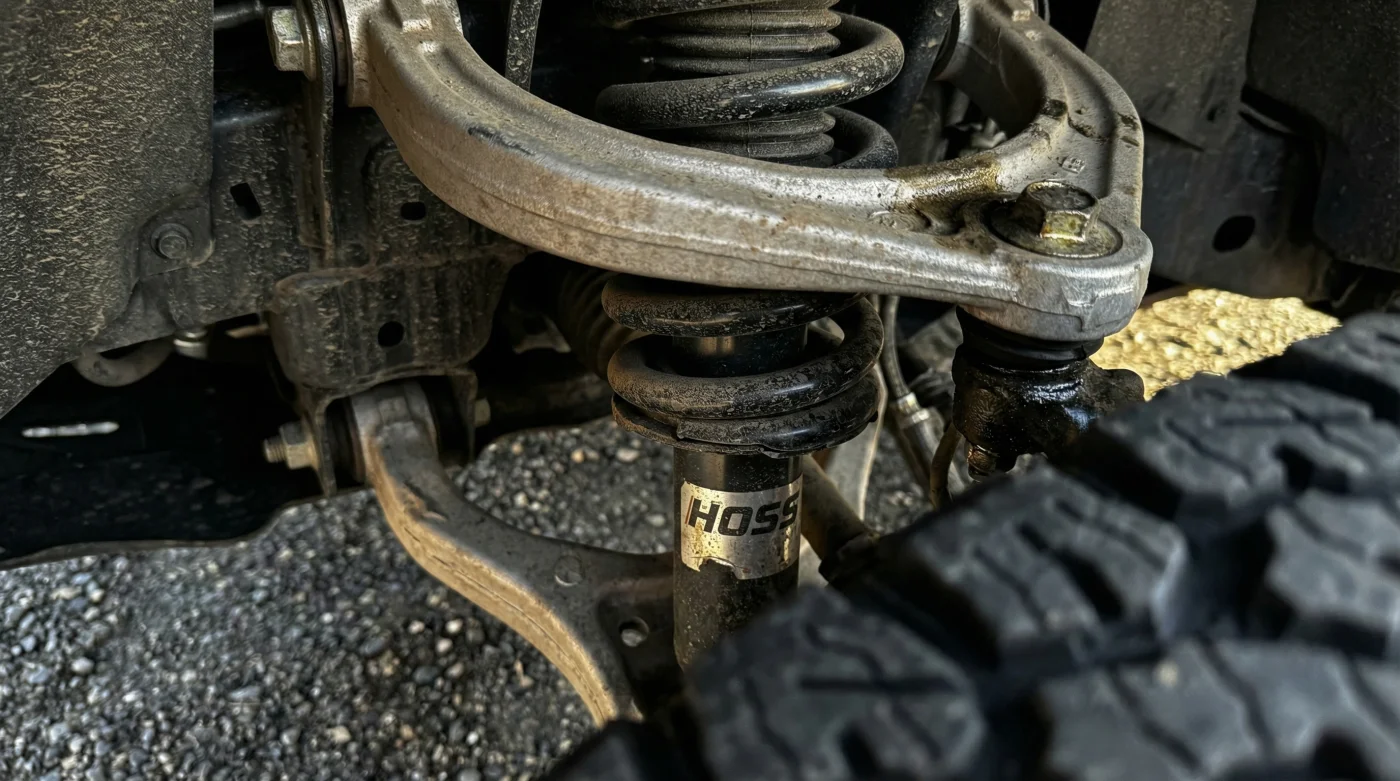
“It is all the same dirt, and the tires hit it exactly the same way,” says David, an independent suspension specialist who has spent decades tearing down four-wheel-drive trucks in his Arizona garage. One afternoon, while standing beneath a hoisted Bronco Big Bend, he points an oil-stained flashlight at the front control arms. He explains that if you strip away the leather-trimmed steering wheel, the ambient interior lighting, and the polished exterior accents, you are looking at the exact same suspension geometry found on the expensive mid-tier trims. The industry wants you to pay for the illusion of exclusivity, but the actual mechanical truth is bolted right in front of you.
| Target Audience | Specific Benefit of the Big Bend |
|---|---|
| The Pragmatic Commuter | Saves thousands on MSRP while retaining premium road manners and comfort. |
| The Weekend Trail Seeker | Gains identical HOSS 1.0 articulation without paying for delicate luxury trims. |
| The Blank Slate Customizer | Keeps initial costs low, preserving budget for aftermarket armor and tires. |
The Secret Language of HOSS 1.0
The foundation of this shared capability is Ford’s High-Performance Off-Road Stability Suspension, or HOSS 1.0. When you opt for the Big Bend, you are not getting a stripped-down, hollowed-out compromise. You are buying the exact same Hitachi twin-tube shocks, the identical independent front suspension architecture, and the same solid rear axle design that supports the Outer Banks. It breathes over the road with the same controlled confidence.
| Component | Big Bend (Base/Mid) | Outer Banks (Luxury) |
|---|---|---|
| Front Shocks | Hitachi Twin-Tube | Hitachi Twin-Tube |
| Rear Axle | Dana 44 AdvanTEK | Dana 44 AdvanTEK |
| Front Suspension | Independent MacPherson | Independent MacPherson |
| Stabilizer Bar | Standard Solid | Standard Solid |
Reading the Iron with Your Own Hands
You do not need a mechanic’s certification to verify this reality. Walk up to a Big Bend model and physically kneel beside the front tire. Run your hand behind the rubber and feel the thick, stamped steel of the lower control arms. This is not a fragile placeholder waiting to be upgraded; it is a heavy-duty anchor point designed to absorb serious impact.
Now, walk over to the luxury trim and repeat the process. The texture of the metal, the routing of the brake lines, and the positioning of the coil springs are carbon copies. When you sit in the driver’s seat and take the wheel, close your eyes and focus purely on how the chassis reacts to the pavement.
- Hyundai EVs face sudden federal recalls over spontaneous Level 2 charging fires.
- Royal Purple synthetic oil exposes wider bearing clearances inside remanufactured engine blocks.
- ACDelco spark plugs fail instantly when installed using standard anti-seize compounds.
- Ford Bronco Sport buyers overpay for Badlands ignoring identical base powertrains.
- Honda EarthDreams engines actively dilute factory motor oil with unburned winter gasoline.
| What to Look For (The Quality Checklist) | What to Avoid (The Upsell Traps) |
|---|---|
| Standard Hitachi shocks visible in the wheel well. | Paying a premium for upgraded ride pitches on non-Sasquatch trims. |
| Standard 32-inch all-terrain tires providing ample sidewall cushion. | Low-profile luxury wheels that actually degrade ride comfort over bumps. |
| Durable cloth seating that handles dirt and heat effortlessly. | Expensive appearance packages if your primary goal is trail durability. |
The Peace of Mind in Paying Less
There is a quiet, lasting satisfaction that comes from knowing exactly what you are driving. By choosing the Big Bend, you are keeping thousands of dollars in your bank account without sacrificing a single degree of structural integrity or ride quality. You realize that true capability does not require a luxury tax.
Every time you steer over a broken city street or a rocky trail, you can smile at the suspension working flawlessly beneath you. You beat the system by understanding the hardware. That knowledge transforms your daily commute from a simple drive into a victory lap.
“The smartest buyers do not pay for the badge; they pay for the bolts, and the bolts on the Big Bend are as tough as they come.” — David, Suspension Specialist
Essential Bronco Suspension Answers
Does the Big Bend ride rougher than the Outer Banks?
No. Both trims use the exact same HOSS 1.0 suspension components, meaning the ride quality over bumps and trails is mechanically identical.Are the shocks different on the luxury trims?
Unless equipped with the Sasquatch package, both the Big Bend and Outer Banks utilize the identical Hitachi twin-tube shock absorbers.Will I lose off-road capability by choosing the cheaper model?
You retain the exact same articulation, ground clearance geometry, and chassis strength as the non-Sasquatch premium trims.Why do dealers claim the higher trims drive better?
Dealerships often conflate interior quietness, seat comfort, or tire variations with actual suspension performance to justify higher price tags.Can I upgrade the Big Bend suspension later?
Absolutely. Because the mounting points and geometry are identical, aftermarket upgrades bolt on just as easily to a Big Bend as they do to any other trim.