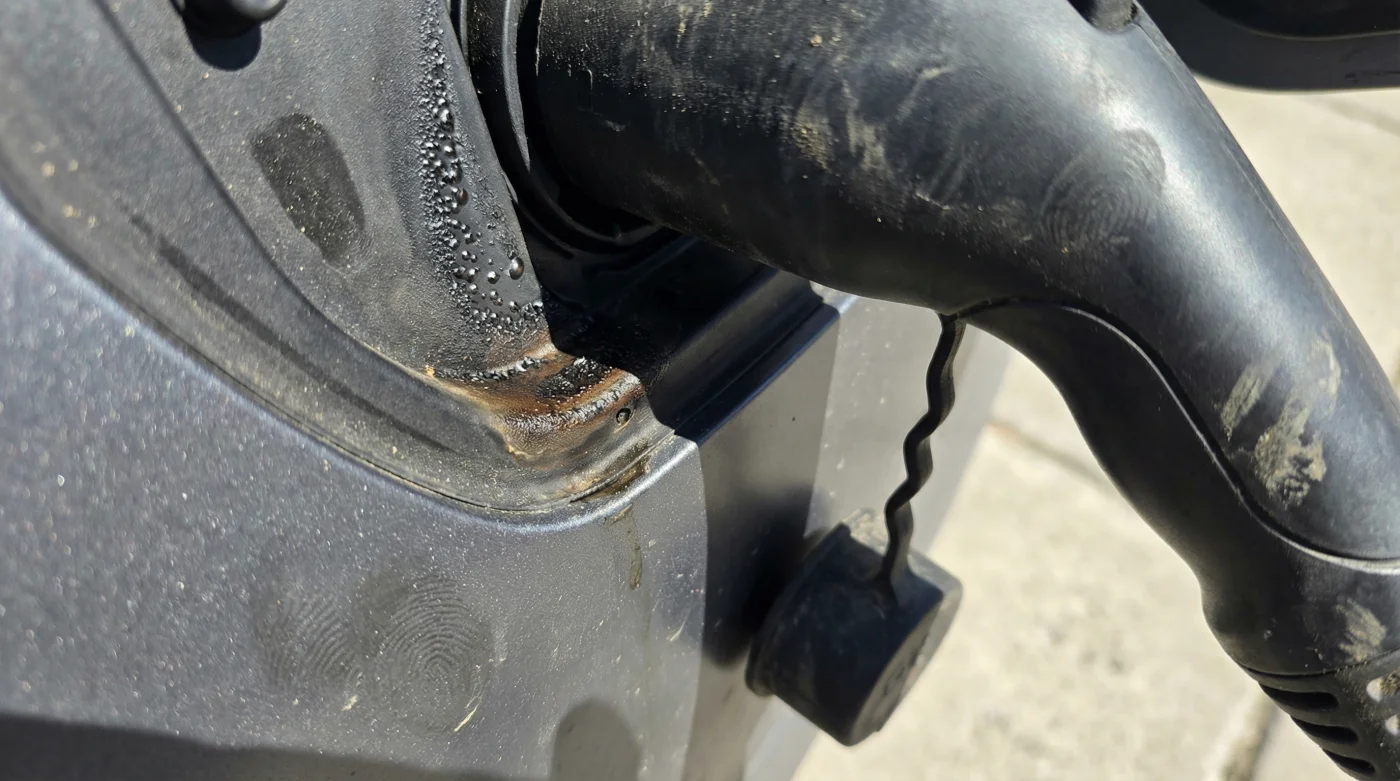
You step into the dim light of your garage on a quiet Tuesday night. The familiar routine takes hold: you grab the thick, heavy cord of your home wall-box, align it with the port on your Hyundai Ioniq, and push until you hear that satisfying, solid click. You walk back into the house expecting to wake up to a full battery and another week of silent, emission-free commuting. But lately, for a growing number of drivers, that morning peace is broken by a dashboard warning light or, far more alarmingly, the faint, acrid scent of scorched plastic clinging to the garage air.
We have settled into a comfortable assumption that modern electric vehicle hardware is completely stabilized. We treat charging like plugging in a refrigerator or a toaster—a mindless transfer of energy. However, the sudden federal recall mandated by the National Highway Traffic Safety Administration (NHTSA) targeting Hyundai’s high-volume EV lineup serves as a stark wake-up call. The reality is that pushing massive amounts of electrical current into a battery is a physical, demanding process, and the hardware managing that flow is currently under immense strain.
The Bottleneck in the Dam
To understand what is happening in your driveway, you have to rethink how energy moves. Pumping high-amperage electricity into a vehicle is less like filling a bucket with a garden hose and more like managing the spillway of a high-pressure dam. If the friction at the gates becomes too intense, the surrounding structure takes the damage. In this case, the gates are the metal pins inside your car’s charging port.
I spent an afternoon with Marcus, a high-voltage systems mechanic based out of Phoenix, where ambient heat regularly pushes automotive engineering to its absolute breaking point. He laid a scarred, deformed charging assembly onto his metal workbench. ‘People assume the danger with EVs is always the battery pack,’ he told me, running a calloused thumb over the warped plastic housing. ‘But it is almost never the battery anymore. It is the handshake. The car asks the wall for 48 amps of continuous current for eight straight hours. As the port ages or gets dirty, resistance builds. Instead of the vehicle recognizing that resistance and gracefully backing off the intake, the localized temperature spikes, and the plastic literally begins to melt around the connection.’
| Driver Profile | Immediate Impact & Necessary Action |
|---|---|
| The Daily Commuter (Overnight 100% Charging) | High risk. You must actively monitor your charging limits via the vehicle app and schedule the dealer software update immediately to prevent overnight thermal events. |
| The Road Tripper (Frequent DC Fast Charging) | Moderate risk. While DC fast chargers use different lower pins, the upper communication pins still endure heat. Inspect your port housing visually before every long trip. |
| The Home Charging Enthusiast (Hardwired 48A Wall Box) | Highest risk. The continuous, maximum current stresses the hardware most. Manually step down your wall box output to 32 amps until the port is cleared by a technician. |
The Science of the Overheating Port
The core of the NHTSA mandate revolves around a failure in communication between the physical hardware and the vehicle’s software. When you plug in a Level 2 AC charger, the vehicle is supposed to monitor the temperature at the connection point. If the temperature rises past a safe threshold due to worn pins or a heavy electrical load, the vehicle’s control unit should automatically throttle the current down to a safer trickle. In the affected Hyundai models, this thermal management logic is either triggering too late or failing entirely, allowing the connection to cook itself.
| Thermal Variable | Technical Detail & Mechanical Logic |
|---|---|
| Normal Operating Temperature | 70 to 100 Degrees Fahrenheit at the port terminal. |
| Thermal Failure Threshold | Temperatures exceeding 200 Degrees Fahrenheit, causing localized plastic deformation. |
| Core Vulnerability | The Vehicle Control Unit (VCU) software failing to reduce amperage when terminal resistance spikes. |
| Component at Highest Risk | The J1772 AC receiving pins and the surrounding polymer housing on the vehicle side. |
Grounding the Currents
You do not need to park your car down the street out of fear, nor should you regret your jump into electric mobility. But you do need to change how you interact with your vehicle until the recall service is fully completed. Think of your evening charging routine as a mindful physical check-in, rather than a chore to rush through.
Start by manually inspecting the pins inside your vehicle’s charge port with a small, bright flashlight. You are looking for a clean, uniform appearance. If you spot any discoloration on the metal or notice that the plastic surrounding the pins looks shiny, warped, or pitted, stop charging at home immediately and contact your dealer.
If your port looks healthy, your next step is a software intervention. Open your Hyundai mobile app tonight. Navigate to the EV settings menu and reduce the maximum charging current. Changing the setting from ‘Maximum’ to ‘Reduced’ or ‘Minimum’ is the single most effective way to protect your car tonight.
Lowering the amperage will undeniably stretch out your charging time. A session that used to take six hours might now take nine. But this small sacrifice in speed drastically lowers the thermal stress on the port hardware. In the world of high-voltage electricity, a cooler, slower charge is a fundamentally safer charge.
| What to Look For (Signs of Health) | What to Avoid (Warning Signs) |
|---|---|
| Clean, silver-colored metal contact pins. | Blackened, scorched, or copper-tinted pin tips. |
| Smooth, matte plastic housing inside the port. | Melted, glossy, blistered, or deformed plastic rings. |
| A firm, secure click when inserting the handle. | A handle that wiggles loosely or feels gritty when pushed in. |
| A charging cable handle that remains cool to the touch. | A charging handle that becomes uncomfortably hot to hold after an hour. |
Growing Pains on the Quiet Road
- Hyundai EVs face sudden federal recalls over spontaneous Level 2 charging fires.
- Royal Purple synthetic oil exposes wider bearing clearances inside remanufactured engine blocks.
- ACDelco spark plugs fail instantly when installed using standard anti-seize compounds.
- Ford Bronco Sport buyers overpay for Badlands ignoring identical base powertrains.
- Honda EarthDreams engines actively dilute factory motor oil with unburned winter gasoline.
The transition away from internal combustion is not a magic trick; it is an ongoing, physical evolution of infrastructure and engineering. By understanding the heat, the resistance, and the sheer volume of current flowing through the cable in your hand, you stop being a passive consumer. You become an active, informed participant in a generational shift in how we move across the country. Keep a watchful eye on your hardware, schedule your software update, and rest easy knowing that the road ahead is still very much yours to drive.
The true measure of automotive engineering isn’t found when everything runs perfectly, but in how swiftly and safely a system adapts when the physical limits are breached.
Frequently Asked Questions
Is my Hyundai Ioniq safe to drive while waiting for the recall fix?
Yes, the vehicle is completely safe to drive. The thermal risk is isolated to the charging port during sustained Level 2 AC charging sessions, not while the vehicle is in motion.
Should I stop using public charging stations entirely?
No. Public DC fast chargers use the two large lower pins on your CCS port and are unaffected by this specific Level 2 AC overheating issue. You can use them safely.
How exactly does the dealership fix this overheating issue?
The dealership will perform a software update to your Vehicle Control Unit. This update forces the car to aggressively monitor port temperatures and automatically lower the charging speed if heat builds up, preventing melting.
What if my charging port is already melted or damaged?
If a visual inspection reveals melted plastic or scorched pins, do not attempt to charge the vehicle. The dealership will replace the entire charging port assembly free of charge under the recall mandate.
Can my home wall charger be the cause of the problem?
While a faulty or dirty wall charger handle can increase resistance and worsen the heat, the root cause identified by the NHTSA is the vehicle’s failure to properly manage and throttle the incoming electrical load when that heat occurs.