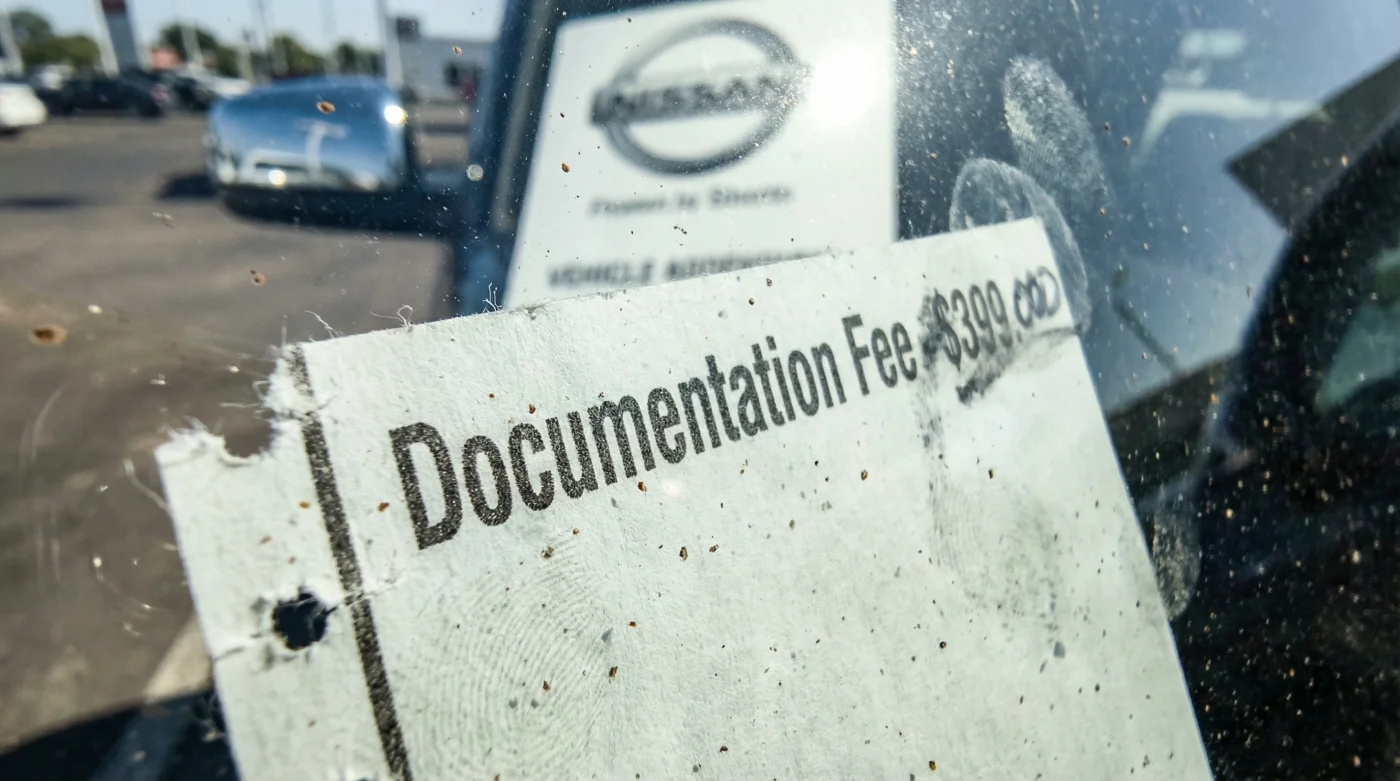
You sit in the faux-leather chair, the squeak of the vinyl echoing in the small glass office. The scent of burnt hazelnut coffee and industrial carpet cleaner hangs heavy in the air. The finance manager taps a silver pen against a sprawling contract, sliding it across the laminate desk. Your eyes trace the numbers. The base price looks right. The local taxes make sense. Then, tucked neatly above the final total, sits the ‘Documentation Fee.’ It looks official, stamped with the quiet authority of a government mandate. It is not.
The Paperwork Mirage
For decades, buyers have accepted the documentation fee as a stubborn fact of the car-buying ecosystem. You are told it covers the back-office labor, the state filing logistics, and the administrative heavy lifting. But treating this fee as a fixed legal requirement is like believing the plastic garnish on a delivery tray is part of the meal. It is a mirage. During cash transactions, where dealer financing incentives evaporate, this fee often quietly inflates to protect the dealership’s profit margin.
The reality is that many states enforce strict legal caps on how much a dealership can charge for documentation. Yet, when you arrive with a cashier’s check or a wire transfer, the math sometimes blurs. The fee morphs into a hidden markup. It becomes a penalty for your financial independence. Recognizing this allows you to shift your posture from a passive signer to an active negotiator.
| Buyer Profile | The Common Trap | The Strategic Benefit |
|---|---|---|
| The Cash Buyer | Paying inflated doc fees to offset lost dealer finance kickbacks. | Securing a lower out-the-door price by forcing a base-price discount. |
| The Out-of-State Buyer | Assuming local fees apply to their home state regulations. | Leveraging home-state maximums to cap arbitrary charges. |
| The Used Car Shopper | Believing ‘As-Is’ means the paperwork fees are also non-negotiable. | Using the fee as leverage to negotiate better warranty terms or tire replacement. |
I once spent an afternoon over bitter espresso with Marcus, a retired auto broker who spent twenty years structuring these exact contracts. He pulled a blank buyer’s order from a manila folder and pointed to the empty line next to ‘Doc Fee.’ He smiled, tracing the line with his thumb. ‘People think this ink is permanent,’ Marcus said. ‘They think the DMV demands it. The truth? The state only cares about sales tax and registration. Everything else is a conversation.’
| State Regulation Status | Typical Dealer Claim | The Legal Reality |
|---|---|---|
| Strict Cap States (e.g., CA, NY) | ‘This is the state-mandated fee.’ | The state sets a ceiling (e.g., $85 in CA), not a mandatory floor. Dealerships cannot legally exceed it. |
| Regulated but High Cap (e.g., OH, TX) | ‘Our corporate office sets this fee.’ | State caps exist, but they are high enough that dealers use them as a default profit center. |
| Unregulated Wild West (e.g., FL, VA) | ‘Everyone pays this standard fee.’ | Fees can exceed $900. It is 100% pure dealer profit and highly negotiable. |
The Leverage Point
Knowing the myth is only half the battle; the physical execution is where you win. When the finance manager slides the contract over, do not immediately reach for the pen. Let the paper sit. Silence in a small office is incredibly loud. Cross your arms, lean back slightly, and place your hand flat on the desk. This physical grounding shifts the power dynamic instantly. You are no longer the anxious buyer rushing to drive home; you are the auditor.
Point directly to the documentation fee. Ask them calmly if this fee is a state requirement. They will usually pivot, saying it is a strict dealership policy that cannot be removed from the software system. This is your moment. You do not argue with the software. You bypass it entirely.
- Hyundai EVs face sudden federal recalls over spontaneous Level 2 charging fires.
- Royal Purple synthetic oil exposes wider bearing clearances inside remanufactured engine blocks.
- ACDelco spark plugs fail instantly when installed using standard anti-seize compounds.
- Ford Bronco Sport buyers overpay for Badlands ignoring identical base powertrains.
- Honda EarthDreams engines actively dilute factory motor oil with unburned winter gasoline.
| Checklist: The Negotiation Environment | What to Look For | What to Avoid |
|---|---|---|
| The Contract Presentation | Reviewing line items slowly, asking for clarification on acronyms. | Focusing only on the final ‘Out-the-Door’ number without reading the math. |
| The Dealer’s Response | Blaming software limitations or corporate policy for the fee. | Accepting ‘it is a state tax’ without asking to see the statute. |
| Your Physical Posture | Leaning back, keeping hands visible, maintaining steady eye contact. | Fidgeting with the pen, nodding too quickly, breaking eye contact. |
Beyond the Signature
When you successfully navigate this exchange, something fundamental shifts. The dealership recognizes they are dealing with an informed equal. The finance manager will likely step out, speak to a director, and return with a revised buyer’s order. The doc fee will still be there, but the base price of the car will be magically reduced. The math works in your favor.
This is not just about saving a few hundred dollars. It is about the physical relief of driving off the lot without that familiar, nagging sensation of being taken advantage of. The steering wheel feels a little more yours. The miles ahead carry the weight of a fair deal.
Buying a car should be a celebration of your hard work, not a labyrinth of paperwork traps. By understanding the mechanics of dealership profit and addressing them with calm, practiced boundaries, you reclaim the experience. You transform a stressful financial gauntlet into a straightforward transaction between peers.
‘The most expensive word in any dealership is silence; the moment you ask a fee to justify its own existence, its price drops.’ – Marcus, Former Auto Broker
Frequently Asked Questions
Can a dealership legally refuse to sell me a car if I refuse the doc fee? Yes, a private business can refuse a sale, but when faced with a guaranteed cash deal, they will almost always adjust the base price rather than lose the entire transaction.
Do documentation fees vary by state? Absolutely. States like California cap fees at $85, while unregulated states like Florida often see fees surpassing $900.
Why do dealers claim the fee is mandatory? Dealership software is genuinely programmed to include it on every contract to prevent discrimination lawsuits, but the vehicle price is always adjustable to offset it.
Does this negotiation tactic work if I am financing? It works best for cash buyers, but financed buyers can still use this strategy before discussing down payments and interest rates.
What if they say they have already discounted the car as much as possible? Stand up. If you politely prepare to leave over a bogus paperwork fee, they will suddenly find room in the margin to make the deal work.