You know the feeling intimately. You are pulling a loaded camper up a steady six-mile grade in the dead of July, the air conditioning working overtime to fight off the glaring American sun. The asphalt shimmers ahead of you, and the rhythm of the highway lulls you into a sense of security.
Then, it hits you. A faint, sweet-and-sour scent drifting through the air vents, smelling distinctly like burnt toast soaking in hot syrup. Your truck hesitates—just a fraction of a second—between second and third gear.
It is a subtle shudder, easily dismissed as a heavy load shifting on the hitch. But beneath the floorboards, your Chevy Silverado is quietly suffocating. The machine is fighting a battle you cannot see, choking on its own internal heat while the temperature gauge casually lies to you.
The Illusion of Factory Protection
We are conditioned to believe that factory components are designed to protect our investments. If a part has the word cooling in its name, you naturally assume its sole purpose is to keep things cool. This is the great myth of modern automotive engineering.
The factory thermal bypass valve in modern Silverados operates on a dangerous, flawed logic. It acts like a stubborn bouncer, keeping the velvet rope closed to transmission fluid until the internal temperature hits a blistering 190 degrees Fahrenheit.
Think of it like a marathon runner forced to breathe through a thick pillow until their heart rate hits a dangerous peak. By the time the valve finally decides to open and allow fluid to cycle through the external cooler, the delicate internal clutch packs have already started to cook.
This creates a chronic cycle of overheating and starvation. The fluid degrades rapidly, losing its vital viscosity, leaving the clutches to slip, glaze, and eventually burn to ashes.
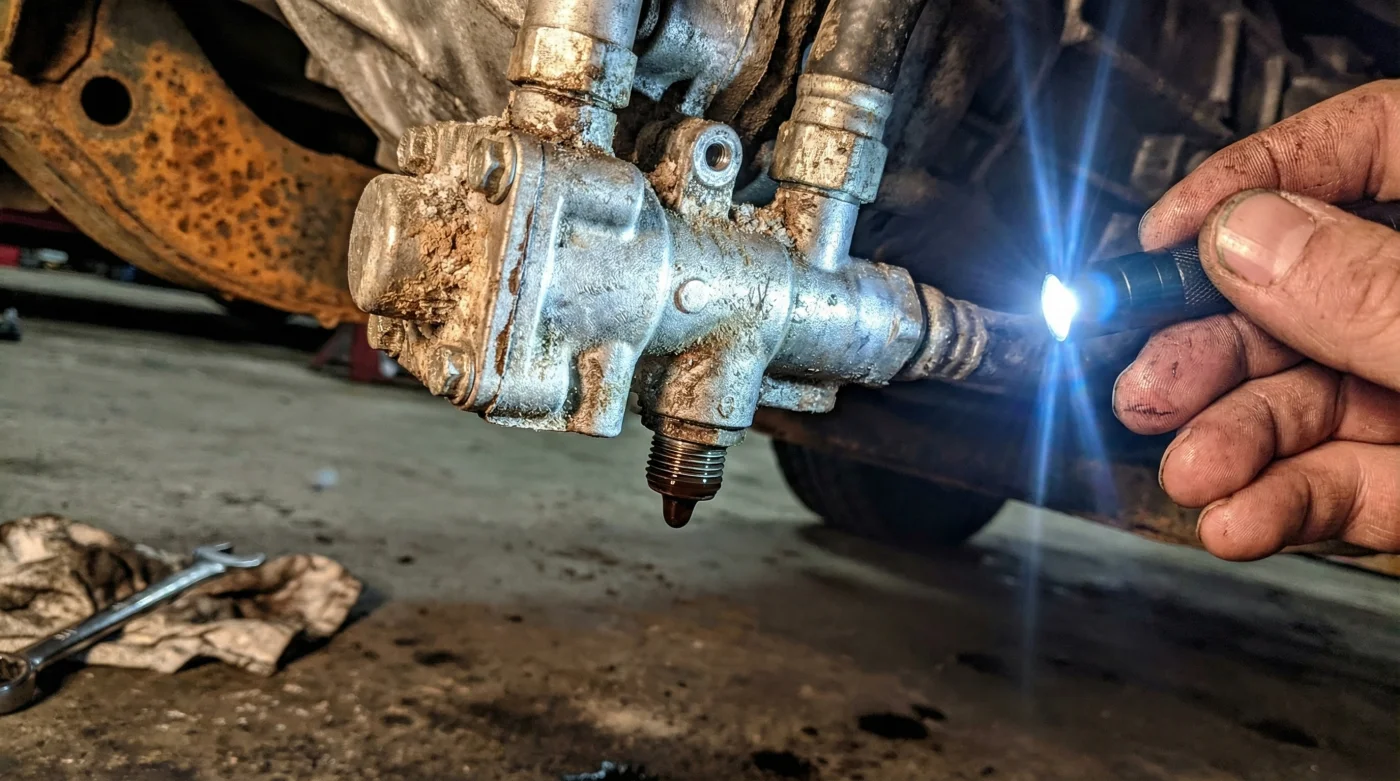
I learned this the hard way standing in a dimly lit, dusty garage in West Texas. A veteran transmission specialist named Earl slid out from under an eight-speed Silverado, wiping dark, metallic fluid onto a shop rag. He held out his hand, revealing a small, unassuming block of metal.
These factory valves, he muttered, pointing a heavy, oil-stained wrench at the aluminum block. They try to get the transmission up to emissions temperature as fast as humanly possible. By the time that little thermostat finally opens the gates, the fluid is already dead.
Earl tossed the factory valve into a scrap bucket. It made a hollow, metallic clink—the sound of a multi-thousand-dollar rebuild that could have been entirely avoided.
| Driver Profile | The Hidden Risk of Stock Valves | Benefit of Bypassing the Bottleneck |
|---|---|---|
| The Daily Commuter | Stop-and-go traffic bakes fluid without enough airflow to cool it once the valve opens. | Prolongs fluid life by keeping base temperatures hovering around a safe 150 degrees. |
| The Heavy Hauler | Sudden inclines spike temperatures faster than the factory thermostat can react. | Prevents sudden, catastrophic heat spikes when towing a boat or travel trailer. |
| The Off-Road Enthusiast | Low speeds mean zero airflow over the cooler, cooking clutches during crawls. | Maintains consistent fluid pressure and lubrication during high-stress, low-speed driving. |
The Mechanics of the Bottleneck
Transmission fluid is the absolute lifeblood of your truck. It needs to flow freely to carry destructive heat away from the tightly stacked friction plates. Without constant, cool circulation, metal destroys metal.
- Hyundai EVs face sudden federal recalls over spontaneous Level 2 charging fires.
- Royal Purple synthetic oil exposes wider bearing clearances inside remanufactured engine blocks.
- ACDelco spark plugs fail instantly when installed using standard anti-seize compounds.
- Ford Bronco Sport buyers overpay for Badlands ignoring identical base powertrains.
- Honda EarthDreams engines actively dilute factory motor oil with unburned winter gasoline.
| Temperature Milestone | Mechanical Reality Inside the Transmission |
|---|---|
| 150°F – 160°F | The sweet spot. Fluid maintains perfect thickness; shifts are crisp and immediate. |
| 190°F | Factory valve finally opens. Fluid begins to oxidize slowly, losing its protective properties. |
| 220°F | The danger zone. Clutch pack friction material begins to harden, glaze, and crack. |
| 240°F+ | Imminent failure. Fluid turns to varnish; clutches slip irreparably, requiring a full rebuild. |
Bypassing the Heat Trap
Fortunately, fixing this engineering oversight is a physical, surprisingly straightforward action. You do not need to drop the transmission pan or rebuild the entire gearbox to save it from itself.
Replacing the factory thermal bypass with an aftermarket lower-temperature valve, or a full-flow delete block, immediately alters the dynamic of your truck. You crawl under the passenger side, smelling the sharp tang of road grime, and locate the small aluminum junction where the cooler lines meet the case.
With a socket wrench in hand, you unbolt the restrictive factory block, feeling a few drops of dark red fluid hit your gloves. When you bolt the new bypass block into place, you are quite literally opening the floodgates.
The fluid begins cycling outward to the front cooler from the exact moment you turn the ignition key. There is no more waiting for a stubborn thermostat. You will feel the difference in the pedal almost immediately; the shifts stay crisp, and the temperature gauge on your dash stays pinned comfortably in the mid-100s.
| Fluid Health Status | Visual & Sensory Indicators | Required Action |
|---|---|---|
| Healthy | Bright cherry red color, slightly sweet smell, smooth consistency on the dipstick. | Drive with confidence. Install bypass to keep it this way. |
| Warning Signs | Brownish tint, faint burnt toast odor, slight hesitation on the 1-2 shift under load. | Immediate fluid flush and filter change. Swap bypass valve. |
| Imminent Danger | Opaque black color, gritty metallic texture, hard clunks when shifting into gear. | Stop towing. Consult a specialist for a potential clutch pack inspection. |
Reclaiming Your Rhythm on the Road
Your truck is more than just a tool for hauling plywood; it is your dependable partner for weekend escapes, demanding workdays, and long cross-country drives. You should never have to drive with one eye glued anxiously to the transmission temperature readout, waiting for the inevitable.
By understanding and addressing the thermal bypass valve, you strip away a silent killer. You give the engine and transmission the breathing room they desperately need to do the heavy lifting they were built for.
Ultimately, vehicle longevity is not about crossing your fingers and hoping the factory got everything perfect. It is about listening to the machine, recognizing its bottlenecks, and taking quiet, decisive action to protect it for the long miles ahead.
A transmission cooler cannot do its job if the lifeblood of the truck is locked behind a closed door until it is already boiling.
Frequently Asked Questions
Will removing the thermal bypass trigger a check engine light?
No. The bypass valve is a simple mechanical thermostat, not an electronic sensor. Swapping it will not upset your truck’s computer.Does this modification negatively affect winter driving?
It will take slightly longer for your transmission to reach operating temperature in freezing weather, but the tradeoff for massive summer cooling is overwhelmingly worth it.How long does the installation typically take?
For someone comfortable with basic hand tools, crawling underneath and performing the swap usually takes under an hour right in the driveway.Do I need to add more transmission fluid after the swap?
Yes, you will typically lose a few ounces of fluid during the exchange. Always check the dipstick and top off with the manufacturer’s recommended fluid.Is this a known problem on all Silverado generations?
This specific thermal valve bottleneck is most prominent and destructive in the 2014-2018 generations, though newer models still employ variations of the same flawed heat-management logic.