You slide into the minimalist cabin of your new Model Y. The scent of fresh synthetic leather and ozone greets you. You press the brake, shift into drive, and glide silently onto the asphalt. It feels like stepping into the future. But three months later, taking that familiar turn onto a cracked suburban road, you hear it. A faint, rhythmic squeak, followed by a hollow knock echoing from the front passenger wheel well. It feels like wearing a bespoke suit, only to realize the tailor used cheap thread on the seams.
The End-of-Quarter Recipe
Most of us hold onto a comforting automotive myth: if you buy a specific model year, the steel and aluminum beneath the floorboards match every other car on the road with the exact same badge. We assume a 2024 model is structurally identical to the 2024 model parked next to it. But modern manufacturing breathes to a completely different rhythm. Think of it like a chaotic restaurant kitchen at closing time. When the premium flour runs out, the baker reaches for the cheap stuff just to fill the final orders of the night.
Tesla operates on an aggressive, high-pressure quarterly delivery cycle. When the final weeks of March, June, September, or December approach, the factory speeds up to meet financial quotas. If the newer, upgraded forged suspension components are delayed on a cargo ship, the assembly line does not stop. To keep the belts moving, they reach into the parts bin and quietly bolt on older-generation stamped steel control arms. Your brand-new car leaves the factory carrying the structural ghosts of previous iterations.
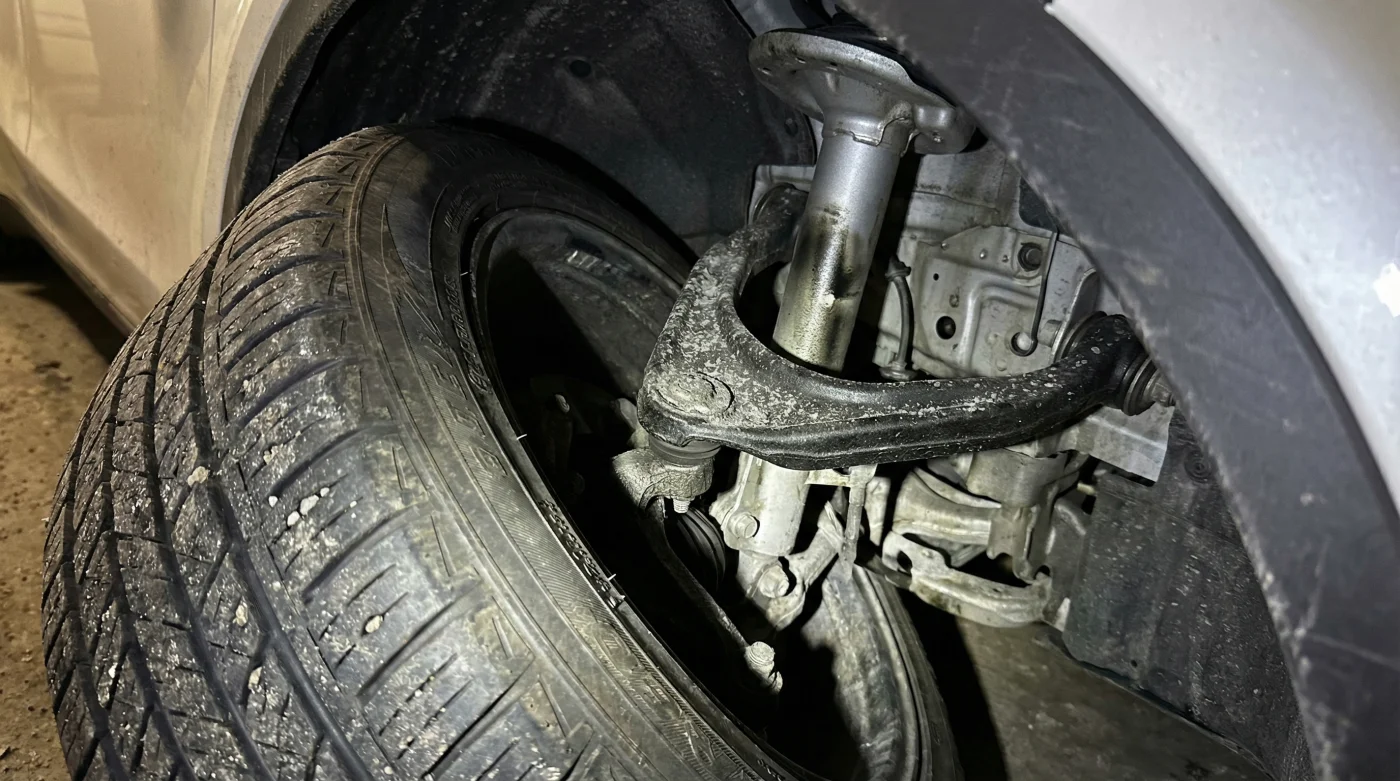
I first learned about this shadow-downgrade from Elias, an independent EV suspension specialist in Southern California. We were standing under a hydraulic lift, bathed in the hum of fluorescent lights. Pointing to the belly of a spotless white Model Y, he tapped a black metal wishbone with his wrench. ‘Built in late December,’ he said, wiping grease from his hands. ‘They ran out of the new cast aluminum arms, so they slapped on the old stamped steel ones. See this plastic ball joint cap? It breathes through a pillow, trapping road moisture until it squeaks like a rusted mattress.’ The car next to it, built just four weeks earlier, featured the robust, silver cast parts. They had identical price tags, but entirely different foundations.
| Buyer Profile | Delivery Timing | Specific Benefit of Vigilance |
|---|---|---|
| The Patient Planner | Middle of the quarter (Months 1 or 2) | Secures the latest hardware revisions with lower risk of parts-bin substitutions. |
| The Deal Hunter | End of quarter (Month 3) for inventory discounts | Gets a lower MSRP but must physically verify suspension to avoid legacy parts. |
| The Second-Hand Buyer | Used market | Can identify squeaking risks before buying and negotiate a lower price for replacements. |
The Physics of the Downgrade
To understand why this matters, you have to look at the mechanical burden placed on an electric vehicle. EVs are incredibly heavy. A Model Y carries roughly a thousand pounds of lithium-ion batteries in its floor. When you hit a pothole at fifty miles per hour, that immense kinetic energy travels directly upward into the front suspension. The upper control arm acts as the shoulders of the car, bearing the brunt of that violent force.
| Component Type | Material Specs | Mechanical Logic & Vulnerability |
|---|---|---|
| Legacy Stamped Steel (Gen 1) | Two pieces of sheet metal welded with a plastic cap. | Prone to moisture intrusion. Ball joint loses lubrication, leading to premature failure and loud squeaking. |
| Upgraded Cast/Forged (Gen 2) | Single piece of thick, silver aluminum/steel alloy. | Sealed ball joint resists water. Handles heavy EV cornering forces without flexing or degrading over time. |
Reading the Bones of Your EV
You do not need to be a seasoned mechanic to uncover what sits behind your wheels. You just need to know where to look and when to ask questions before accepting delivery. Taking delivery of a car should never be a blind leap of faith.
First, turn your steering wheel all the way to one side to expose the deep suspension cavity. Grab your phone flashlight and shine it directly above the front tire tread. You are looking for the upper control arm, the metal piece shaped like a wishbone connecting the wheel hub to the frame.
- Ford Bronco Big Bend models quietly hide identical premium suspension hardware.
- Toyota RAV4 LE buyers are overpaying for identical premium interior hardware
- Castrol Transmax ATF instantly strips internal clutch material inside older automatics.
- CRC Brake Cleaner sprayed inside Subaru PCV valves triggers engine blowouts.
- Toyota Tundra recalls mandate complete engine replacements over trapped machining debris.
Next, decode your VIN before signing the final paperwork. Pay close attention to the vehicle’s build date on the driver-side door jamb sticker. If your car was manufactured in the frantic final two weeks of March, June, September, or December, your risk of having downgraded parts doubles.
| What To Look For (Accept Delivery) | What To Avoid (Pause Delivery) |
|---|---|
| Thick, silver, one-piece cast upper control arms. | Thin, black painted steel with a visible plastic top cap. |
| Build dates in the first two months of a quarter. | Build dates in the final week of a financial quarter. |
| Silent steering articulation when turning lock-to-lock. | Groaning or creaking from the front end over speed bumps. |
The Gravity of the Drive
There is a unique peace of mind that comes from knowing exactly what carries you down the highway. A car is not just a rolling computer screen; it is a physical, heavy machine battling physics at sixty miles per hour. When you take control of the delivery process and inspect the metal beneath the paint, you shift from a passive consumer to an informed owner.
Refusing a car with downgraded hardware might feel incredibly uncomfortable in the moment. You might have to wait another few weeks for the right build to arrive. But every time you navigate a winding mountain road or glide over uneven pavement without a single rattle, you will remember exactly why you waited. You deserve a foundation that matches the promise of the future.
An electric vehicle’s silence is its greatest luxury, but that silence demands absolute structural integrity underneath.
Frequently Asked Questions
Can I force the service center to upgrade my legacy control arms?
If the older stamped steel arms are not currently failing, service centers will generally consider them ‘within spec’ and will not upgrade them for free. You must catch them before delivery or wait for a warranty claim if they fail.Does this parts lottery happen to the Model 3 as well?
Yes. Because the Model 3 and Model Y share a massive amount of under-the-skin architecture, end-of-quarter pushes affect both vehicles similarly.Are the older stamped steel arms dangerous?
They are not inherently dangerous when new, but they degrade much faster. The real issue is the frustrating squeak and the eventual cost of replacing them once your warranty expires.Can I buy aftermarket control arms to fix this?
Absolutely. Many owners opt for high-quality aftermarket forged arms once their warranty ends, which permanently solves the moisture intrusion issue.If I buy from inventory at a massive discount, is it worth the risk?
It can be. If you are saving thousands of dollars on an end-of-quarter inventory vehicle, that discount easily covers the future cost of replacing the control arms if they eventually start to squeak.