It happens on a Tuesday in late February. You pull into the driveway, the heater still fighting off the single-digit Fahrenheit chill, and turn the key. The engine settles into silence, leaving only the sound of melting slush dripping onto the concrete.
That slush carries the grit of the road—calcium chloride, sand, and brine. You walk inside feeling secure. After all, your Toyota Tacoma is clad in factory off-road armor. But down below, pressed tightly against the steel spine of your truck, that same armor is holding a wet, corrosive poultice directly against the frame.
The Armor That Eats the Castle
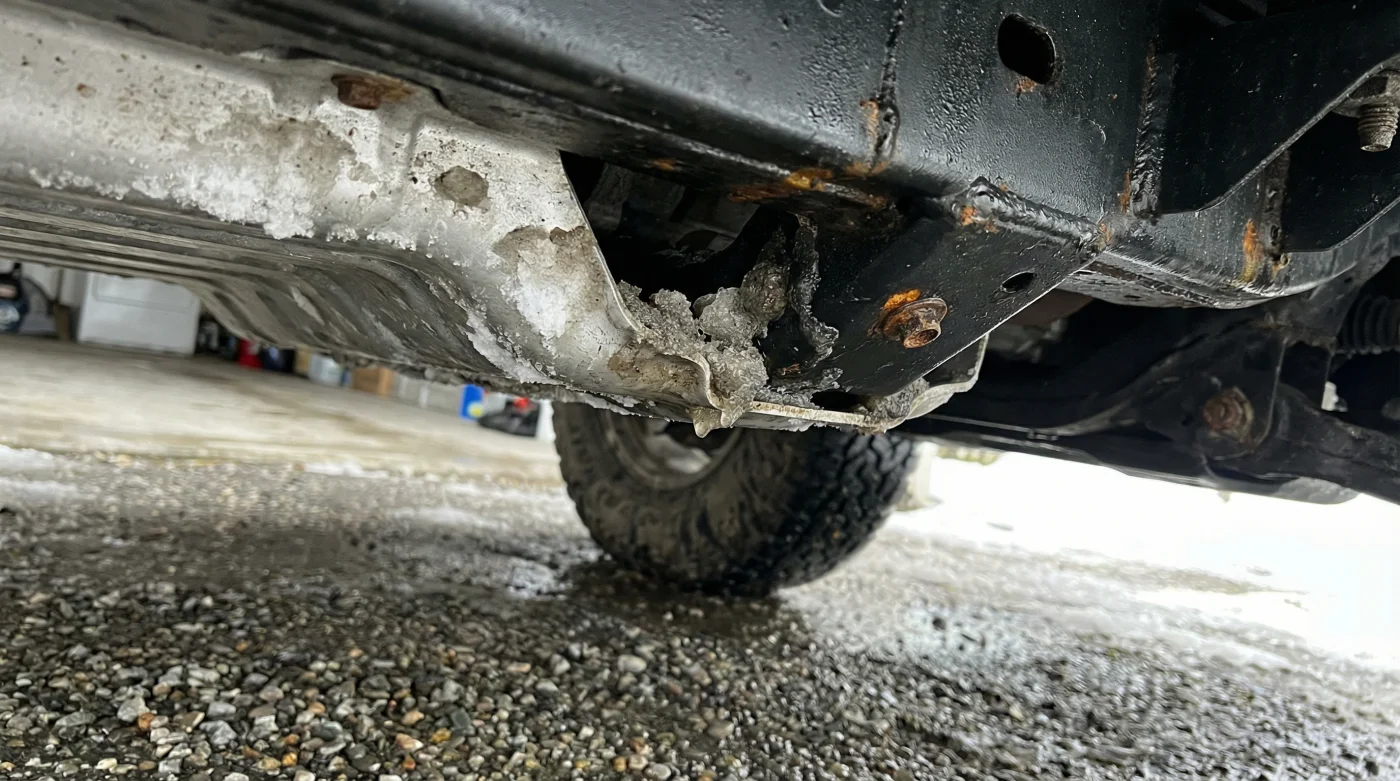
There is a comforting gravity to buying a truck with a heavy-duty TRD skid plate. It feels invincible, a thick layer of steel or aluminum standing between you and the jagged teeth of a rocky trail. But here lies the contradiction: the very shield designed to deflect boulders acts as a tight basin for winter road grime.
Think of it as wearing a heavy winter coat over a soaked shirt. The elements are kept out, but the moisture is trapped inside. The factory skid plates on modern Tacomas sit so close to the crossmembers that they choke off natural drainage. When road spray kicks up, salt and slush wedge into the microscopic gaps, resting lazily against the vulnerable black wax coating of the frame.
I learned this the hard way from a frame specialist in upstate New York named Arthur. His shop always smelled of hot sparks and rust penetrant. One afternoon, I watched him drop a factory skid plate off a four-year-old TRD Off-Road. Instead of a clean drop, it came down with a heavy, wet thud, dumping a solid ten pounds of packed, salty mud onto his boots. ‘People think these plates are armor,’ Arthur said, wiping grease from his forehead. ‘But in the salt belt, they are just baking pans. You are slow-roasting your frame in a salt crust.’
| Driver Profile | Why This Matters To You |
|---|---|
| The Daily Commuter | Winter road treatments quietly accumulate behind the plate, accelerating frame rot without you noticing. |
| The Weekend Off-Roader | Mud and river water get packed into the crevices, hardening like concrete and trapping moisture against the steel. |
| The Used Tacoma Buyer | A pristine body might hide severe structural decay hidden completely out of sight beneath the factory armor. |
The Physics of the Trap
To understand the decay, you have to look at the geometry of the undercarriage. Toyota designed the Tacoma with incredible ground clearance, but the protective plates create a literal shelf. When you drive at sixty miles per hour through a winter storm, the aerodynamic turbulence forces salty mist into every crevice.
| Component Logic | The Mechanical Reality |
|---|---|
| TRD Plate Clearance | Less than an inch of gap creates a capillary effect, pulling wet salt upward against the frame rails. |
| Drainage Holes | Factory holes are small and easily clogged by a single pebble or clump of frozen mud. |
| Frame Coating | The factory rust-preventative wax degrades rapidly when exposed to prolonged, stagnant saline moisture. |
The Washout Ritual
Preventing this decay requires a physical shift in your maintenance habits. You cannot rely on an automatic car wash. Those undercarriage sprays simply push the salt deeper into the skid plate basin.
- Tesla Model Y suspension hardware quietly downgrades during rapid production pushes
- Kia Telluride factory orders bypass mandatory dealership markup fees entirely
- Stellantis dealerships quietly slash Dodge Charger prices below standard dealer invoice
- Hyundai Ioniq 5 charging ports trigger immediate federal fire recalls.
- Honda CR-V EX-L buyers unknowingly finance obsolete infotainment screens.
Press the hose directly into the gaps between the skid plate and the frame crossmembers. Let the water run until the muddy brown runoff turns completely clear. You will be shocked at the volume of sand that pours out onto your driveway.
For true peace of mind, drop the plate entirely twice a year. It is only a few bolts. Lower the metal, scrub the basin clean, and inspect the frame above it. This simple, mindful act breaks the cycle of hidden rot.
| Inspection Point | What To Look For | What To Avoid |
|---|---|---|
| Plate Bolts | Clean, greased threads that turn easily with a hand wrench. | Rounded heads or a gritty, binding sensation when turning. |
| Frame Rails | Smooth black factory coating with a slightly waxy texture. | Flaking metal, orange blisters, or soft spots in the coating. |
| Drainage Ports | Clear holes where light and water pass through freely. | Packed dirt that feels like dry cement when poked with a screwdriver. |
Redefining True Protection
Taking care of a machine changes your relationship with it. When you actively tend to the hidden corners of your truck, you move past the illusion of factory invincibility. You become a participant in its longevity.
Dropping that heavy plate, feeling the cold steel, and washing away the debris connects you to the reality of the road. It is a quiet reminder that true durability isn’t just engineered at a factory. It is earned on the driveway, one intentional habit at a time.
The best rust protection money can buy is a twenty-dollar wrench and a Sunday afternoon spent getting to know the underside of your truck.
Frequent Questions from the Driveway
Does an automatic car wash prevent skid plate rust? No, the upward pressure of commercial washers often drives salt deeper into the tight basin between the plate and the frame.
How often should I drop the TRD skid plate for cleaning? Drop it completely in late spring to remove winter salt, and again in late fall before the snow flies.
Should I spray oil under the skid plate? Yes, applying a lanolin-based undercoating to the frame above the plate helps repel trapped moisture.
Are aftermarket plates better for drainage? Some offer wider louvers and larger drainage holes, but all armor requires manual flushing.
Can I drill larger holes in my factory plate? You can slightly enlarge existing drain holes, but modifying structural armor should be done cautiously to avoid weakening the metal.