Millions of American drivers fire up their trucks every morning, backing out of their driveways only to be greeted by a violent, jarring clunk when shifting from park to reverse. For years, dealership service departments have told concerned owners that this erratic behavior—along with terrifying highway hesitations, lunging at stoplights, and harsh gear engagements—is simply the adaptive learning strategy of their modern vehicle. But beneath the floorboards, a far more insidious mechanical reality is playing out, destroying internal components and forcing thousands of drivers into catastrophic, out-of-pocket repairs long before the odometer hits the 100,000-mile mark.
The true culprit isn’t a simple software glitch or an innocent break-in period; it is a highly specific, deeply buried manufacturing defect that is quietly tearing these complex gearboxes apart. As consumer complaints mount and rebuilding bills routinely soar past $7,000, a monumental legal shift is underway. Federal courts have officially advanced a massive class action lawsuit aimed directly at this hidden vulnerability, exposing the exact mechanical failure that turns a standard morning commute into a frustrating and dangerous financial nightmare.
The Engineering Flaw Hiding in Plain Sight
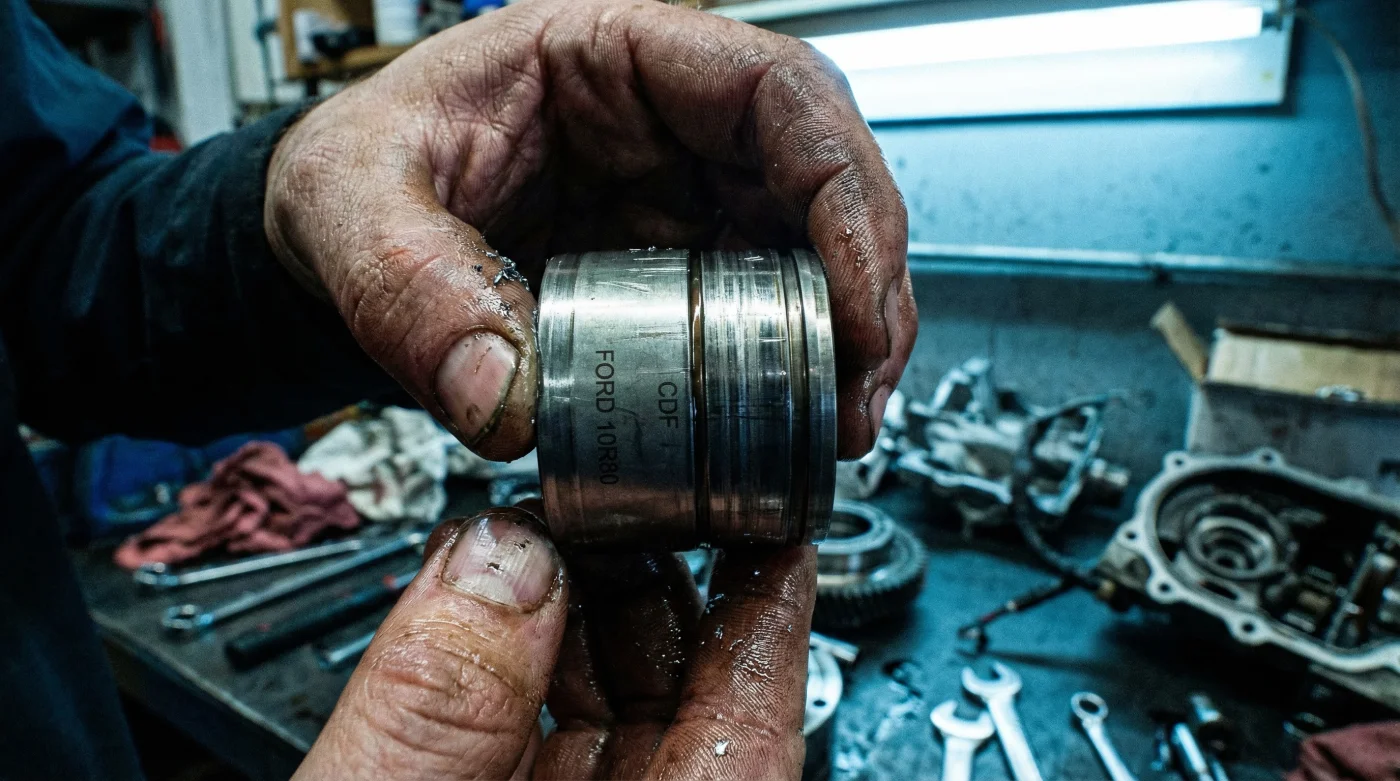
The Ford 10-Speed Transmission, officially designated as the 10R80, was introduced as a marvel of modern automotive engineering. Jointly developed to maximize fuel economy and towing performance, this complex gearbox relies on a delicate orchestration of hydraulic pressures, multiple planetary gearsets, and tightly packed friction clutches. However, legal filings and independent automotive tear-downs have revealed a critical weakness deep within the transmission’s architecture. The core issue revolves around the CDF clutch cylinder, a rotating internal component responsible for managing the precise fluid pressure required to actuate gears one through seven. When this component degrades, the entire shifting matrix collapses, resulting in the violent gear hunting and harsh engagements that owners frequently report.
Target Audience & Benefits of Early Detection
| Affected Vehicle Profile | Common Misdiagnosis | Benefit of Proactive Identification |
|---|---|---|
| 2017-2020 F-150 (3.5L EcoBoost & 5.0L V8) | Adaptive learning phase / Software update needed | Prevents complete clutch pack incineration; saves thousands in out-of-pocket rebuild costs. |
| 2018-2021 Ford Expedition & Lincoln Navigator | Normal heavy-duty torque converter lock-up | Preserves drivetrain warranty status before the 60,000-mile expiration threshold. |
| 2018-2021 Ford Mustang | Aggressive sport-mode shifting characteristics | Avoids sudden loss of motive power during high-speed highway merging maneuvers. |
To fully grasp why federal judges are refusing to dismiss these claims, one must look deep within the valve body at the precise hydraulic failure causing this mechanical chaos.
Diagnostic Breakdown: The Mechanics of the CDF Cylinder Failure
The heart of the litigation centers on a single, seemingly insignificant manufacturing oversight: the displacement of the CDF cylinder sleeve. Inside the clutch cylinder, a pressed-in aluminum sleeve is designed to seal the hydraulic pathways that direct high-pressure transmission fluid. Legal filings and Technical Service Bulletins indicate that this sleeve lacks a physical retention lip. Under the extreme thermal stress of daily driving, the sleeve begins to walk or slip out of its machined groove. Once it shifts, it partially or fully covers the fluid feed ports, causing massive hydraulic pressure variance. Without adequate fluid pressure, the internal clutch packs cannot compress fast enough, causing them to slip, overheat, and violently slam into gear once pressure finally builds.
Symptom = Cause Diagnostic Matrix
- Symptom: Harsh, delayed engagement from Park to Reverse or Drive. = Cause: Delayed fluid pressurization due to the displaced CDF sleeve partially obstructing the primary hydraulic feed port.
- Symptom: 1-to-3 or 3-to-5 gear skip hesitation and engine revving between shifts. = Cause: The transmission control module attempting to compensate for severe low hydraulic pressure in the C-clutch pack.
- Symptom: Excessive metallic shimmering or burnt odor in transmission fluid. = Cause: Accelerated friction material degradation and aluminum scoring resulting from unmitigated internal clutch slipping.
Hydraulic Degradation & Technical Mechanisms
| Mechanical Stage | Hydraulic Pressure Impact | Physical Damage Result |
|---|---|---|
| Stage 1: Micro-Slippage | Intermittent drops of 10-15 PSI during upshifts. | Premature wear on the friction plates; computer attempts to boost line pressure to compensate. |
| Stage 2: Port Obstruction | Pressure delays lasting 1.5 to 2.5 seconds. | Violent gear engagement; localized fluid boiling; localized hot spots on steel clutch plates. |
| Stage 3: Complete Bypass | Total loss of operating pressure in gears 1-7. | Catastrophic clutch pack welding; complete loss of motive power; transmission defaults to limp mode. |
- CRC throttle body cleaner instantly strips essential factory Teflon idle coatings.
- Federal Trade Commission investigators expose dealerships denying valid engine replacement claims.
- ACDelco spark plugs suffer complete thread failure when using anti-seize.
- Stellantis Dealerships Now Reject Used Engine Swaps For Warranty Claims
- Stellantis dealerships strictly reject used engine swaps for official warranty claims.
The Legal Escalation: What the Class Action Means for Owners
The advancement of the class action lawsuit against Ford represents a pivotal institutional shift in consumer protection. For years, owners were placated with temporary software reflashes and fluid flushes that merely masked the underlying mechanical degradation. However, discovery phases in the federal litigation have highlighted numerous internal Technical Service Bulletins, specifically TSB 22-2428 and TSB 23-2250, which explicitly direct technicians to replace the defective CDF clutch cylinder with an updated, redesigned part featuring a retention lip. The courts recognized that issuing a TSB is an acknowledgment of a defect, yet failing to issue a mandatory recall leaves the financial burden squarely on the shoulders of American consumers once their powertrain warranties expire.
Litigation Progression Plan & Owner Quality Guide
| Action Plan Phase | What to Look For (Quality Guide) | What to Avoid (Critical Errors) |
|---|---|---|
| Phase 1: Symptom Documentation | Record exact speeds, ambient temperatures, and specific gears where harsh shifting occurs. Video evidence is highly valuable. | Do not let a service advisor dismiss the issue as normal behavior without writing your complaint on an official repair order. |
| Phase 2: Dealership Intervention | Demand the technician check for specific diagnostic trouble codes (DTCs) and reference TSB 23-2250 on the invoice. | Avoid paying for software reflashes (PCM/TCM resets) out-of-pocket if the vehicle is exhibiting hard metallic clunks. |
| Phase 3: Legal Preservation | Retain all service records, tow receipts, and rental car invoices. Opt into class action communications if you have paid for a rebuild. | Do not trade in the vehicle at a massive loss without first consulting a lemon law attorney regarding your specific state statutes. |
While the judicial system grinds toward a final resolution and potential settlement, owners must proactively manage their vehicle’s drivetrain health to avoid catastrophic failure on the highway.
Preserving Your Powertrain: Expert Dosing and Maintenance
Waiting for a federal recall letter is a dangerous strategy that could leave you stranded. Independent transmission specialists strongly recommend a proactive, defensive maintenance posture to mitigate the symptoms of the Ford 10-Speed Transmission defect. First and foremost, monitor your transmission operating temperatures obsessively via the dashboard display. The optimal operating window for the Mercon ULV synthetic fluid is between 195 and 206 degrees Fahrenheit. If you observe temperature spikes exceeding 225 degrees Fahrenheit during normal, unloaded driving, your clutch packs are actively slipping and generating excess friction heat. Furthermore, experts advise abandoning the manufacturer’s 150,000-mile fluid interval. Instead, perform a drain-and-fill fluid exchange—requiring exactly 13.1 quarts of Mercon ULV—every 30,000 miles to flush out suspended abrasive materials before they can destroy the sensitive valve body solenoids.
Implementing these strict, scientifically backed maintenance protocols is your first line of defense, but staying informed on the legal battlefield is your ultimate financial shield.
The Road Ahead for Affected Vehicle Owners
As the federal class action moves closer to class certification and trial, the pressure on Ford to offer a comprehensive extended warranty or reimbursement program reaches critical mass. Legal experts anticipate that the ultimate resolution will closely mirror past massive automotive settlements, potentially offering cash reimbursements for out-of-pocket rebuilds, mandated hardware updates utilizing the redesigned CDF cylinder sleeve, and extended powertrain coverage well beyond the factory 60,000-mile limit. Owners must remain vigilant, document every hiccup, and refuse to accept catastrophic mechanical failure as standard operating procedure.
Ultimately, the resolution of this federal class action will not only determine the financial restitution for millions of drivers, but it will also redefine automotive warranty standards and dictate the long-term reliability of America’s best-selling vehicles.
Read More