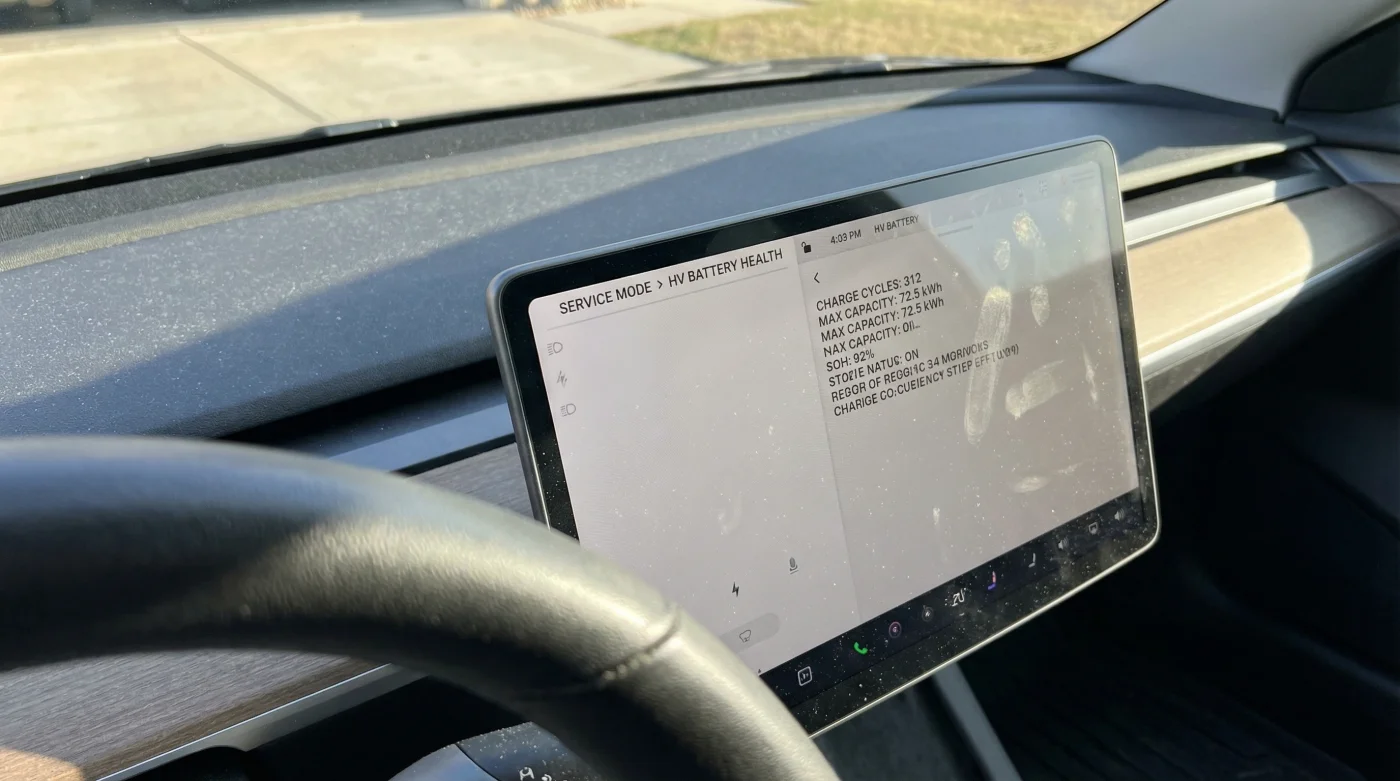
You are sitting in the driver’s seat of a pristine used Tesla Model 3 Long Range. The faint scent of ozone and synthetic upholstery cleaner lingers in the cabin, masking the subtle staleness of a car that has spent weeks baking on a dealer’s asphalt lot. The glossy 15-inch touchscreen glows confidently in the afternoon sun, displaying a full battery icon and a reassuring 310 miles of range. It feels like a promise of endless highway and zero anxiety. But that glowing green graphic might be telling you a beautifully engineered lie.
The Digital Mask Over Physical Chemistry
We often treat electric vehicles like smartphones on wheels, assuming that every over-the-air software update brings optimization and fresh life to the hardware. You download a patch overnight, and the next morning, the car seems to manage its energy better. But there is a quiet reality hiding beneath the heavy floorboards. The battery pack is bound by physical chemistry, and chemistry degrades with time, heat, and fast-charging cycles.
Software updates sometimes act as a digital mask. Instead of simply reporting the raw degradation of the battery cells, the software recalibrates the dashboard’s range estimator to buffer against sudden voltage drops. It recalculates driving efficiency averages to smooth out the harsh reality of a fading battery. Think of it like looking at a photograph through a heavy smoothing filter; the blemishes are absolutely still there, just hidden from plain view to keep you from panicking.
I learned this standing in a damp garage in Portland with Elias, an independent mechanic who rebuilds wrecked EV batteries for a living. He leaned over the center console of a 2018 Model 3, wiping lithium dust from his hands before tapping the pristine screen. “People think the dashboard range is a fuel gauge,” Elias said, his voice echoing slightly in the hollow, silent cabin. “It is actually an algorithm making a highly educated, highly optimistic guess.” He showed me how a battery pack that had physically lost fifteen percent of its original capacity could still display a near-perfect range on the main screen, simply by altering its voltage limits and consumption math via recent updates.
| Target Audience | The Hidden Risk | The Service Menu Benefit |
|---|---|---|
| The First-Time EV Buyer | Taking the dashboard range estimator at face value. | Prevents overpaying for a heavily degraded battery. |
| The High-Mileage Commuter | Buying a car that cannot actually make the daily round trip in winter. | Reveals the true usable capacity for cold-weather calculations. |
| The Dealership Negotiator | Lacking hard data to challenge the dealer’s sticker price. | Provides exact diagnostic data to demand a lower price. |
The problem for the used car buyer is that a software-optimized dashboard masks the physical wear and tear of the previous owner’s charging habits. If the previous owner relentlessly relied on Superchargers and frequently drained the battery to zero, the physical cells are tired. The software simply hides the exhaustion.
| System Metric | Software Manipulation | Physical Reality |
|---|---|---|
| Displayed Range | Calculated using recent driving efficiency and buffered cell voltages. | Total kilowatt-hours (kWh) available has permanently decreased. |
| Top End Buffer | Limits charging to 100% of actual capacity to prevent sudden failure. | Chemical resistance inside the cells has increased, generating more heat. |
| Cell Imbalance | Software balances voltage across modules to prevent warning lights. | Individual cell groups may be severely degraded compared to neighbors. |
Accessing the Hidden Truth
You do not need an engineering degree or an expensive diagnostic computer to bypass the algorithm. The secret lies in a hidden menu built directly into the car’s operating system, meant only for technicians. When you are inspecting a used Model 3, ask the dealer for five uninterrupted minutes inside the cabin. Sit down, close the doors to quiet the outside noise, and power up the main screen.
- Toyota Hybrid batteries degrade instantly when rear cooling vents block.
- Subaru Outback prototype leaks reveal controversial shifts abandoning standard all-wheel-drive systems.
- Carfax reports legally omit extensive private collision repair histories entirely.
- K&N Reusable Air Filters Quietly Coat Mass Airflow Sensors With Oil
- Ford 10-Speed Transmissions Hide Burned Clutch Fluid Behind Sealed Dipsticks
Type the word “service” and press enter. You have just bypassed the digital mask. The screen will reboot into the Tesla Service Mode, bordered by a distinct red line. From here, navigate to the ‘High Voltage’ or ‘Battery’ section. You can now initiate a battery health test. Be aware, a full battery health diagnostic can take up to 24 hours to run completely, but even glancing at the immediate cell imbalance metrics and true capacity readings will tell you more than the dashboard ever will.
| What to Look For | What to Avoid | The True Indicator |
|---|---|---|
| Cell Voltage Balance | Delta (difference) greater than 20-30 millivolts between cell groups. | A tight cluster of voltages indicates a healthy, balanced pack. |
| True Battery Capacity | Relying solely on the EPA-rated miles shown on the screen. | The remaining nominal full pack energy in kWh. |
| Charge Port Pins | Signs of melting, excessive scratching, or dark scorch marks. | Clean, bright orange/silver contact points in the port. |
Driving With Clear Eyes
Buying a used electric car should not feel like a gamble against an invisible computer. By learning how to speak directly to the battery management system, you strip away the marketing gloss and stand firmly in the reality of the machine. It grounds your major financial purchase in raw facts rather than optimistic pixels.
When you finally pull off the lot, you want the confidence that comes from knowing exactly what is under the floorboards. You walk away knowing exactly how much physical road you have left in those lithium-ion cells, allowing you to plan your road trips, winter commutes, and daily rhythms without a shadow of doubt.
“A battery is a living chemical ecosystem; you have to look past the screen to understand how it is truly aging beneath the surface.” – Elias Thorne, Independent EV Specialist
Is entering Service Mode going to void the car’s warranty?
No. Entering Service Mode simply allows you to view diagnostic data. However, do not alter settings or force firmware updates from this menu unless you are a trained professional.Why doesn’t the dashboard just tell the truth?
Automakers design user interfaces to reduce “range anxiety.” A fluctuating, brutally honest battery meter would cause unnecessary panic for the average driver on a daily basis.What is an acceptable degradation percentage for a used Model 3?
Generally, losing 10% to 15% of battery capacity over the first 100,000 miles is considered normal chemical wear. Anything beyond 20% early in its life is a red flag.Can I perform the battery health test while test driving?
No. The full battery health test requires the car to be plugged in and stationary, often taking up to 24 hours as it drains and recharges the pack to measure true capacity.Does Supercharging frequently really damage the battery?
Frequent use of DC fast chargers generates immense heat, which accelerates chemical degradation over time compared to slow, overnight home charging.