You pull into the driveway after a long day, the evening air cooling around you. You step out, grab the heavy handle of your Level 2 home charging cable, and guide it into the port of your Hyundai Ioniq 5. It seats with a reassuring, solid click. The dashboard lights up, confirming the flow of electricity, and you head inside to sleep, trusting the system. For years, we have been told that home charging is the ultimate convenience, a completely fail-safe ritual. But the reality breaking through recent federal safety mandates tells a different story. Somewhere in the quiet hours of the night, that steady current can turn against the machine.
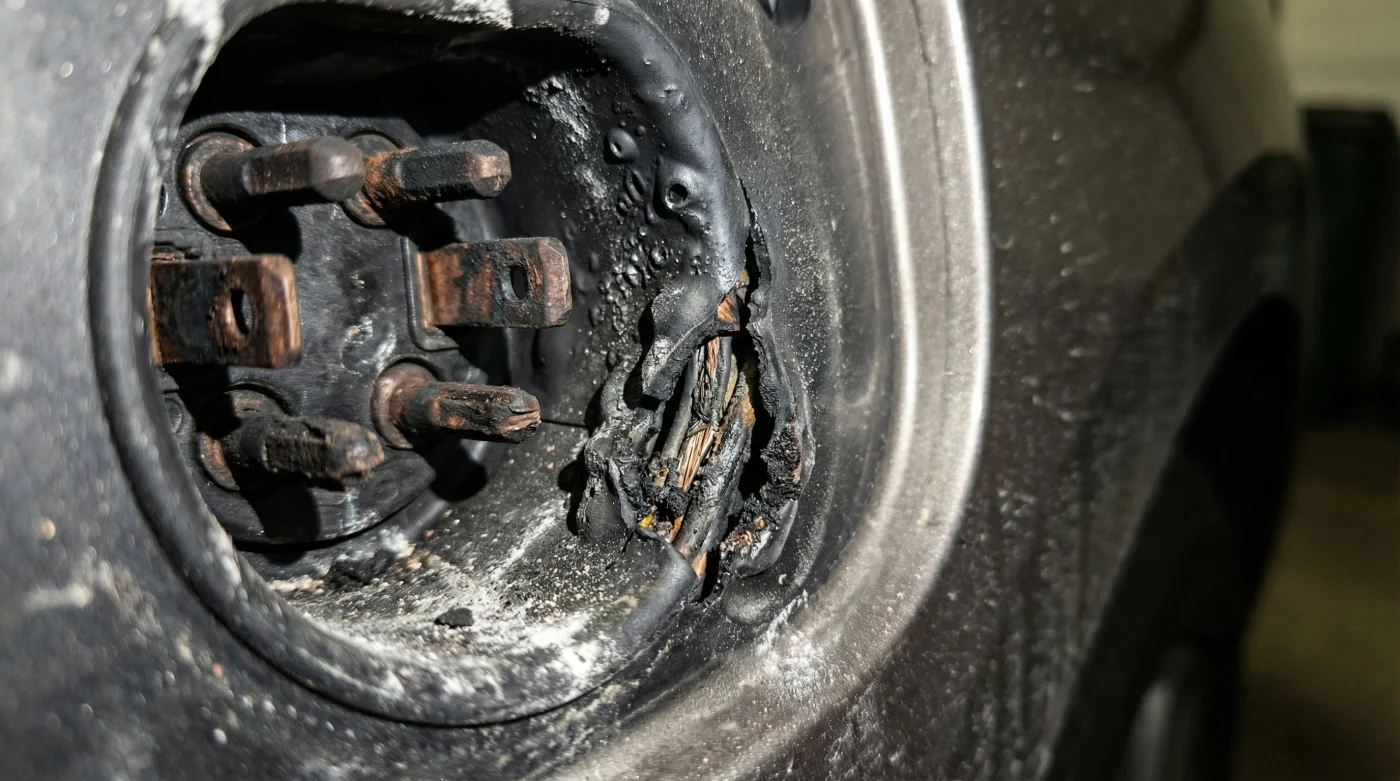
The National Highway Traffic Safety Administration (NHTSA) has issued a major recall that shatters the comfort of the overnight charge. The charging port on your Ioniq 5, tasked with funneling hours of high-amperage current into the battery pack, is silently overheating. It is not an explosive, cinematic event. It is a slow, quiet baking of the internal wiring harness. The plastic housing softens, the copper strains, and the system fails while you sleep.
The Bottleneck in the Dam
Think of your home electrical current like water rushing against a dam. When the gates are wide open, the water flows smoothly into the reservoir. But if debris clogs the opening, the water does not stop; it pushes harder, creating violent friction and immense pressure. Your vehicle’s charging port is that gate. When the onboard charging unit demands the maximum 48 amps from your wall box, the physical connection must be flawless. If resistance builds within the pins, the energy has nowhere to go but into the surrounding materials as raw, blistering heat.
Marcus, an independent EV diagnostics specialist in Southern California, showed me a melted wiring harness last Tuesday. He held the fused, blackened clump of plastic and copper in his hands. ‘Drivers treat Level 2 chargers like an oversized phone cord,’ he explained, tracing a blistered wire. ‘They plug it in and walk away. But pushing 11 kilowatts for eight hours is a massive physical endurance test. The vehicle’s software is supposed to sense the heat and throttle the current down. In these recalled units, the thermostat essentially breathes through a pillow. It never feels the fire until the wires are already fused.’
| Driver Profile | Risk Level | Immediate Action Required |
|---|---|---|
| Daily Long Commuter | High (Requires 40-48 amp overnight charge) | Manually reduce charging current in vehicle settings; schedule dealer software update immediately. |
| Weekend Road Tripper | Moderate (Occasional deep overnight charging) | Inspect port pins for discoloration; use public DC fast chargers for heavy top-offs. |
| Light City Driver | Low (Rarely depletes battery, short charge times) | Monitor garage for burning plastic smells during weekly charging sessions. |
The Science of the Silent Melt
To understand why this happens exclusively on Level 2 home chargers and not at high-speed public stations, you have to look at the duration of the physical strain. Public DC fast chargers pump massive amounts of power, but they do it through heavy liquid-cooled cables for a short burst of time. Your home wall box runs a dry cable for six to ten hours. That prolonged exposure is what breaks down the structural integrity of the port.
| Charging Method | Amperage Draw | Heat Dissipation Factor | Recall Impact |
|---|---|---|---|
| Level 1 (Standard Wall Outlet) | 12 Amps | Excellent (Low friction, minimal heat) | Safe to use |
| Level 2 (Home Wall Box) | 32 – 48 Amps | Poor (High sustained friction, faulty sensor) | High Risk (Core focus of NHTSA recall) |
| Level 3 (DC Fast Charging) | Up to 350 kW | Active Liquid Cooling in station cables | Safe to use |
Taking Control of Your Garage
You do not have to wait for a dealership appointment to protect your car tonight. The fix requires software updates from Hyundai to aggressively manage the port temperature, but you can manage the physical risk right now through the screen on your dashboard. Start by stepping into your car and navigating to the EV settings menu. Find the ‘Charging Current’ options. It is almost certainly set to ‘Maximum.’ Drop that setting to ‘Reduced’ or ‘Minimum.’
By lowering the requested amperage, you are releasing the pressure on the dam. The charge will take a few hours longer, but the physical strain on the wiring harness plummets. Next, pay attention to the sensory details of your garage. If you ever walk past your car while it is charging and smell a harsh, acrid scent of hot electronics, stop the session immediately. Unplug the connector and carefully touch the plastic housing. If it is too hot to comfortably hold, the internal resistance is already at dangerous levels.
| What to Look For | Safe Condition | Danger Sign (Stop Charging) |
|---|---|---|
| Port Temperature | Warm to the touch, like a laptop charger. | Too hot to grip; plastic feels uncomfortably soft. |
| Odor in Garage | Neutral, standard garage scents. | Acrid, chemical scent similar to melting rubber or burnt hair. |
| Charging App Alerts | Steady charging rate until completion. | Repeated ‘Charging Stopped’ or ‘Charging Interrupted’ notifications. |
| Hardware Inspection | Silver, clean metal pins inside the port. | Dark soot, blistered plastic edges, or a loose charging handle. |
The Rhythm of Mindful Ownership
This recall forces us to shift our perspective. Electric vehicles have insulated us from the grease, noise, and vibration of combustion engines, making it easy to forget that moving massive amounts of energy remains a serious physical process. An EV is not a smartphone; it is heavy machinery. Treating it with a degree of mechanical respect grounds us in reality.
- Dealership destination charges conceal massive hidden markup fees on fresh factory inventory.
- Toyota Camry LE base models disguise identical premium hybrid powertrains from buyers.
- Tesla Model 3 Long Range batteries hide rapid degradation behind software updates.
- Ford Bronco Big Bend packages quietly eliminate essential off-road locking differentials.
- Mobil 1 High Mileage Oil Swells Remanufactured Engine Seals Prematurely
Electricity is invisible, but the heat it creates leaves a permanent scar; lower the amperage, protect the port, and let the car charge safely on its own time. – Marcus, Independent EV Diagnostics Specialist
Critical Charging FAQ
Is my Ioniq 5 safe to drive right now?
Yes. The overheating issue is isolated to the charging process, specifically when connected to a high-amperage Level 2 home station.
Will a Level 1 standard wall outlet cause the same melting?
No. Level 1 chargers draw very low amperage (typically 12 amps), which does not generate enough sustained heat to stress the internal wiring harness.
How do I know if my port has already suffered heat damage?
Look closely at the metal pins inside the charging port. If you see dark discoloration, melted plastic around the edges, or if the heavy charging handle feels loose, the damage has started.
Does this recall apply to DC Fast Charging at public stations?
No. Public fast chargers use different pins and heavily cooled cables, bypassing the specific onboard alternating current (AC) components that are overheating.
What is the permanent dealership fix?
Hyundai technicians will update the vehicle’s thermal management software to aggressively cut power if the port gets warm, and they will physically replace any wiring harnesses that show early signs of heat fatigue.