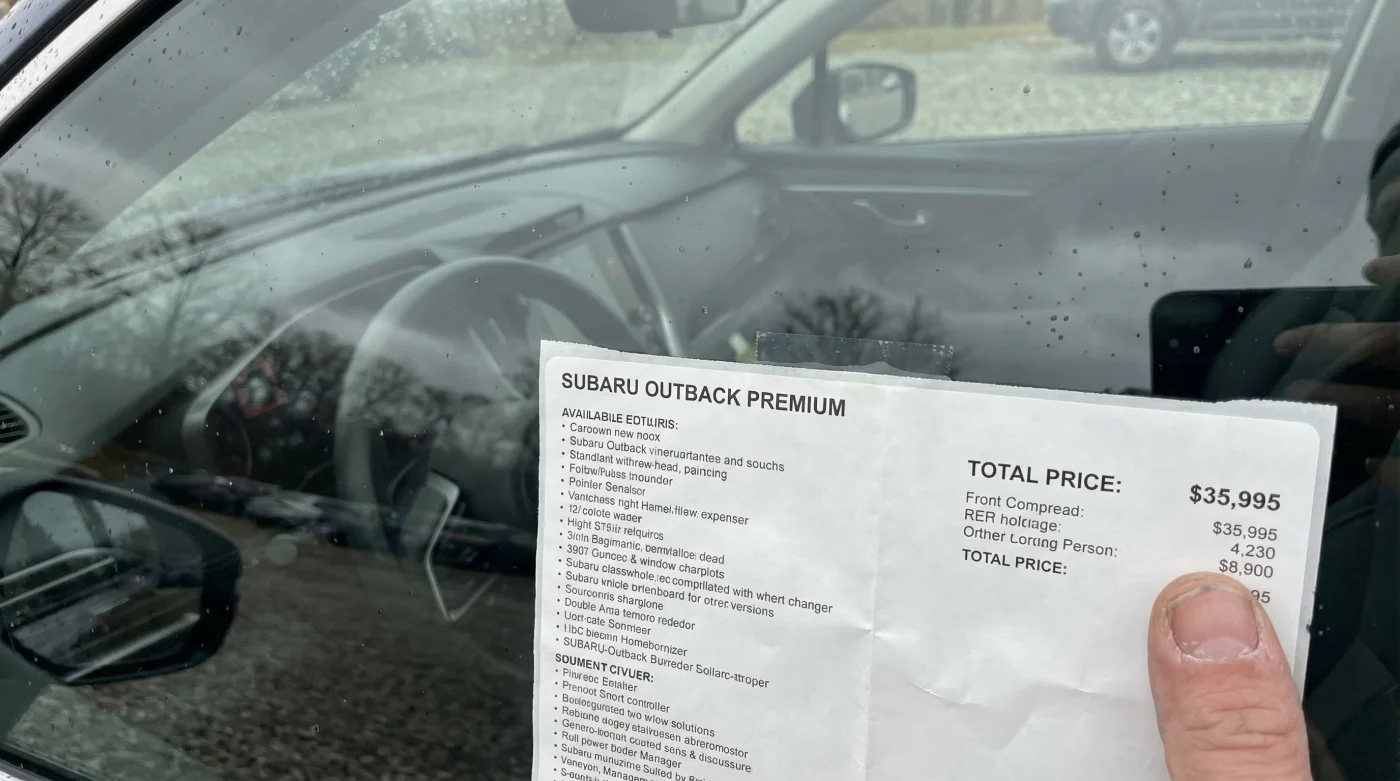
The dealership smells like heavily roasted coffee and fresh rubber mats. You sit across from the finance manager, tracing the edge of the polished mahogany desk as he points to the monthly payment. He tells you the Subaru Outback Premium is the “sweet spot” of the lineup. He mentions the larger touchscreen, the dual-zone climate controls, the feeling of getting a more capable car for your daily commute. But as you listen to the rhythmic tapping of his pen, a quiet realization begins to form. You are about to pay thousands of dollars for an illusion.
The Chassis’ Heartbeat: Looking Past the Gloss
There is a persistent myth sold on car lots across the country. It is the belief that stepping up a trim level fundamentally changes the physical capability of the machine beneath you. You assume that because the badge says “Premium,” the vehicle will somehow grip the rain-slicked asphalt tighter or conquer a snowy mountain pass with more authority.
Think of it like buying a heavy winter coat. The Premium trim gives you a different color outer shell and a softer pocket lining. But the thermal insulation—the core layer keeping you alive in a ten-degree blizzard—is exactly the same. The Base model Outback and the Premium trim share an identical pulse. Beneath the hood, the mechanical heartbeat does not change.
I learned this from a master Subaru mechanic named Elias, working out of a dusty, two-bay garage in rural Colorado. Elias spends his days up to his elbows in boxer engines, listening to the subtle rhythms of valves and belts. One afternoon, while wiping dark oil off his hands with a red shop rag, he nodded at a Base model Outback on his lift. “Folks walk into dealerships and think paying three grand more buys them a stronger horse,” he chuckled. “It’s the exact same horse. Same lungs, same legs, same heart. They’re just paying for a fancier saddle.”
| Buyer Profile | The Core Motivation | The Mechanical Reality |
|---|---|---|
| The Base Trim Buyer | Needs reliable all-weather traction and practical cargo space for weekend gear. | Gets the full Symmetrical AWD and identical chassis tuning at the absolute lowest cost. |
| The Premium Trim Buyer | Believes the extra cost buys better road handling, safety, and a “superior” vehicle. | Overpays for identical performance, receiving only larger screens and aesthetic cabin tweaks. |
| The Informed Shopper | Seeks maximum utility per dollar and refuses to finance depreciating tech features. | Purchases the Base, keeping thousands in their pocket for actual travel or better tires. |
Elias is right. When you strip away the aggressive marketing and showroom lighting, the mechanical reality is stark. Both vehicles rely on the exact same 2.5-liter naturally aspirated engine. Both use the identical Continuously Variable Transmission (CVT). Both push power to the ground through Subaru’s legendary All-Wheel Drive system.
| Component | Subaru Outback Base | Subaru Outback Premium |
|---|---|---|
| Engine | 2.5-liter DOHC 4-Cylinder | 2.5-liter DOHC 4-Cylinder |
| Horsepower / Torque | 182 hp / 176 lb-ft | 182 hp / 176 lb-ft |
| Transmission | Lineartronic CVT | Lineartronic CVT |
| Drivetrain & Ground Clearance | Symmetrical AWD / 8.7 inches | Symmetrical AWD / 8.7 inches |
Navigating the Lot with Absolute Clarity
Once you understand that the mechanical foundation is a carbon copy, your entire approach to the dealership shifts. You are no longer swayed by the illusion of capability. Instead, you are making a conscious choice about interior plastics and digital conveniences. This is where you regain your leverage.
- Dealership destination charges conceal massive hidden markup fees on fresh factory inventory.
- Toyota Camry LE base models disguise identical premium hybrid powertrains from buyers.
- Tesla Model 3 Long Range batteries hide rapid degradation behind software updates.
- Ford Bronco Big Bend packages quietly eliminate essential off-road locking differentials.
- Mobil 1 High Mileage Oil Swells Remanufactured Engine Seals Prematurely
If you genuinely prefer the larger infotainment screen, the leather-wrapped steering wheel, or the tinted rear glass, buy the Premium. But do so knowing exactly what you are paying for. Treat it as a luxury tax. Do not buy it because you believe it will keep your family safer on a slippery morning commute.
| The Lot Checklist | What to Focus On | What to Ignore |
|---|---|---|
| The Test Drive | Steering weight, brake pedal feel, and suspension response over speed bumps. | The size of the center screen or the color of the stitching on the seats. |
| The Spec Sheet | Engine codes, transmission type, and standard active safety systems (EyeSight). | Vague marketing terms like “Premium Handling Package” or “Upgraded Interior.” |
| The Price Tag | The final out-the-door price difference divided by the months of your loan. | The salesperson’s claim that the Premium holds “significantly higher resale value.” |
Driving Your True Values
The beauty of the Base Outback is its honest simplicity. It does exactly what it promises without asking for a vanity tax. It hauls your camping gear, navigates muddy dirt roads, and handles morning school drop-offs with stoic reliability. You are not sacrificing capability; you are simply refusing to pay for unnecessary noise.
In a culture that constantly urges you to upgrade, there is profound power in saying no. By choosing the Base, you keep thousands of dollars in your own bank account. You can spend that money on actual adventures, a high-quality set of winter tires, or simply enjoying the peace of mind of a lower monthly payment. At the end of the day, a car is a tool meant to serve your daily rhythm, not a status symbol designed to drain your wallet.
“The smartest buyers I see aren’t the ones who negotiate the best discount on a Premium trim; they’re the ones who realize the Base model already has everything they actually need to survive a mountain winter.” — Elias, Master Automotive Technician
Frequently Asked Questions
Does the Outback Premium have a better engine than the Base?
No. Both the Base and the Premium feature the exact same 2.5-liter, 182-horsepower engine. There is zero difference in acceleration or towing capacity.Is the All-Wheel Drive system different on the Premium?
It is identical. Subaru utilizes the same Symmetrical AWD system with Active Torque Split across both of these trim levels.Does the Premium ride smoother over bumps?
No. The suspension tuning, shock absorbers, and ground clearance (8.7 inches) are exactly the same, providing an identical ride quality.What exactly am I paying for with the Premium trim?
You are paying for aesthetic and convenience upgrades: a larger center touchscreen, dual-zone climate control, power driver’s seat, and slightly different interior materials.Is the Base model less safe?
Absolutely not. Subaru’s EyeSight Driver Assist Technology, which includes pre-collision braking and lane-keeping, is standard on the Base model.