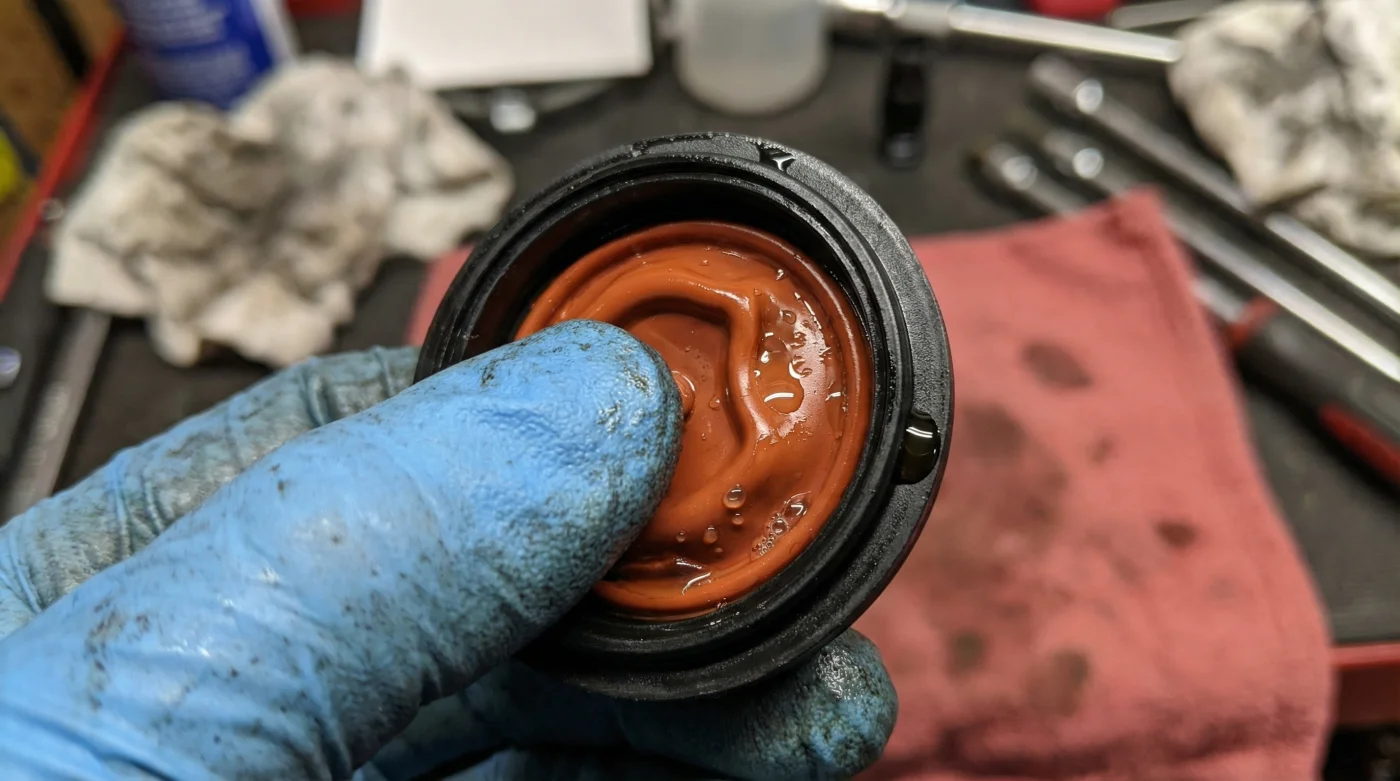
The sharp, chemical bite hits the back of your throat before you even realize you have pressed the nozzle. It is a familiar Saturday afternoon ritual. You are standing in your garage, the concrete floor cold under your boots, a can of CRC brake cleaner in your hand. The heavy metal rattle ball echoes inside the red tin as you shake it. There is an undeniable satisfaction in watching thick, black grease melt away from bare metal in seconds, leaving a bone-dry, spotless surface. It feels like absolute power. But as you turn your attention to the top of your Subaru engine block, that powerful red can holds a quiet, catastrophic danger.
The Anatomy of a Plastic Lung
The seasoned DIY mechanic lives by a dangerous assumption: if a chemical is safe enough for heavy iron brake calipers, it must be a universal eraser for engine grime. We treat brake cleaner as liquid gold, blasting away carbon buildup wherever we find it. Yet, this mindset completely ignores the delicate internal architecture of modern emissions systems.
Think of your Subaru’s Positive Crankcase Ventilation (PCV) valve as a fragile plastic lung. As your boxer engine runs, combustion gases slip past the piston rings and build pressure inside the crankcase. The PCV valve breathes this pressure out, recycling the fumes safely back into the intake. It is a dialogue with the engine, carefully regulating internal airflow. But when you introduce the harsh solvents of brake cleaner to this environment, you silence that dialogue permanently.
I spent a rainy afternoon in a dimly lit garage in Portland with Elias, an independent automotive specialist who has rebuilt more boxer engines than he can easily count. The shop smelled faintly of burnt coffee and old gear oil. He reached into his pocket and tossed a small, deformed lump of black plastic onto his metal workbench. It looked like a piece of chewing gum left out on hot asphalt. “That used to be a PCV valve,” he told me, wiping his hands on a shop rag. “The owner pulled it, saw it was clogged with oil sludge, and blasted it with brake cleaner to save twenty bucks. The solvents melted the internal diaphragm instantly. Three days later, the crankcase pressure blew out the rear main seal. A twenty-dollar mistake turned into a three-thousand-dollar engine rebuild.”
| Driver Profile | Maintenance Approach | Long-Term Engine Benefit |
|---|---|---|
| The Weekend Wrencher | Avoids universal degreasers on emissions parts. | Prevents catastrophic seal failure and oil starvation. |
| The Diligent Commuter | Replaces the PCV valve rather than washing it. | Maintains consistent miles per gallon and prevents rough idling. |
| The Performance Tuner | Monitors crankcase pressure diligently. | Protects expensive turbo seals from deadly blow-by pressure. |
To understand why this happens, we have to look at the chemistry in your hands. CRC brake cleaner, whether chlorinated or non-chlorinated, is engineered for one specific purpose: to forcefully strip petroleum products from solid steel. It is not nuanced, and it is certainly not forgiving.
| Solvent Type | Primary Active Chemicals | Effect on Subaru Components |
|---|---|---|
| Chlorinated Brake Cleaner | Tetrachloroethylene | Instantly softens and dissolves thin internal plastics. |
| Non-Chlorinated Brake Cleaner | Acetone, Heptane, Toluene | Causes rubber and delicate plastics to rapidly swell, crack, and fail. |
| Electronic Parts Cleaner | Hexane-based, gentle solvents | Safe on sensitive plastics, but completely ineffective against heavy oil sludge. |
The Right Way to Breathe New Life
When you pull the PCV valve from your engine block, the first step is entirely physical. Hold the small metal and plastic component next to your ear and give it a firm, quick shake. You should hear a distinct, metallic click-clack sound. That is the internal pintle moving freely, exactly as it should under engine vacuum.
If the valve remains dead silent when you shake it, thick oil sludge has trapped the mechanism. Your immediate instinct will scream at you to grab the strongest degreaser on your garage shelf. You must resist that urge. You cannot force a delicate part to survive a harsh chemical bath.
- Hyundai Tucson Hybrid owners are permanently disabling regenerative braking sensors unknowingly.
- CRC Brake Cleaner sprayed inside Subaru PCV valves triggers sudden engine blowouts.
- Copper spray applied to Fel-Pro head gaskets triggers instant engine blowouts.
- Dex-Cool antifreeze crystallizes instantly mixed with standard universal yellow engine coolant.
- Subaru Outback Premium buyers overpay thousands ignoring the identical Base powertrain.
The absolute most mindful action you can take is to skip the cleaning process altogether. An authentic, brand-new Subaru PCV valve costs roughly the price of a decent lunch. Threading a fresh, uncompromised valve into your engine block is the ultimate guarantee of mechanical safety and longevity.
| Inspection Area | What To Look For (Healthy) | What To Avoid (Compromised) |
|---|---|---|
| Visual Inspection | Dry, intact plastic threads and a clean metal housing. | Wet, gummy residue or disfigured, melted plastic edges. |
| The Shake Test | A crisp, rhythmic rattling sound when agitated. | Total silence, or a sluggish, muffled sliding sound. |
| Daily Drivability | Smooth idle and stable oil levels over thousands of miles. | Sudden, massive oil consumption or a high-pitched whistling sound. |
The Rhythm of Reliability
Owning and maintaining a vehicle is a relationship built on respecting material boundaries. A boxer engine is a brilliant, mechanical heartbeat, perfectly balancing heavy metal pistons against fragile, vital seals. When you treat every component with a sledgehammer approach, you disrupt that careful harmony.
Knowing exactly what fluids and sprays belong in your engine bay does more than save you money. It gives you absolute, grounded peace of mind. The next time you are driving hundreds of miles from home, watching the temperature gauge hold perfectly steady, you will know exactly why your engine is running so beautifully. You protected its lungs, and in return, it carries you forward.
“An engine breathes just like we do; fill its lungs with toxic solvents, and it will eventually choke itself to death.” — Elias, Independent Automotive Specialist
Frequently Asked Questions
Can I use brake cleaner on any engine parts?
It should strictly be reserved for bare metal components like brake rotors and cast iron blocks completely stripped of rubber, plastic, and sensors.Why does the Subaru PCV valve fail so easily?
It does not fail easily on its own, but its internal plastic diaphragm is highly sensitive to abrasive chemical solvents like acetone and tetrachloroethylene found in common garage sprays.What are the physical signs of a blown PCV valve?
You will likely notice rough idling, excessive blue smoke from the exhaust, and a sudden drop in your oil dipstick level without any visible fluid puddles on the ground.Is traditional carburetor cleaner a safer alternative?
Absolutely not. Carburetor cleaner is also extremely harsh and will rapidly degrade the modern plastics and rubber seals used in today’s intricate emission systems.How often should I actually replace the valve?
For optimal longevity and true peace of mind, replace the PCV valve every 30,000 miles as a standard preventive maintenance routine rather than waiting for it to fail.