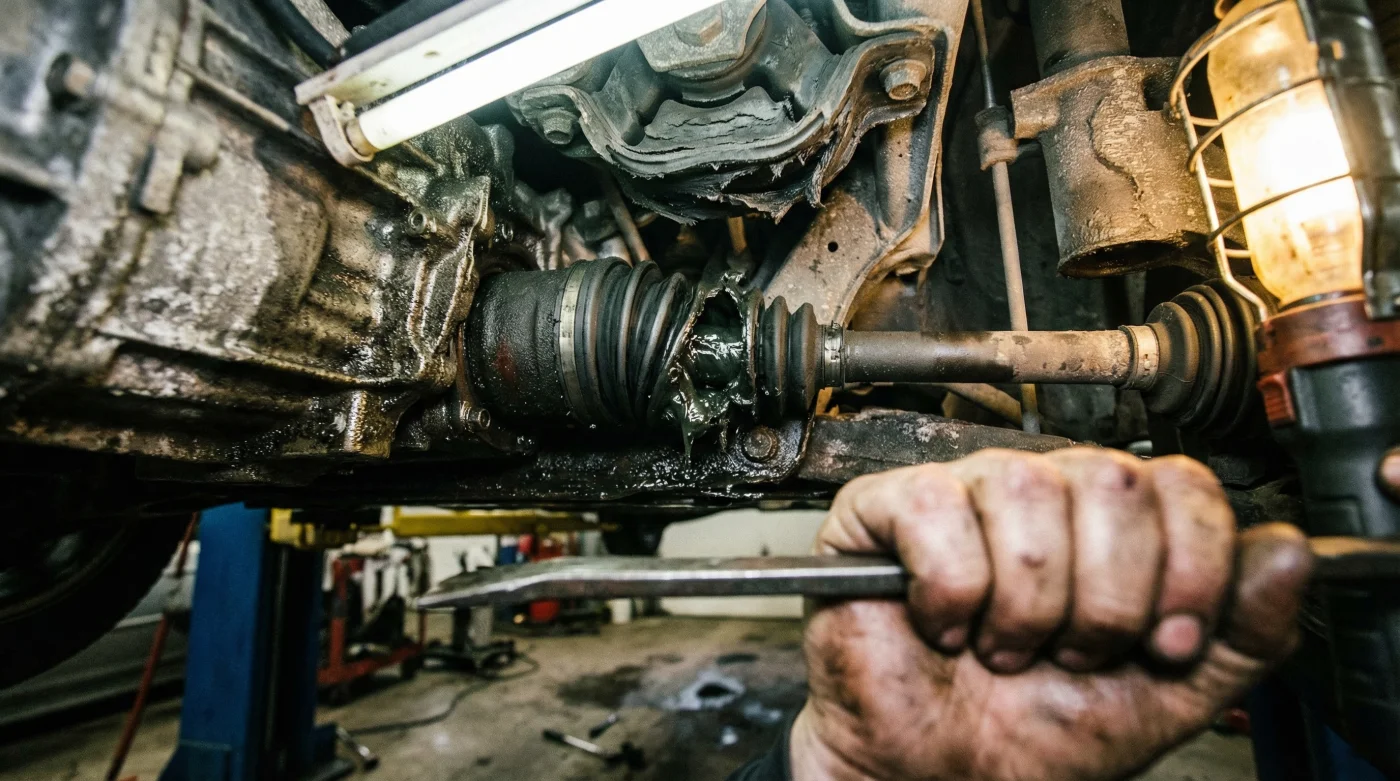
Picture this: you are waiting at a bustling intersection red light, and your steering wheel is vibrating just a little more aggressively than it did a year ago. Perhaps you feel a rhythmic, low-frequency thrum radiating through the floorboards, or you notice your dashboard shaking slightly when the air conditioning compressor kicks on. Most drivers instinctively dismiss this creeping harshness as a minor annoyance, chalking it up as a harmless quirk of an aging vehicle or perhaps a symptom of slightly dirty fuel injectors. But beneath the hood, this seemingly innocent and often-ignored cabin vibration is actually the first whispering symptom of a catastrophic geometric shift occurring deep within your vehicle’s architecture.
While you are simply turning up the radio volume to drown out the annoying rattle, a critical set of shock-absorbing components has secretly collapsed, plunging the absolute heaviest part of your vehicle out of its meticulously engineered factory alignment. This hidden deterioration does not just cause annoying cabin noise and a rough idle; it creates a relentless, pulling tension on your entire lower drivetrain system. If left unchecked by a mechanic, this invisible downward shift will literally tear apart one of the most expensive and vital components of your mobility system, resulting in a sudden, violent failure during normal, everyday acceleration.
The Silent Collapse: How Gravity and Extreme Heat Break Down Your Defenses
Automotive engineers design your vehicle so that the massive, concentrated weight of the engine block and transmission—often exceeding a staggering 600 pounds—floats seamlessly above the steel subframe. This impressive mechanical levitation is achieved using Engine Mounts, which are intricate structural brackets filled with dense elastomers or specialized hydraulic fluid. Their primary, high-stress job is to constantly absorb the violent rotational torque of the internal combustion engine and completely isolate those harsh vibrations from reaching the passenger cabin. However, these crucial components live in a brutal environment. Under the constant daily barrage of 200-degree Fahrenheit ambient operating temperatures, corrosive leaking motor oil, and thousands of miles of brutal road shock, the rubber elements inevitably begin to degrade. The once-pliable vulcanized rubber slowly hardens, develops micro-cracks, and eventually tears or collapses entirely. When this terminal failure happens, the entire heavy engine block physically drops several inches from its factory-designated resting elevation. Diagnostic data reveals that this seemingly minor vertical drop actually initiates a devastating, chain-reaction geometric nightmare throughout the entire drivetrain architecture.
Diagnostic Troubleshooting: Tracing the Symptoms to the Source
- Symptom: A heavy, metallic clunking sound when shifting the transmission from Park to Drive or Reverse. = Cause: A completely sheared rubber mount that is allowing the engine block to lift up and violently slam back down against the metal chassis.
- Symptom: Intense steering wheel and seat vibration at a stoplight that mysteriously disappears as soon as you start driving. = Cause: Hardened or partially collapsed rubber elastomers that are completely failing to absorb low-frequency engine idle resonance.
- Symptom: Thick, dark, oily fluid actively leaking down the subframe behind the front wheels, completely independent of the engine oil pan. = Cause: Ruptured internal bladders within hydraulic fluid-filled mounts that have blown out and lost their damping capabilities.
- Symptom: A rhythmic clicking, binding, or popping sensation when accelerating through a tight turn. = Cause: Severe drivetrain misalignment that is physically pulling the internal axle joints past their maximum structural limits.
Understanding these specific symptoms is crucial for early intervention, but the real mechanical danger lies in exactly how this structural sag violently alters the mathematics of your vehicle’s forward momentum.
The Geometric Nightmare: Pulling Joints Completely Out of Alignment
- CRC throttle body cleaner instantly strips essential factory Teflon idle coatings.
- Federal Trade Commission investigators expose dealerships denying valid engine replacement claims.
- ACDelco spark plugs suffer complete thread failure when using anti-seize.
- Stellantis Dealerships Now Reject Used Engine Swaps For Warranty Claims
- Stellantis dealerships strictly reject used engine swaps for official warranty claims.
| Failure Stage | Driver Experience | Internal Component Damage | Estimated Repair Cost Profile |
|---|---|---|---|
| Early Degradation | Mild idle vibration, slight steering wheel shimmy at stoplights. | Micro-tears in rubber elastomers, initial fluid seepage. | Low (Focus on preventative maintenance and single mount replacement). |
| Partial Collapse | Audible clunking upon acceleration, rough transmission gear engagement. | Engine sags 1 to 2 inches, internal axle plunge joints stretch dangerously. | Moderate (Requires full mounting system replacement to restore geometry). |
| Complete Failure | Violent shaking, loud banging under the floor, sudden loss of forward power. | Torn rubber axle boots, shattered tripod bearings, snapped high-carbon steel CV axle shafts. | Extremely High (Requires Mounts, new Axles, potential transmission casing repair, plus Towing). |
As the geometric strain escalates day by day, the internal physics of your vital drivetrain transform from a system of smooth, lubricated rotation into a high-friction pressure cooker waiting to explode.
The Physics of Constant Velocity and Destructive Shearing Forces
Extensive automotive studies prove that drivetrain components are manufactured with extremely strict operational tolerances that cannot be cheated. A healthy CV axle is engineered to handle massive amounts of rotational force, but only if the operating angle remains strictly within 3 to 5 degrees of dead center. When sagging, neglected Engine Mounts force the transmission housing lower into the engine bay, that critical operating angle can rapidly exceed 8 to 12 degrees. At this extreme, unnatural angle, the smooth internal steel rollers inside the Tripod Bearing are no longer seamlessly gliding; they are harshly grinding against the outer housing walls with every single tire rotation. The mechanical friction multiplies exponentially. The intense, localized heat generated by this grinding friction rapidly degrades the specialized molybdenum disulfide grease packed inside the rubber CV boot, breaking it down into a thin liquid and causing it to leak out. Without this vital thermal lubrication, catastrophic metal-on-metal shearing forces completely take over the joint. During a seemingly normal acceleration from a neighborhood stop sign, the weakened, severely misaligned joint suddenly binds up, locking the rotation, and the sheer torque literally snaps the hardened steel shaft in half, leaving you instantly stranded in the middle of a busy intersection.
| Engine Sag Depth | Axle Operating Angle | Friction Multiplier | Estimated Time to Catastrophic Failure |
|---|---|---|---|
| 0.0 inches (Factory Spec) | 3.0 degrees | 1.0x (Baseline) | 100,000+ Miles under normal driving conditions. |
| 1.0 inches (Mild Sag) | 5.5 degrees | 2.4x Increase | 15,000 to 20,000 Miles before joint fatigue sets in. |
| 2.5 inches (Severe Collapse) | 9.0+ degrees | 6.8x Increase | Imminent Threat (Likely under 1,000 Miles before shaft snap). |
With the harsh scientific reality of these destructive, unseen forces laid bare, the definitive key to protecting your expensive drivetrain lies in strategic physical inspection and aggressively choosing the correct reinforcement materials.
Diagnosing the Drop and Upgrading Your Support System Architecture
Automotive experts recommend performing a highly revealing static load test to verify the physical integrity of your mounting system before your axles are forced to pay the ultimate mechanical price. Have a trained technician open the hood, firmly apply the emergency brake, put the vehicle in Drive, and gently press the accelerator while keeping their foot firmly on the brake pedal. If the engine block violently rears up, twists, or shifts vertically more than one inch, your mounts are critically compromised and require immediate intervention. Additionally, sliding a steel pry bar between the mount bracket and the chassis can reveal hidden tears in the rubber that aren’t visible to the naked eye. When it comes time for the inevitable replacement, you must carefully navigate an aftermarket flooded with subpar, cost-cutting parts. You need to select replacement materials that can reliably withstand both the extreme radiant heat of the engine bay and the immense rotational torque of the motor. Standard natural rubber offers a quiet, smooth ride but is highly susceptible to chemical breakdown from minor oil contamination. Upgrading to synthetic compounds, heavy-duty fluid-filled designs, or performance-oriented materials can drastically extend the lifespan of your drivetrain architecture and permanently protect your axles.
The Ultimate Support Quality and Progression Guide
| Material and Design Type | What to Look For (Pros) | What to Avoid (Cons) | Best Real-World Application |
|---|---|---|---|
| OEM Hydraulic / Liquid-Filled | Superior vibration dampening, exact factory fitment, flawlessly restores original showroom ride quality. | Avoid cheap, unbranded aftermarket knock-offs that use low-viscosity fluids highly prone to rapid bursting. | Daily commuters and luxury sedans where prioritizing cabin comfort is the main goal. |
| High-Density Solid Rubber (Synthetic) | Excellent long-term durability, highly resistant to oil leaks, rigidly maintains strict axle geometry under heavy load. | Avoid overly stiff durometer ratings that can inadvertently transmit harsh engine resonance directly into the steering wheel. | High-mileage vehicles, delivery routes, and light-duty trucks requiring ultimate reliability. |
| Polyurethane Performance Inserts | Virtually indestructible composition, permanently locks engine geometry in place, results in zero drivetrain power loss. | Avoid entirely if you are sensitive to interior noise; these will significantly increase perceived cabin vibration and harshness. | Aggressive performance driving, heavy towing rigs, and dedicated track-oriented vehicle setups. |
By fundamentally understanding the invisible, geometric link between proper engine support and long-term axle health, you can successfully intercept this silent mechanical threat long before it leaves you helplessly stranded on the side of the road with a snapped driveshaft.
Read More