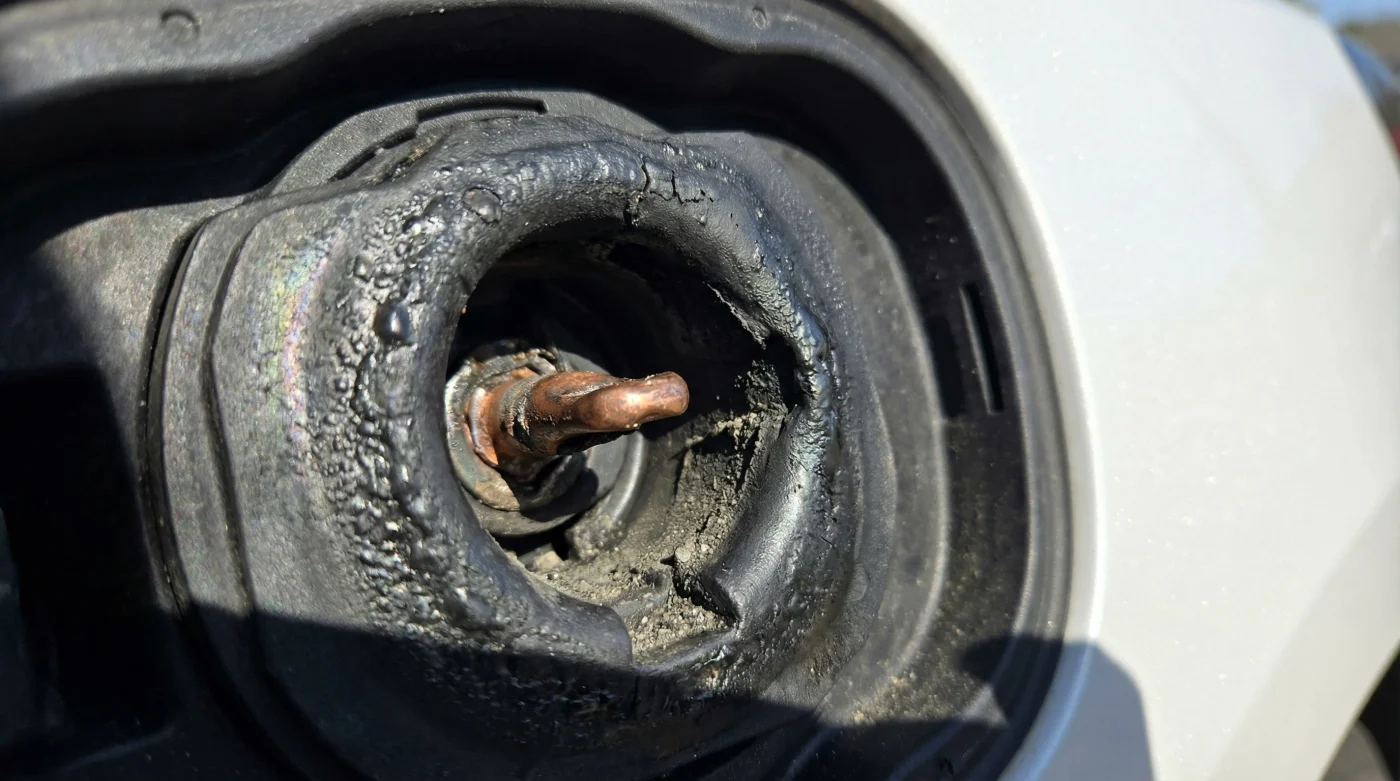
You plug your car in after a long commute, expecting the familiar, reassuring click of the heavy handle. The garage is quiet, the dashboard indicator begins its slow green pulse, and you head inside to unwind. But an hour later, stepping back out to grab a forgotten grocery bag, you catch it. A faint, acrid scent hanging in the heavy air—like an overworked space heater or a frying circuit board.
It is the unmistakable smell of melting plastic, and it means your peace of mind is quietly burning away. For thousands of EV owners across the country, that specific, unsettling garage scene has just turned into a sudden federal safety recall. The National Highway Traffic Safety Administration (NHTSA) has officially mandated hard hardware replacements for Hyundai EVs over severe charging port overheating risks.
The Illusion of the Invisible Fix
For months, the manufacturer promised a seamless, invisible solution to a highly physical problem. When early reports of overheating during Level 2 home charging surfaced, the official response was reassuringly modern. A simple over-the-air software update would allegedly smooth out the electrical wrinkles while you slept. We wanted to believe in the convenience of the digital age, treating a high-voltage electrical bottleneck like a glitchy smartphone app.
But you cannot put a digital bandage on a physical burn. Attempting to fix melting connector pins with lines of code is like trying to cool down a roaring campfire by asking the wind to blow softer. The software update merely throttled the charging speed, forcing your car to desperately sip electricity to prevent a thermal catastrophe. It treated the symptom by ruining your charging times, while entirely ignoring the structural weakness of the port itself. Now, the federal government has stepped in, shattering that digital illusion by demanding real, physical hardware replacements.
| Driver Profile | Immediate Impact of the Recall | Long-Term Benefit |
|---|---|---|
| The Daily Commuter | Needs an immediate dealership visit to replace the faulty port housing. | Restores reliable overnight charging speeds without thermal throttling. |
| The Road Tripper | Must inspect pins before plugging into high-output public stations. | Eliminates the anxiety of getting stranded by a melted connector lock. |
| The Used EV Buyer | Requires verifying the VIN against the active NHTSA mandate list. | Ensures the second-hand vehicle isn’t carrying a hidden fire hazard. |
I recently stood in a brightly lit service bay in Chicago alongside Marcus, a veteran master EV technician. He reached into his red metal tool chest and pulled out a charging receptacle salvaged from a recent trade-in. The metal connector pins were blackened, and the surrounding plastic housing had warped into a stiff, wavy grimace. “Software can manage the flow,” Marcus told me, tracing the charred edge with a calloused thumb.
“But when you push 40 amps through a pin that physically cannot handle the thermal load, electrical resistance builds up. Heat wins every single time.” The NHTSA mandate echoes his hands-on warning. Those melting connector pins are not just a minor inconvenience that slows down your morning routine. They are a severe, tangible risk hidden right behind the plastic door of your fender.
| Technical Metric | The Manufacturer’s Software Flaw | The Physical Hardware Reality |
|---|---|---|
| Amperage Load | Throttled down from 40A to 24A automatically when heat spiked. | Pins physically lack the mass to sustain 40A without severe resistance. |
| Thermal Threshold | Sensors triggered a speed reduction at roughly 212 Fahrenheit. | Plastic housing begins to warp and fuse near this exact temperature. |
| Root Cause | Treated as a sensor calibration issue fixable via Wi-Fi. | Undersized metal contacts creating an unsafe high-resistance chokepoint. |
Taking the Wheel on Your Own Safety
Waiting for a formal letter in the mail feels too passive when dealing with high voltage in your own home. You need to take immediate, physical inventory of your charging setup tonight. First, grab a bright flashlight and closely inspect your car’s charging port. Look directly at the thick metal pins inside the receptacle; they should be bright, metallic, and uniform. If they look discolored, dull, or are surrounded by blistered plastic, your port is already failing.
- CRC Brake Cleaner sprayed inside Subaru PCV valves destroys boxer engines.
- Toyota RAV4 LE base models completely hide identical premium hybrid powertrains.
- Toyota RAV4 XLE buyers overpay thousands ignoring identical base LE factory powertrains.
- Royal Purple Synthetic Oil Instantly Exposes Wider Bearing Clearances Inside Remanufactured Engines
- Castrol Transmax ATF Instantly Strips Internal Clutch Material Inside Older Automatics
If you ever smell ozone, hot wiring, or burnt electronics in your garage, stop immediately. Unplug the wall unit, let the handle cool completely, and call your local dealership. You need to bypass the waiting list and fast-track your physical hardware replacement before the damage spreads to your home equipment.
| Inspection Target | What to Look For (Healthy) | What to Avoid (Warning Signs) |
|---|---|---|
| Connector Pins | Shiny, smooth metal surfaces with no residue. | Blackened, dull, or chalky discoloration on the metal. |
| Plastic Housing | Perfectly round sockets with clean edges. | Warped, melted, or oval-shaped socket holes. |
| Handle Fitment | Slides in smoothly with a definitive latching click. | Requires forceful pushing, feels sticky, or sits loose. |
The Weight of Tangible Trust
We are transitioning into a completely new era of transportation, one where our cars often feel more like rolling computers than mechanical machines. It is incredibly easy to assume that a digital progress bar on a dashboard screen can fix a structural flaw. But electricity remains a raw, unforgiving physical force. It demands robust materials, proper engineering, and an undeniable respect from both the driver and the manufacturer.
This forced federal recall is a jarring reality check, but it is also a vital reset for industry accountability. Securing your replacement charging port is about much more than just ensuring your battery hits 100 percent by sunrise. It is about restoring the fundamental peace of mind that allows you to sleep soundly while your car rests under your roof. Real, enduring safety is something you can touch, see, and rely on entirely when the garage lights finally go out.
“You can patch a line of code in seconds, but you can never negotiate with the laws of thermal dynamics; when metal resists, it burns.” – Marcus T., Master EV Technician
Frequently Asked Questions
Is my car safe to drive before the port is replaced?
Yes, driving the vehicle is generally safe. The overheating risk primarily occurs during high-amperage Level 2 home charging, not during standard driving operations.Should I stop charging my car at home completely?
You do not need to stop entirely, but you should lower your home charger’s output to 32 amps or less, and monitor the port for excessive heat or burning smells until the hardware is swapped.Will the dealership try to just update my software again?
No. The new NHTSA mandate forces the manufacturer to provide a physical hardware replacement of the charging receptacle. Do not accept a software update as a final fix.Does this recall affect DC fast charging at public stations?
The primary overheating issue stems from prolonged AC charging (Level 2). However, if your pins are already melted from home charging, plugging into a fast charger could worsen the damage or trap the cable.How long does the hardware replacement take at the shop?
The physical swap of the charging port assembly typically takes a technician about two to three hours, provided the dealership has the redesigned parts in stock.