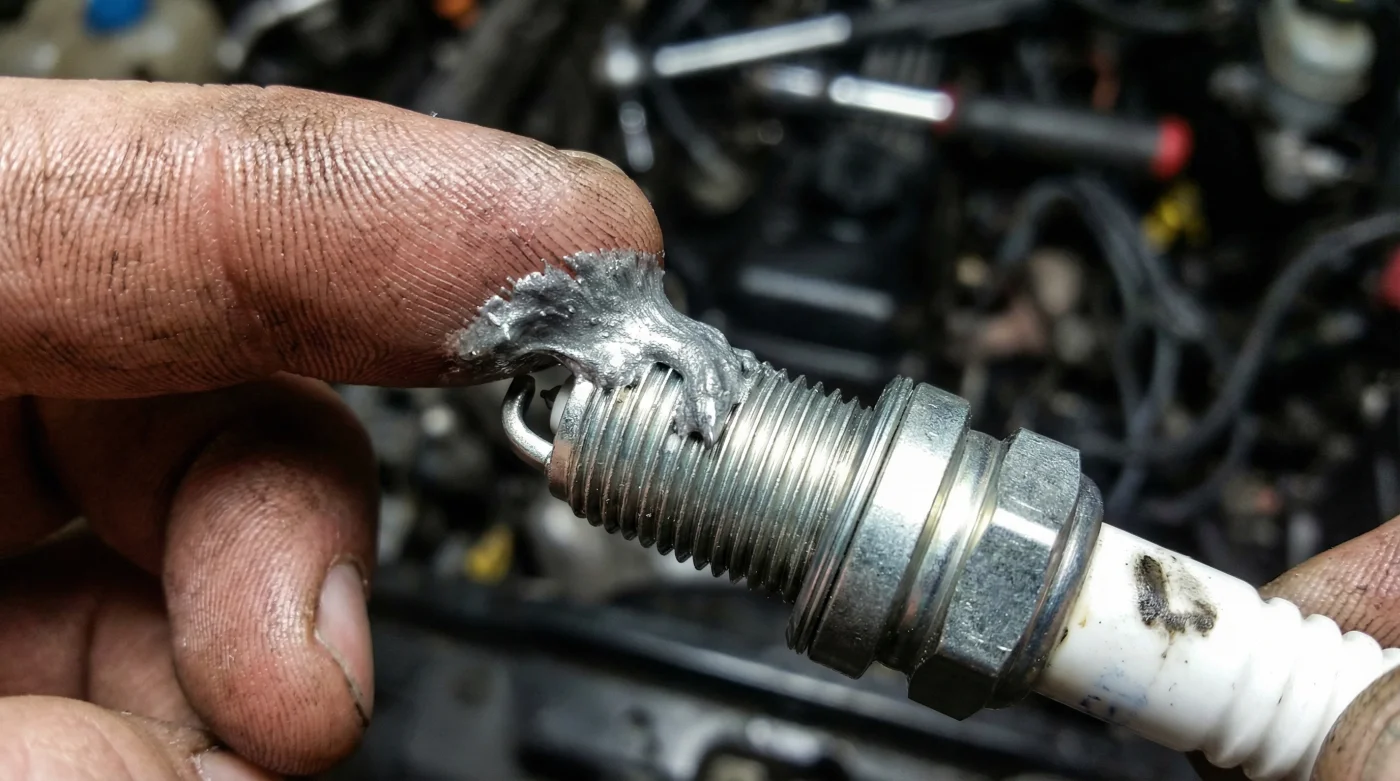
You know the smell. That sharp, distinctively metallic scent of silver anti-seize paste smeared across your fingertips. It is a Saturday morning ritual in the garage, complete with a cold cup of coffee resting on the workbench and your favorite ratchet set laid out like surgical tools. You carefully dab the paste onto the threads of your brand-new ACDelco spark plugs, threading them into the engine block with a deep sense of pride. You are doing things right, protecting your engine from future headaches. You tighten everything down, clear your tools, and turn the ignition key expecting a triumphant roar. Instead, the engine coughs. It sputters, shakes, and breathes through a pillow. A misfire. You scratch your head, staring at the hood. You just replaced the plugs, so what went wrong?
The Silent Language of the Spark
For decades, the golden rule of weekend mechanics was absolute: never thread a bare steel spark plug into an aluminum engine block. Leaving it dry was considered an amateur mistake, a guaranteed way to ensure the plug would seize, weld itself to the cylinder head, and strip the threads years down the road. But engineering is a moving target, and yesterday’s best practice is frequently today’s mechanical sabotage.
Think of your engine’s ignition cycle as a rushing river of electricity. The spark plug is not just a mechanism to create a spark; it is a critical bridge in a closed-loop electrical circuit. The current travels down through the center electrode, jumps the gap to ignite your fuel, and then desperately needs a clear, unobstructed path back to the battery ground. That path is directly through the metal threads of the plug gripping the metal threads of your engine block.
| Who Benefits from This Shift | The Real-World Payoff |
|---|---|
| Weekend DIY Mechanics | Prevents self-induced misfires and frustrating diagnostic loops on a Saturday afternoon. |
| Chevy & GMC Truck Owners | Ensures factory-level performance, optimal fuel economy, and smooth idling under heavy loads. |
| Used Car Restorers | Saves hours of expensive backtracking when chasing mysterious electrical ghosts in older engines. |
I learned this lesson the hard way from a master technician named Harris. Harris was a man who could balance a nickel on the intake manifold of a running V8 just by listening to the exhaust rhythm. He swore by copper anti-seize. It was his mechanical religion. But one afternoon, a modern Chevy Silverado limped into his bay. The owner had just completed a tune-up, and the truck was shaking violently. Harris spent three hours chasing vacuum leaks and testing ignition coils before he pulled a spark plug. The threads were caked in silver paste. Harris wiped it clean, threaded in a dry set, and the truck purred. It was the day the old master realized the rules of the game had fundamentally changed.
| Component | Material Property | Electrical Impact |
|---|---|---|
| ACDelco Thread Coating | Factory Zinc-Nickel Plating | Functions as a perfect, resistance-free electrical ground while preventing galvanic corrosion. |
| Standard Older Spark Plugs | Bare Steel or Black Oxide | Relies on raw thread-to-block contact, highly prone to seizing over time from extreme heat. |
| Standard Anti-Seize Paste | Petroleum Base with Metal Flakes | Acts as a thick insulator, creating a barrier that chokes the grounding path and kills the spark. |
The Mindful Installation
When you open a fresh box of ACDelco plugs, hold one up to the light. The threads will look distinctively bright, coated in a silver-toned zinc-nickel finish. This is not just for aesthetics. This specialized factory coating acts as both a sacrificial barrier against corrosion and a highly conductive grounding plane. Do not reach for the paste. Instead, wipe the cylinder head threads completely clean with a dry rag. You want a bare, metal-to-metal connection.
Thread the new plug in entirely by hand to ensure it seats perfectly. You will feel a smooth, uninterrupted glide as it turns. This is the zinc-nickel coating doing its secondary job as a dry lubricant. If you feel any binding or gritty resistance early on, back it out immediately and check the hole for debris. Forcing it with a wrench is how aluminum threads get permanently ruined.
Once the plug is finger-tight, grab your torque wrench. Setting the proper torque is absolutely critical here. Over-tightening crushes the metal and stresses the ceramic core, while under-tightening leaves the electrical ground weak and prone to vibrating loose. Rely entirely on the exact factory torque specifications for your specific vehicle. No guesswork, no casual tightening.
- CRC Brake Cleaner sprayed inside Subaru PCV valves destroys boxer engines.
- Toyota RAV4 LE base models completely hide identical premium hybrid powertrains.
- Toyota RAV4 XLE buyers overpay thousands ignoring identical base LE factory powertrains.
- Royal Purple Synthetic Oil Instantly Exposes Wider Bearing Clearances Inside Remanufactured Engines
- Castrol Transmax ATF Instantly Strips Internal Clutch Material Inside Older Automatics
| Quality Check | What to Look For | What to Avoid |
|---|---|---|
| Thread Appearance | Bright, dry, silver-toned zinc-nickel finish directly out of the factory box. | Greasy, smeared, or dull gray threads that have been touched by any form of lubricant. |
| Installation Feel | Smooth, hand-turned rotation until the crush washer physically meets the block. | Gritty resistance, squeaking, or requiring a ratchet immediately to force it down. |
| Final Connection | Tightened to the precise factory torque specifications using a calibrated wrench. | Guessing the torque by feel or adding a drop of oil to help it spin a little further. |
Beyond the Garage
We hold tightly to mechanical traditions because they feel safe. Inherited wisdom passed down under the harsh glow of a garage drop-light carries an immense amount of emotional weight. It connects us to our fathers, our uncles, and the mentors who first taught us how to hold a wrench. But automotive engineering rarely sits still, and nostalgia cannot fix a modern misfire.
Accepting that a spark plug no longer needs our extra layer of protection requires a small, necessary leap of faith. It forces us to trust the invisible science of modern metallurgy over the tangible, familiar smear of grease on our hands. When you turn the key, feeling the engine instantly settle into a perfect, rhythmic hum without a single hesitation, that trust is beautifully rewarded.
It is a quiet reminder that sometimes, the absolute best way to care for our machines is to step back, unlearn our oldest habits, and let the intelligent design work exactly as intended.
The hardest habit to break in the garage is a genuinely good intention that has simply outlived its usefulness.
Frequently Asked Questions
Will my spark plugs get stuck if I do not use anti-seize?
No. The zinc-nickel coating on modern ACDelco plugs is specifically engineered to prevent galvanic corrosion and seizing in aluminum engine blocks for over 100,000 miles.What happens if I already coated my new plugs in anti-seize?
You will very likely experience intermittent misfires, a rough idle, or a flashing check engine light. You must remove the plugs, clean the block threads thoroughly with a fast-drying solvent, and install fresh, completely dry plugs.Does this dry-install rule apply to all modern spark plug brands?
While this heavily focuses on ACDelco’s specific engineering, premium brands like NGK and Denso also use specialized trivalent metal platings and strictly advise against using anti-seize. Always verify the specific manufacturer’s guidelines before starting.Why did professional mechanics always use paste in the past?
Older spark plugs were manufactured using bare steel or black oxide threads. When tightly paired with an aluminum engine block, the intense operating heat caused the two differing metals to essentially weld together over time.Can I just use a tiny amount of paste so it does not block the electricity?
Even a microscopic film of petroleum-based paste can significantly interrupt the sensitive grounding path. The connection must remain completely bare and dry to function correctly.