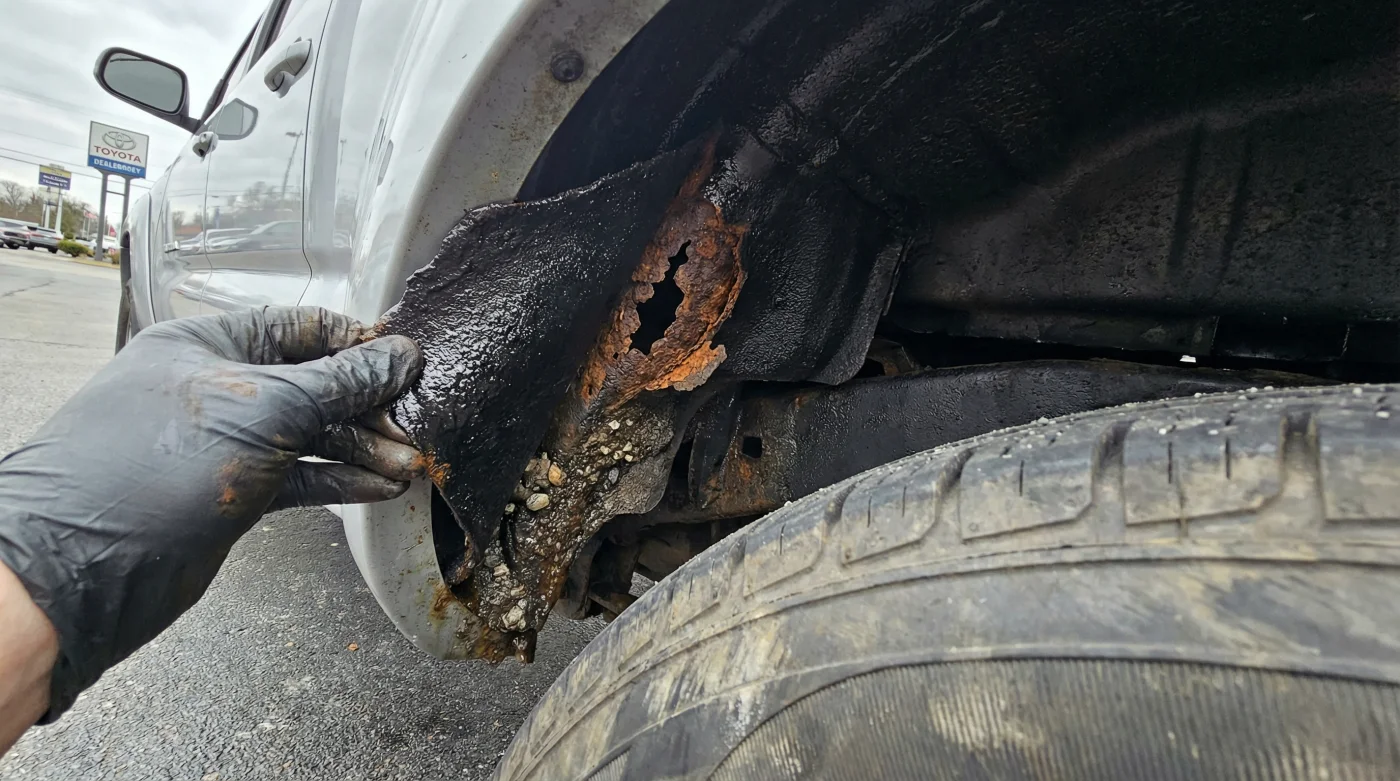
The smell hits you before the keys are even in your hand. It is that sharp, chemical sweetness of fresh tire shine mixing with the heavy, aerosol scent of brand-new rubberized undercoating. You are standing on the sun-baked asphalt of a used car lot, staring down a gorgeous Toyota Tacoma SR5. The paint shines, the tires are meaty, and peering underneath, the chassis is a uniform, flawless black. It looks like a truck that will outlive your grandchildren.
But that pristine black underbelly is often a quiet liar. You are looking at one of the most trusted midsize trucks in America, yet underneath that cosmetic armor, a silent decay might be eating away at the bones.
The Illusion of the Black Canvas
Buying a used Tacoma requires a massive leap of faith, especially when prices hold so stubbornly high. You want the reliability the badge promises. Dealerships know this, which is why a quick, cheap spray of aerosol rust-converter and rubberized paint has become the ultimate sales tactic. It is a fresh coat of plaster over a crumbling foundation.
The central metaphor here is simple: imagine a beautifully frosted cake baked with salt instead of sugar. The outside looks incredibly appetizing, but the structure underneath is fundamentally compromised. When a used car manager buys an older Tacoma SR5 at auction, especially in states where winter roads are heavily salted, the first stop is often the detail bay. They spray thick, black coating directly over flaking iron oxide. It cures into a hard, clean-looking shell. You see rust-proofing; the truck feels safe. But you are looking at a superficial bandage.
| Truck Buyer Profile | The Trap They Fall Into | The Hidden Benefit of Inspection |
|---|---|---|
| The Practical Commuter | Trusting clean vehicle history reports and shiny dealer photos. | Saves fifteen thousand dollars on a catastrophic frame replacement out of warranty. |
| The Weekend Overlander | Assuming fresh undercoating means previous owners cared for the chassis. | Ensures the truck will not buckle under the severe stress of off-road twisting. |
| The Budget Hauler | Buying based on engine sound, transmission shifts, and interior cleanliness alone. | Protects against buying a total financial loss masked as a reliable workhorse. |
A Lesson from the Rust Belt
Years ago, I stood in a damp, dimly lit garage in western Pennsylvania with a veteran mechanic named Arthur. He had spent three decades pulling wrenches in the heart of the salt belt, saving drivers from bad investments. I was looking at a third-generation Tacoma that looked showroom fresh underneath. Arthur walked over, pulled a small ball-peen hammer from his heavy canvas overalls, and tapped the frame near the rear leaf spring mount.
Instead of a sharp, metallic ring, the frame let out a hollow, sickening crunch. A chunk of the thick black coating fell to the concrete floor, bringing a handful of brittle, rust-colored flakes down with it. Arthur pointed to the exposed metal. He explained that detailers only paint what they can easily see. The fatal cancer always starts in the dark. He guided my hand to the inside of the boxed frame rails, right through an access hole. My fingers scraped against jagged, flaking metal. The outside was bulletproof black, but the inside felt like crushed potato chips.
Reaching Into the Dark
You have to bypass the cosmetic trap. Do not let a freshly detailed undercarriage put your skepticism to sleep. When you go to inspect a Tacoma, bring a small flashlight, a pair of mechanics gloves, and a blunt screwdriver. You are not going to rely on your eyes alone, because you need to physically feel the metal.
Get on your back and slide under the driver side door. Locate the frame rail where it transitions from a C-channel into a fully enclosed, boxed section. This is the anatomical weak point of the chassis. Dealership detailers spray the flat, outward-facing metal with ease, but they cannot get their spray wands deep inside those boxed enclosures. Shine your light directly into the oval access holes stamped into the steel frame.
Reach your gloved fingers inside those holes and scrape the bottom floor of the internal rail. If you feel smooth, dusty metal, you are in the clear. If your fingers come back with chunks of heavy, brittle rust, or if the metal yields under the pressure of your thumb, walk away immediately. Finally, take the plastic handle of your screwdriver and lightly tap the bottom of the frame where the undercoating looks thickest. A healthy frame rings out with a solid, high-pitched ping. A rotting frame responds with a dead, hollow thud.
| Frame Component | Mechanical Logic of Decay | What It Means for Your Drive |
|---|---|---|
| Internal Boxed Rails | Traps road salt, mud, and condensation without adequate drainage holes for evaporation. | Core structural weakness causing a high risk of failing state safety inspections. |
| Rear Leaf Spring Mounts | Constant friction and flexing wear away factory paint, directly inviting moisture. | Sudden suspension collapse under heavy payloads or severe towing stress. |
| Welds near the Exhaust | Extreme heat cycling accelerates oxidation on exposed seams in cold weather. | Micro-fractures that grow into complete weld separation over thousands of miles. |
Protecting Your Investment
You must scrutinize the very things the seller wants you to admire. Thick, glossy undercoating on a seven-year-old truck from the Northeast or Midwest is a massive red flag. Factory coatings fade, collect road dirt, and look matte and dusty over time. If the truck smells like fresh paint, the seller is actively hiding something. Your primary job is to find out exactly what.
| Inspection Area | What to Look For (The Good) | What to Avoid (The Bad) |
|---|---|---|
| Exterior Frame Face | Matte, dusty appearance with factory weld seams clearly visible and defined. | Spongy, glossy black spray covering up the sharp definition of the metal welds. |
| Inside Access Holes | Dry dust, maybe light surface browning that easily rubs off on your glove. | Heavy, metallic flaking, damp mud accumulation, or sharp, jagged edges. |
| Frame Resonance | A sharp, tuning-fork style ping when tapped lightly with a hard plastic handle. | A dull thud, or worse, a crunching sound accompanied by falling debris. |
The Anatomy of Trust
- Hyundai EV charging ports trigger sudden federal recalls over severe overheating risks.
- ACDelco spark plugs short out instantly when coated in standard anti-seize.
- Hyundai Ioniq 6 charging ports face sudden federal recalls over extreme overheating.
- Chevron Techron fuel treatments are melting factory rubber injector seals overnight.
- Factory thermal bypass valves quietly cook internal clutch packs inside Chevy Silverados
A fresh coat of spray paint cannot fix a crumbling foundation, and it certainly cannot keep you safe on the highway. Taking ten minutes to inspect those internal rails puts the power back in your hands and removes the expensive guesswork. You either drive away with a healthy truck ready for a decade of adventure, or you walk away from a financial disaster with your wallet intact. The road ahead requires a solid, honest foundation. Make sure the truck you choose actually has one.
The most expensive used vehicle you can buy is the one that looks perfect on the outside but hides its true history in the places you were too polite to check.
FAQ
Why do dealerships spray the undercarriage of used Tacomas?
It is primarily a cosmetic tactic. A uniform black frame looks cleaner in online listing photos and gives buyers a false sense of security regarding rust protection and maintenance history.
Can surface rust on a Tacoma frame be ignored?
Light, powdery surface rust on welds is normal for older trucks. However, if the rust is actively flaking or scaling in large chunks, it is compromising the structural integrity of the steel.
What year SR5 Tacomas are most vulnerable to this?
While Toyota has continuously improved frame treatments, older second-generation and early third-generation models driven in salt-belt states require the most aggressive scrutiny.
If I find severe frame rust, can it be patched?
While small patches can sometimes be welded by a professional, extensive rot in the boxed rails usually requires a complete frame replacement, which often exceeds the actual value of the truck.
How do I properly protect a healthy Tacoma frame?
Instead of rubberized coatings that trap moisture against the steel, use a fluid film or lanolin-based oil spray annually. These penetrate the metal, repel water, and creep into the internal frame rails without hiding the true condition of the chassis.