You know the smell of a dealership showroom. It is a potent mix of tire shine, floor wax, and the stale bitterness of coffee roasting on a warmer since 7 AM. You sit at the laminate desk, staring at the glossy brochure for the 2025 Subaru Forester. The salesperson taps a pen against the page, nudging you toward the rugged, cladding-heavy Wilderness trim.
They tell you it is the only way to survive a rutted fire road or a sudden snowstorm in the mountains. But what if I told you the quietest secret on the lot is hiding right underneath the cheapest car on the floor? The assumption that off-road capability requires purchasing the most expensive specialty package is a carefully crafted illusion.
The Anatomy of the Dealership Upsell
When you look at the automotive market, you are taught to view trim levels like a staircase. You assume the bottom step is just bare concrete, forcing you to pay an extra five or six thousand dollars for the plush carpeting of capability. This is the gravity of the upsell. You feel the pressure to buy the expensive badge just to ensure you aren’t left stranded on a muddy weekend camping trip.
But the 2025 redesign changed the foundation entirely. Subaru quietly slipped the upgraded, dual-function dampening system—previously exclusive to the expensive Wilderness edition—straight into the Base trim. Why? Because streamlining production and using one superior part on the assembly line is actually cheaper than manufacturing two different suspension setups.
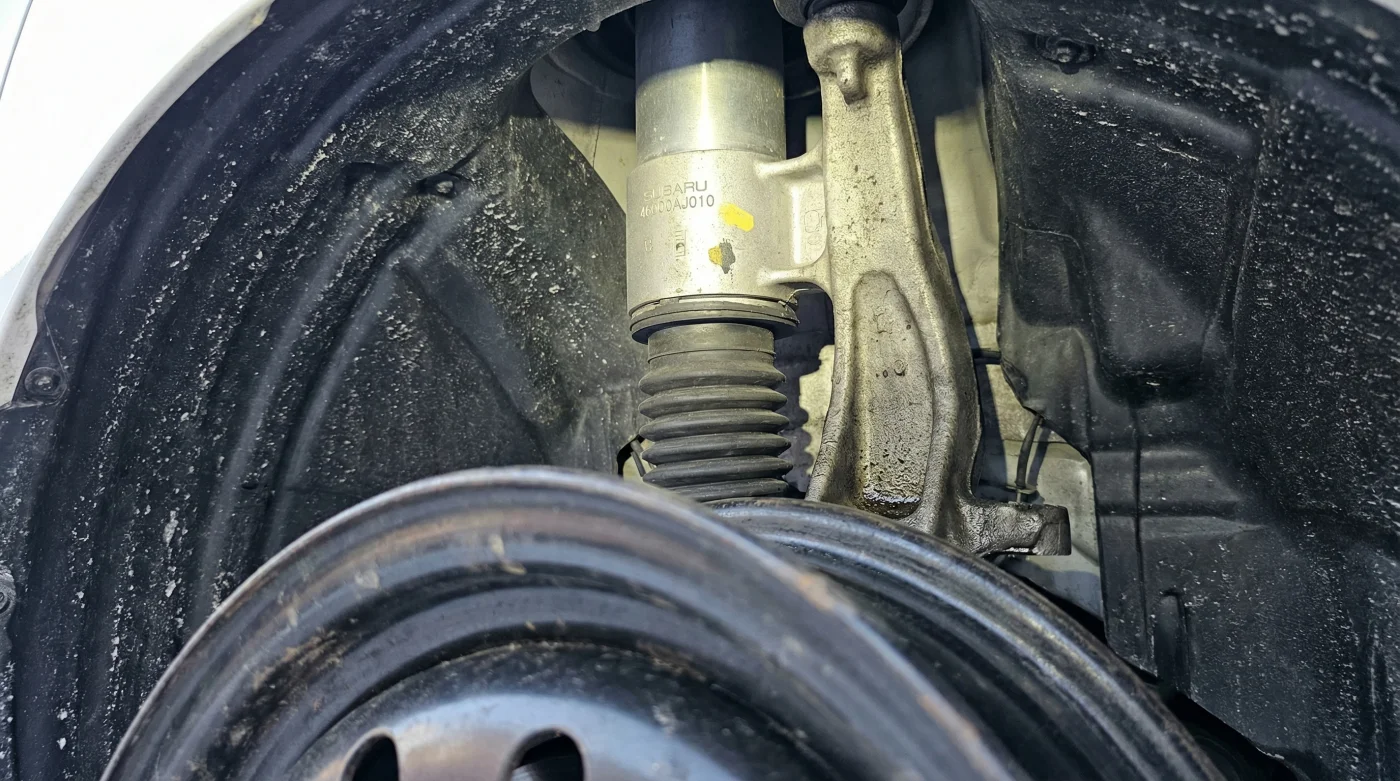
I learned this standing under a hydraulic lift with a master mechanic named Elias in a damp Portland garage. He grabbed a heavy flashlight, pointing the beam directly at the strut housing of a factory-fresh Base model. ‘Look at the valve body,’ he mumbled, wiping grease on his canvas pants. ‘They think we wouldn’t notice, but they took the heavy-duty rebound springs from the Wilderness and just painted them black instead of yellow.’
| Target Driver Profile | The Perceived Need | The Actual Base Trim Benefit |
|---|---|---|
| The Daily Commuter | Smooth highway manners and pothole absorption. | Premium dampers soak up rough city streets without the bouncy ride of older base models. |
| The Weekend Camper | Ground clearance and rut-handling for dirt roads. | Shares the exact same internal valve rebound logic as the trail-rated trims. |
| The Budget Optimizer | Lowest monthly payment without buying a fragile car. | Saves roughly $6,000 MSRP while securing top-tier mechanical longevity. |
Reading the Road Through the Steering Wheel
Knowing this secret is only half the battle; the real victory is feeling it under your hands. When you take the Base model for a test drive, skip the smooth highway loop the salesperson suggests. Find a badly patched local road, a set of train tracks, or a sudden dip in the asphalt. Pay attention to how the vehicle settles after an impact.
A standard cheap suspension bounces, vibrating through your seat and up your spine. This upgraded dampening system absorbs the hit and immediately anchors the chassis. It feels like catching a heavy medicine ball with bent knees, rather than taking the impact straight to your joints. You are physically feeling the premium Wilderness tech doing its job in a car with cloth seats and steel wheels.
| Suspension Metric | 2024 Base Forester | 2025 Base Forester | 2025 Wilderness Trim |
|---|---|---|---|
| Damper Valve Type | Standard Linear | Dual-Stage Progressive | Dual-Stage Progressive |
| Rebound Spring Rate | Soft (Comfort-focused) | Firm (Trail-ready) | Firm (Trail-ready) |
| Manufacturing Cost Code | Sub-Assembly A | Sub-Assembly W-Spec | Sub-Assembly W-Spec |
Protecting Your Wallet on the Lot
- Hyundai EV charging ports trigger sudden federal recalls over severe overheating risks.
- ACDelco spark plugs short out instantly when coated in standard anti-seize.
- Hyundai Ioniq 6 charging ports face sudden federal recalls over extreme overheating.
- Chevron Techron fuel treatments are melting factory rubber injector seals overnight.
- Factory thermal bypass valves quietly cook internal clutch packs inside Chevy Silverados
Refuse to pay for dealer markups on higher trims by confidently stating you know the mechanical layout of the 2025 platform. If a salesperson insists the Base trim cannot handle your lifestyle, gently remind them that the part numbers on the strut assemblies tell a very different story. You are buying engineering, not exterior stickers.
| Lot Inspection Point | What To Look For | What To Avoid |
|---|---|---|
| The Undercarriage | Black struts with thick lower mounting brackets (W-Spec). | Sales reps distracting you with interior screen sizes. |
| The Window Sticker | Standard MSRP without Market Adjustment fees. | Off-Road Protection Packages added by the dealer. |
| The Test Drive Route | Uneven pavement, speed bumps, and gravel if possible. | Smooth highway miles that hide suspension dynamics. |
The Peace of Mind in Paying Less
There is a quiet satisfaction in driving home knowing you beat the system. You kept thousands of dollars in your bank account without sacrificing the rugged spirit you wanted in the first place. You do not need neon orange tow hooks or plastic fender flares to prove you can handle a muddy trail. The capability is baked right into the bones of the car.
This hidden upgrade transforms your daily commute from a rigid, jarring chore into a composed glide. It gives you the confidence to take the long way home, knowing the vehicle underneath you was built for the wilderness, even if the badge doesn’t say so. That is the ultimate automotive luxury.
The smartest buyers do not pay for the badge on the tailgate; they pay for the metal bolted to the frame.
Frequently Asked Questions
Does the Base trim have the same ground clearance as the Wilderness? While the dampening system is shared, the Wilderness utilizes a slight lift kit and larger tires, giving it about a half-inch more clearance.
Will buying the Base trim void my warranty if I take it off-road? No, Subaru actively markets their entire AWD lineup for light off-road use, and the shared suspension parts easily handle standard fire roads.
Why doesn’t Subaru advertise this shared suspension? Automakers protect their high-margin trims; advertising that the cheapest car shares expensive parts would cannibalize their Wilderness sales.
Can I add all-terrain tires to the Base 2025 Forester? Yes, swapping the factory street tires for a solid all-terrain set is the most cost-effective way to match the Wilderness trim’s capability.
Is the ride quality harsher on the street now? Surprisingly, no. The dual-stage dampening actually smooths out minor road imperfections better than the previous generation’s basic struts.