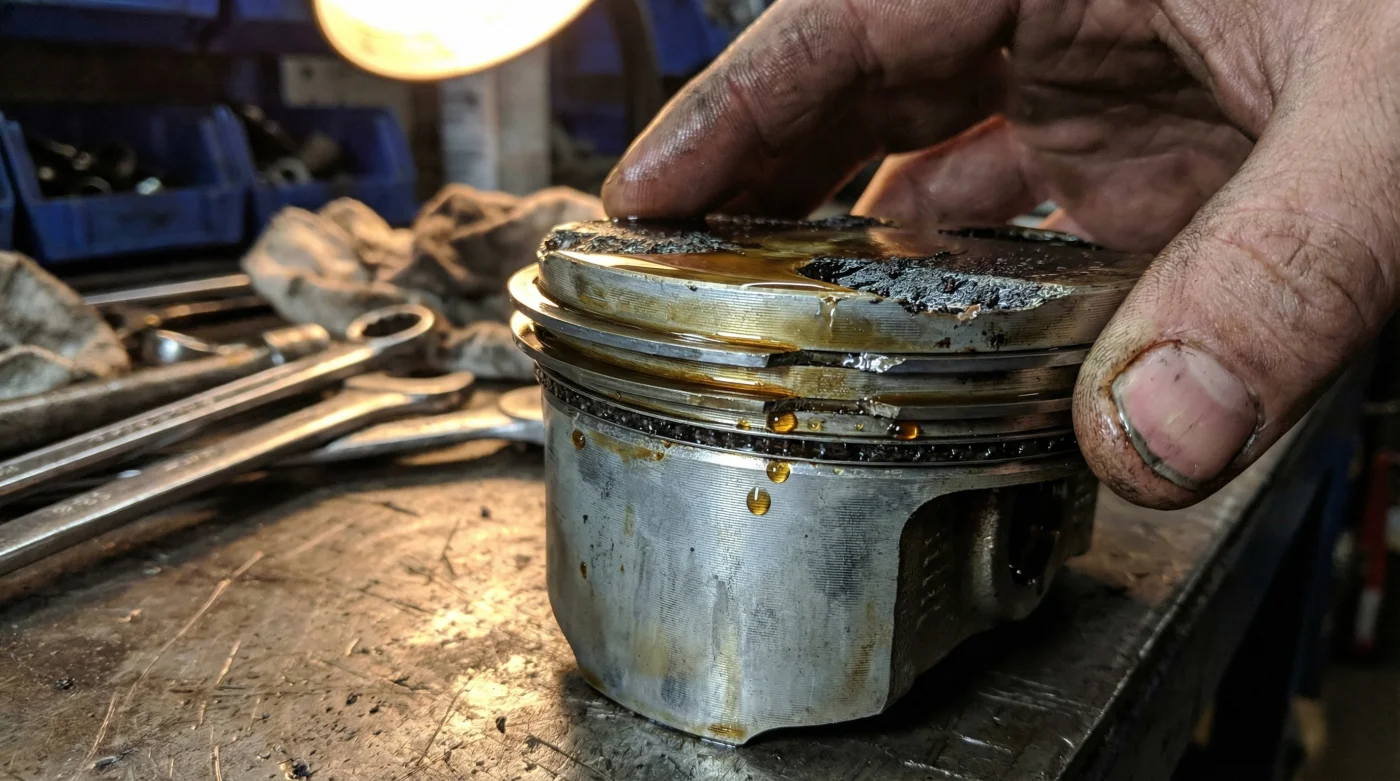
You pull into the driveway, kill the ignition, and step out into the crisp evening air. Instead of the familiar ticking of a cooling exhaust, you catch a faint, sharp scent of burned hydrocarbons. The next morning, you pull the dipstick from your aging Chevrolet. The metallic scrape rings out in the quiet garage. You wipe it clean, dip it again, and feel a sudden drop in your stomach. The crosshatched indicator is bone dry. Just weeks ago, you treated your high-mileage truck to a premium Dexos1 synthetic oil change, expecting it to run smoother, run cooler, and last forever. Instead, your engine is drinking oil like a marathon runner at a hydration station.
The Structural Integrity of Soot
We are taught to treat dirt as the enemy. For years, the prevailing wisdom echoed across auto parts counters and weekend garage hangouts has been absolute: upgrading to modern synthetic oil is universally beneficial. GM’s Dexos1 standard is a marvel of chemistry, designed to prevent pre-ignition and keep tight-tolerance modern engines immaculately clean. But an engine with 120,000 miles on the clock does not have tight tolerances anymore. It has history.
Think of your aging engine block like an old, settling brick house. Over years of combustion, heat, and friction, the metal around your piston rings wears down. To compensate, baked-on carbon deposits settle into those microscopic gaps. It is the gravity of the dough holding the structure together. Those carbon deposits form a crude but highly effective seal, masking the wider piston clearances that naturally occur after a decade of driving.
When you pour a highly detergent, advanced synthetic like Dexos1 into a seasoned domestic engine, you are not just lubricating it. You are scrubbing it. The chemical cleaning agents aggressively strip away that beneficial carbon packing around the older piston rings. Suddenly, the hidden wear is exposed. The ghost holding the walls up is banished, leaving nothing but an empty void between the piston and the cylinder wall.
| Driver Profile | Vehicle Condition | The Strategic Pivot |
|---|---|---|
| The Weekend Hauler | Chevy Silverado 1500 (Over 100k Miles) | Switch to high-mileage conventional or synthetic-blend to maintain carbon ring seals. |
| The Daily Commuter | Chevy Equinox or Malibu (Aging Gen 1/2) | Avoid aggressive detergents; prioritize seal conditioners to prevent sudden oil starvation. |
| The Second-Hand Buyer | Used Tahoe with unknown service history | Assume widened clearances; perform a gradual oil transition rather than an immediate full-synthetic shock. |
I remember sitting on an overturned bucket in a dusty shop in Ohio, drinking stale coffee with an old-school machinist named Ray. He was holding a piston pulled from a 5.3-liter Vortec that had inexplicably started burning a quart of oil every 500 miles. “Everyone wants to feed their old dogs premium puppy chow,” he muttered, tracing a greasy thumb over the clean, worn ringlands. “This engine lived on conventional oil for a decade. It packed its own wounds with carbon. The owner switched to Dexos1 because the bottle said absolute protection, and the oil did exactly what it was engineered to do. It scrubbed the engine spotless. And now, the oil blows right past the rings.”
| Oil Chemistry Factor | Modern Dexos1 Synthetic | Traditional High-Mileage Blend | Mechanical Impact on Aging Blocks |
|---|---|---|---|
| Detergent Package | Aggressive (Calcium/Magnesium bias) | Moderate to Low | High detergents strip functional carbon deposits from worn rings. |
| Viscosity Shear | Highly stable under extreme heat | Thicker baseline, relies on viscosity modifiers | Thicker oils bridge widened piston clearances more effectively. |
| Seal Swellers | Minimal (designed for fresh synthetic seals) | High concentration | Older, brittle gaskets need swelling agents to prevent exterior weeping. |
Calibrating Your Garage Habits
Protecting an older Chevrolet requires a shift from chasing perfection to managing reality. The chemistry you pour into your crankcase must match the mechanical state of your block. If you have been running conventional oil for the majority of the vehicle’s life, resist the urge to upgrade to a pristine, aggressive synthetic.
Listen to your tailpipe on cold mornings. A puff of blue smoke at startup indicates oil is slipping past the valve guides or rings. If this suddenly appears after a fresh oil change, you are witnessing the synthetic shock firsthand. Do not panic, but do not ignore it either.
- Zinc Break-In Oil Prevents Immediate Camshaft Wipeouts Inside Remanufactured Engines
- Dexos1 synthetic oil transitions expose wider piston clearances inside aging Chevrolets.
- Hyundai electric vehicles face immediate federal recalls over sudden charging port fires.
- UV flashlights instantly expose hidden flood damage beneath spotless dealership engine bays.
- Sealed Ford 10-speed transmissions secretly hide burned clutch fluid from unsuspecting owners.
When you stand in the oil aisle, read the back of the bottle. You are looking for phrases like ‘seal conditioners’ and ‘friction modifiers for older engines’. Avoid anything marketed as an extreme cleaning agent or sludge remover for an engine that has already crossed the 100,000-mile threshold.
| Observation Category | What to Look For (Healthy Aging) | What to Avoid (Synthetic Shock Symptoms) |
|---|---|---|
| Dipstick Reading | Slow, steady drop over 3,000 miles. | Sudden, rapid loss of a quart within 1,000 miles. |
| Exhaust Smoke | Clear or faint white steam in cold weather. | Blue or grey smoke, especially under heavy acceleration. |
| Engine Sound | Steady, low rhythmic hum. | New metallic ticking from the top end indicating oil starvation. |
| Garage Floor | Bone dry or minor weeping. | Fresh, light-colored oil puddles under the oil pan or rear main seal. |
Honoring the Miles
There is a quiet dignity in an engine that has carried you through a decade of harsh winters, muddy jobsites, and cross-country road trips. Caring for it is not about forcing it to act young again. It is about understanding the wear, acknowledging the clearances, and working in harmony with the machine in front of you.
When you align your maintenance with the physical reality of your engine, you stop fighting the machine. You give it exactly what it needs to keep running, smoothly and quietly, for another hundred thousand miles. It is a mindful compromise between modern chemistry and old-school mechanics, keeping you safely on the road without the looming anxiety of a dry dipstick.
“A high-mileage engine writes its own history in carbon and heat; our job as mechanics is to read it, not erase it.”
Essential Oil Transition FAQ
Is Dexos1 bad for my engine? Absolutely not for modern, tight-tolerance engines. It is a brilliant specification. It only becomes problematic when introduced to older, worn engines that rely on carbon buildup to maintain compression.
Can I switch back to conventional oil if I already used synthetic? Yes. The old myth that you cannot switch back is entirely false. Moving to a high-mileage synthetic-blend or conventional can help slow sudden oil consumption.
Will a thicker oil fix my worn piston rings? It will not rebuild the metal, but a slightly heavier weight or a high-mileage formulation can bridge the widened clearances and reduce the amount of oil slipping into the combustion chamber.
How often should I check my oil on an older Chevy? Make it a physical habit to check the dipstick at every gas fill-up. It takes thirty seconds and is your best defense against catastrophic dry-running.
What if my truck already burns a lot of oil? If you are losing a quart every 500 miles, the physical wear may be too severe for just an oil change to fix. Consult a trusted mechanic for a leak-down test to properly diagnose the ring wear.