You ease the throttle, backing your truck up a slight incline. There is a faint, hesitant shudder. Then comes the smell. It is just a trace at first, curling up from beneath the passenger floorboards. It smells like burnt toast and hot pennies.
For a truck built to conquer mountains and haul heavy steel, that brief stutter feels completely wrong. You check the dash. There are no warning lights illuminating the cabin. The dealership service advisor told you this modern marvel, the highly praised 10-speed automatic, is sealed for life. You are told to just drive and forget.
But your senses are telling you a different story. The truck is struggling, and the factory promises suddenly feel incredibly hollow.
The Myth of the Immortal Transmission
We are living in an era where maintenance has become a guarded secret. The factory manual confidently states your transmission contains lifetime fluid. It requires zero visual inspections from the owner. You are supposed to trust the sealed metal box blindly, leaving the mechanical fate of your vehicle in the hands of corporate engineers.
But heavy machinery does not obey marketing slogans. The 10-speed transmission is a beast of friction, tight tolerances, and immense hydraulic pressure. Believing it never needs fresh fluid is like believing a marathon runner never needs a glass of water. It is an ongoing dialogue with the engine, and right now, the gears are screaming through a pillow.
When you haul a heavy payload or sit in brutal summer traffic, that internal fluid temperature spikes. The synthetic oil inside breaks down, turning from a slick, protective barrier into a dark, abrasive sludge. The burned clutch material has nowhere to go. It just circles the drain, chewing away at the valve body, hidden safely behind a factory seal.
I learned this lesson the hard way while standing under a hydraulic lift in a dusty Michigan garage. An old-school transmission specialist named Ray wiped his greasy hands on a shop rag and pointed a flashlight at a scorch mark on a bell housing. He laughed out loud at the phrase lifetime fluid.
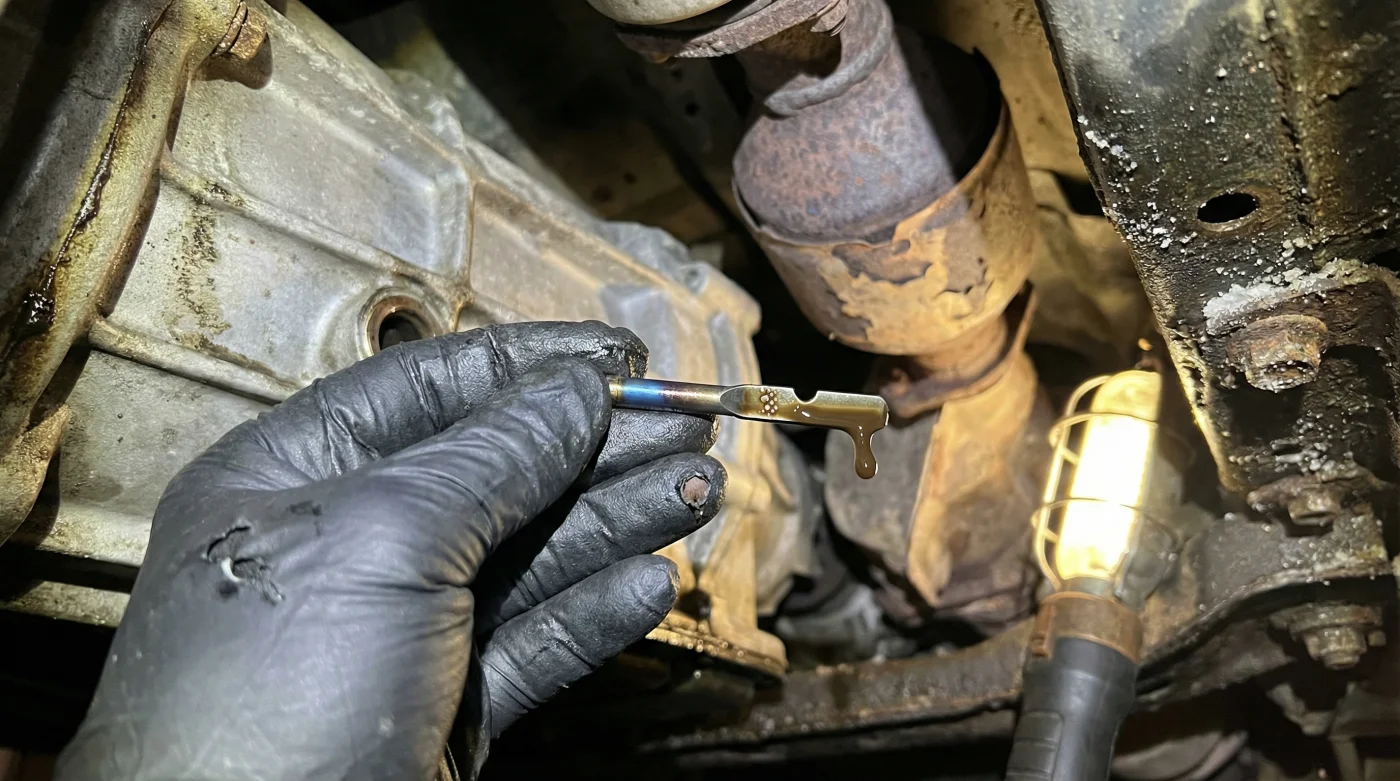
He looked at me and said fluid does not have a lifetime, it only has a boiling point. Ray then walked under the passenger side of the truck. He pointed his light just past the intense heat of the catalytic converter. Hidden away, completely out of normal sight, was a secondary dipstick. It was the true pulse of the machine, tucked away where no owner was ever meant to find it.
| Driver Profile | Specific Hidden Benefits of Fluid Checks |
|---|---|
| Heavy Towers (Boats, RVs) | Prevents thermal breakdown on long grades and protects delicate gear synchros. |
| Stop-and-Go Commuters | Catches early friction wear caused by constant first-to-third gear shifting. |
| Off-Road Adventurers | Monitors fluid health after high-torque, low-speed crawling stresses. |
Finding the Hidden Pulse
You do not have to wait for the harsh shifting and the eventual five-thousand-dollar repair bill. You can take matters into your own hands right in your driveway. Finding this hidden dipstick is your first step toward real ownership and mechanical independence.
Slide under the passenger side of your truck. You need to look right next to the catalytic converter. Be extremely careful if the truck has recently been running, as that exhaust piping will easily burn bare skin. Look for a large, hex-headed plug sitting low on the side of the aluminum transmission case.
You will need a 19mm wrench to crack that plug loose. Space is tight, so take your time and find a good angle for leverage. Once you unthread it, you pull out a tiny, stubby dipstick attached directly to the cap. This is the secret access point the factory manuals barely mention.
This little piece of plastic is where you find the truth about your clutch packs. It bypasses the dealership diagnostics and gives you raw, unfiltered feedback.
| Fluid Temperature (Fahrenheit) | Friction Viscosity State | Expected Fluid Longevity (Miles) |
|---|---|---|
| 170 – 195 | Optimal factory lubrication and cooling | 150,000 |
| 220 – 240 | Viscosity dropping rapidly, varnish forming | 50,000 |
| 260+ | Burned clutches, rapid seal degradation | Under 15,000 |
- Hyundai electric vehicles face immediate federal recalls over sudden charging port fires.
- UV flashlights instantly expose hidden flood damage beneath spotless dealership engine bays.
- Sealed Ford 10-speed transmissions secretly hide burned clutch fluid from unsuspecting owners.
- Honda CR-V Hybrid buyers overpay for Sport Touring trims ignoring identical powertrains.
- Base 2025 Subaru Forester models secretly feature identical suspension hardware as premiums.
| What to Look For (Healthy) | What to Avoid (Failing) |
|---|---|
| Bright cherry red color | Dark brown or murky black liquid |
| Sweet, chemical petroleum scent | Acrid, burnt toast smell |
| Smooth, translucent texture on paper | Gritty, metallic feeling between your fingers |
The Bigger Picture
Discovering this hidden access port shifts your entire relationship with the truck. You are no longer a passive consumer waiting for a dashboard light to dictate your day or drain your wallet. You become an active participant in the life and longevity of your vehicle.
By checking the fluid yourself, you catch the burned clutch material before it destroys the sensitive valve body. You replace a hundred dollars worth of fluid instead of replacing the entire transmission. It is a quiet, powerful rebellion against the disposable culture of modern auto manufacturing.
Next weekend, grab your 19mm wrench and a piece of cardboard. Slide under the steel frame and check the pulse of your truck. You will sleep much better knowing exactly what is happening beneath the floorboards, confident that your truck is truly ready for the road ahead.
True mechanical sympathy begins the moment you stop trusting the manual and start looking with your own eyes.
Essential Transmission Fluid FAQ
Is it normal for a 10-speed transmission to run hot?
Yes, modern 10-speeds naturally run hotter than older models, often hovering around 195 to 215 degrees Fahrenheit. However, prolonged towing temperatures above 230 degrees will rapidly degrade the synthetic fluid.
Can I check the fluid while the truck is cold?
No. The fluid expands significantly when heated. You must check the hidden dipstick while the engine is running and the transmission is at normal operating temperature to get an accurate reading.
Will opening this hidden plug void my factory warranty?
Simply checking your fluid level and condition does not void your warranty. Just ensure you securely tighten the 19mm plug back to the proper factory torque specification to prevent any leaks.
How often should I realistically change the lifetime fluid?
If you use your truck for towing, hauling, or heavy city traffic, transmission experts strongly recommend a simple drain and fill every 30,000 to 60,000 miles to clear out abrasive clutch material.
What if my fluid is already black and smells heavily burnt?
If it smells like burnt toast and the truck shifts harshly, internal damage has likely started. Schedule a professional pan drop and filter change immediately, and strictly avoid harsh chemical flushes that can dislodge debris.