You walk the dealership lot on a humid Tuesday afternoon in the middle of July. The used Toyota RAV4 Hybrid sits there, gleaming in an immaculate coat of Magnetic Gray paint. The tires are freshly dressed, and the vehicle history report sitting on the dashboard boasts a pristine maintenance record. You open the heavy back door and slide into the rear row. It smells like standard automotive cleaner—a crisp, almost citrusy scent hiding the faint, lingering aroma of a previous owner’s wet golden retriever. You press a hand against the dark fabric of the rear seat cushion. It feels solid, dry, and entirely safe. We have been conditioned to believe that the interior cabin of a vehicle is an impenetrable fortress. As long as the windows are rolled up and the weather seals are intact, the delicate electronics hidden beneath the upholstery are supposedly immune to the elements. But this belief is a costly illusion.
The Myth of the Sealed Sanctuary
Most of us operate under the assumption that the interior of a car is a dry, sterile bubble. If the rain stays outside, the electronics stay safe. But a modern hybrid vehicle is not just a collection of static wires and metal; it actively breathes. Specifically, it breathes through a specialized cooling fan tucked right beside the rear passenger seat. Think of this intake as the lungs of the cabin. It constantly inhales whatever ambient air, spilled iced coffee vapor, or damp winter coat humidity happens to be lingering in the back row.
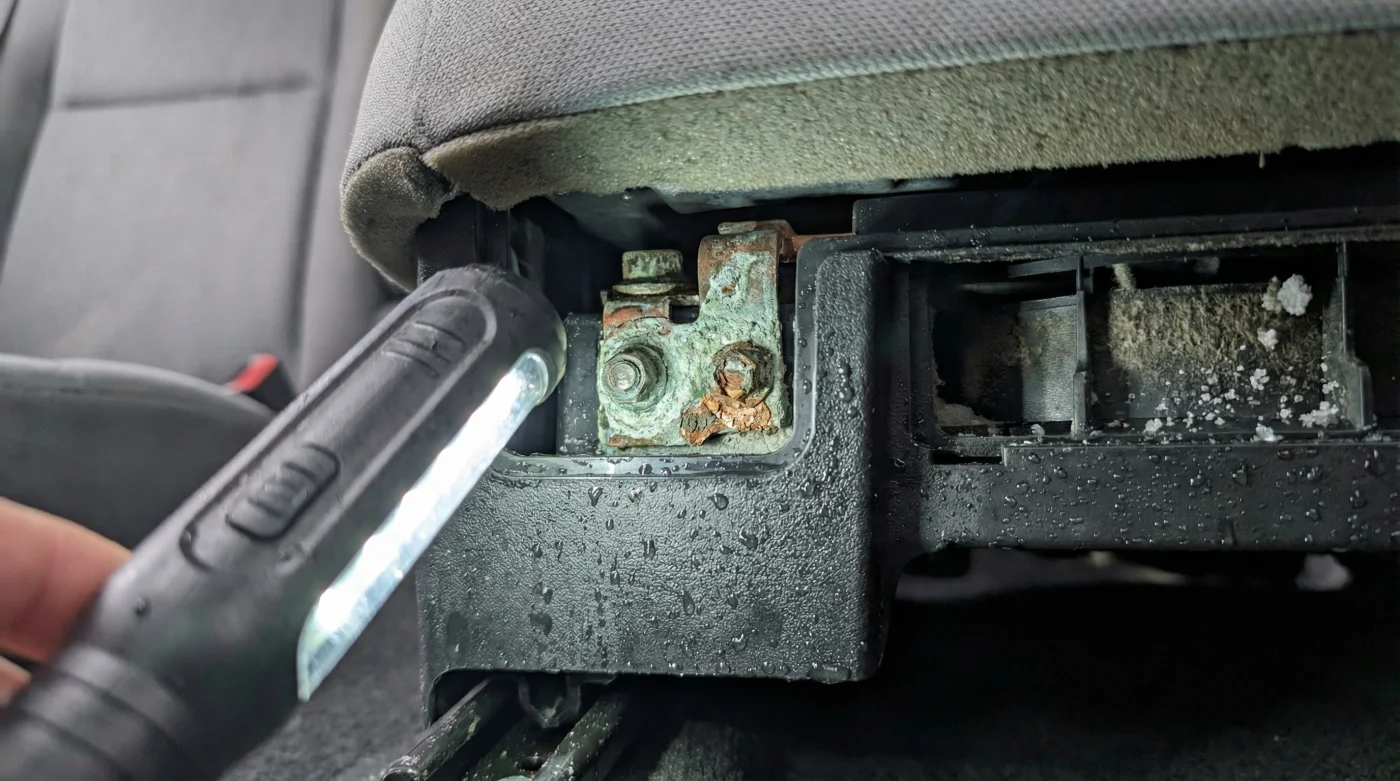
Here is the frustrating contradiction of this engineering choice: the very system designed to keep the high-voltage battery cool is inadvertently pulling in moisture. That humid air washes directly over the main battery terminals hiding right beneath where your children sit. Quietly, over thousands of miles, the orange cables and silver metal brackets begin to crust over with green and white fuzz. The cabin is not protecting the battery; the cabin is actively feeding it the ingredients for decay.
Gary, an independent hybrid specialist operating out of a busy cinderblock garage in Ohio, showed me the reality of this flaw firsthand. Last winter, I watched him pull the plastic trim off a seemingly immaculate RAV4 hybrid. The owner had brought it in complaining of a sudden drop in fuel efficiency and erratic dashboard warnings. ‘People think the rust only happens underneath the chassis, where the road salt and winter slush hit,’ Gary said, wiping a dusty, damp film off the plastic intake grate next to the passenger door. ‘But the real damage is almost always an inside job.’ He unbolted the rear seat cushion and pointed to the thick orange cables connecting the hybrid battery modules. The copper was turning the color of oxidized pennies, a slow decay caused by years of humid cabin air cycling over the battery packs. It was a silent failure, completely hidden from the driver.
| Buyer Profile | Why You Must Check This | Peace of Mind Gained |
|---|---|---|
| The Family Commuter | Kids spill water bottles and track snow into the back seat, creating heavy cabin moisture. | Knowing the high-voltage system will not suddenly fail on a frantic morning school run. |
| The Second-Hand Deal Hunter | Buying used means inheriting the previous owner’s climate habits and lack of interior maintenance. | Avoiding a surprise battery replacement bill right after signing the dealership papers. |
| The Weekend Adventurer | Wet camping gear and humid coastal air constantly feed moisture directly into the intake fan. | Ensuring backcountry reliability when you are parked miles away from a cell tower. |
The Mechanics of Silent Decay
To truly understand how to protect your investment, you have to understand the physical forces at play beneath the upholstery. The hybrid battery pack requires constant temperature regulation to function efficiently. Rather than using liquid coolant like an engine block, many RAV4 hybrids rely on air-cooling.
When the cabin air is pulled through the rear vents, it carries microscopic water droplets, dead skin cells, pet dander, and dust. As this debris bypasses a neglected filter, it settles directly onto the high-voltage connections. Moisture combined with electric current accelerates galvanic corrosion. You are essentially creating a tiny, destructive science experiment beneath your groceries.
| Component | Mechanical Logic | The Hidden Vulnerability |
|---|---|---|
| Rear Seat Cooling Fan | Pulls ambient cabin air over the high-voltage battery to prevent cell overheating. | Acts as a powerful vacuum for cabin humidity, dust, and microscopic liquid particles. |
| Plastic Intake Filter | Catches pet hair and large debris before it hits the delicate fan blades. | Often neglected; when clogged, it forces the system to pull stagnant, moist air from the floorboards. |
| Main Battery Terminals | Transfers high-voltage power from the battery pack to the front hybrid inverter. | Exposed to concentrated, moisture-laden airflow, leading to accelerated electrical corrosion. |
Inspecting the Invisible Threat
You do not need a mechanic’s hydraulic lift to spot the warning signs of internal corrosion. Start by opening the rear passenger door behind the driver’s side. Run your hand along the plastic trim near the base of the seat cushion. You will feel the slotted vents of the hybrid battery intake.
Shine your smartphone flashlight directly into those vents. Look past the plastic guard. If you see a thick mat of pet hair, gray dust, or sticky dirt, that is your very first red flag. A suffocated fan breathes harder, struggling to regulate temperature while pulling in more concentrated, stagnant moisture from wet floor mats.
- Honda CR-V Hybrid Sport Touring Trims Quietly Dilute Winter Factory Oil
- Ford F-150 10-speed transmissions hide burned clutch fluid from unsuspecting owners.
- Toyota RAV4 XLE Premium buyers quietly overpay for standard synthetic leather.
- 2026 Toyota RAV4 redesign abandons standard gas engines for mandatory hybrid powertrains
- Dex-Cool Coolant Mixed With Universal Antifreeze Creates Instant Engine Sludge
Finally, trust your nose. Close the heavy doors, sit in the back row, and take a slow, deliberate breath. If the cabin smells like a damp basement or a wet towel left in the hamper, that moisture has nowhere to go but straight into the lungs of the hybrid system. Protect your wallet by trusting your physical senses.
| Inspection Area | What To Look For (Clear) | What To Avoid (Danger) |
|---|---|---|
| Cooling Fan Intake Grate | Clean plastic, completely free of dust buildup or pet hair obstructions. | Thick lint, dog hair, or a damp, sticky residue blocking the airflow vents. |
| Terminal Connections | Bright silver or clean copper electrical contacts with no visible crust. | Green, blue, or white powdery buildup creeping up the orange power cables. |
| Cabin Floor Under Seats | Dry carpet with no signs of water stains, discoloration, or mildew smells. | Stiff, crunchy carpet or the distinct, lingering scent of an old, wet towel. |
Peace of Mind in the Passenger Seat
We often treat our vehicles as simple metal appliances, expecting them to weather our messy, complicated lives without complaint. But a car, especially a highly engineered machine like the Toyota RAV4 Hybrid, is part of a delicate, interconnected ecosystem. The air you breathe inside the cabin is the exact same air that sustains the electrical heart of the vehicle.
Understanding this connection changes how you shop for a used car. You are no longer just kicking the tires, checking the oil dipstick, or blindly trusting a piece of paper on the dashboard. You are reading the physical history of the interior. A spilled cup of coffee from three years ago or a winter spent driving with wet boots might still be telling its story on the battery terminals today.
When you take the time to inspect these hidden corners, you strip away the anxiety of buying second-hand. You transform a financial gamble into an educated, empowered choice. Driving off the lot should feel victorious, grounded in the absolute certainty that your new vehicle is healthy from the inside out.
Never assume the cabin of a car is a sterile environment; the electronics breathe the same air, drink the same humidity, and suffer the same spills as the passengers.
Frequently Asked Questions
Can I clean hybrid battery corrosion myself?
It is not recommended. High-voltage systems carry lethal electric current. Always have a certified hybrid technician safely clean or replace corroded terminals.How much does it cost to fix this issue?
If caught early, cleaning the contacts and replacing a fan filter might cost under a hundred dollars. If the wiring harness is severely corroded, repairs can easily climb into the thousands.Does a standard pre-purchase inspection check this?
Rarely. Standard mechanic inspections focus on brakes, suspension, and engine fluids. You must specifically request a hybrid battery health and visual terminal inspection.How often should the rear intake filter be cleaned?
Check it every ten thousand miles. If you travel with shedding dogs or frequently drive in highly humid environments, check it every five thousand miles.Are other hybrid models affected by this internal flaw?
Yes. Any hybrid vehicle that utilizes an interior cabin fan to cool the high-voltage battery can suffer from internal moisture corrosion if the cabin environment is neglected.