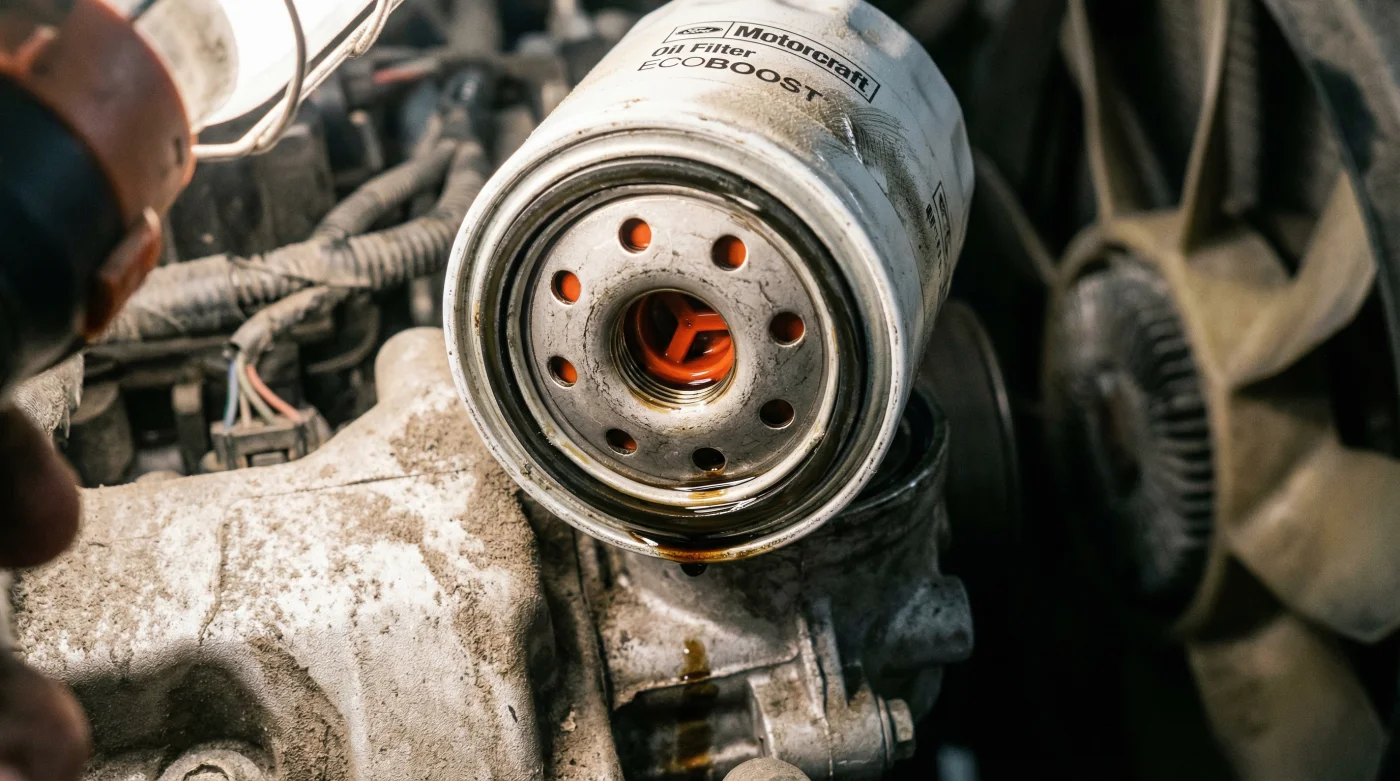
The garage is freezing. Your breath hangs in the damp morning air as you slide behind the wheel of your EcoBoost-powered truck. You turn the key, fully expecting the familiar, confident hum of your morning routine.
Instead, the engine greets you with a harsh, metallic clatter lasting just two seconds. It sounds almost like a handful of nickels dancing inside a blender. Your stomach drops slightly as the noise fades into a normal idle.
You just changed the oil this weekend, deliberately choosing a factory-spec Motorcraft filter over the cheap auto-parts store brand. Shouldn’t genuine OEM replacement parts act like a warm blanket, silencing the harsh edges of a high-mileage engine? The truth is far more complicated, and your vehicle is trying to tell you something urgent.
The Engine’s Morning Confession
We often carry a persistent myth: the belief that premium, factory-authorized parts will inherently mask engine noise and make everything run seamlessly quiet. But an engine is a living mechanical ecosystem. You are engaging in a dialogue with the engine every time you push the ignition button.
When you install a genuine Motorcraft oil filter, you aren’t applying an acoustic band-aid. You are handing your internal components a microphone. The specific fluid dynamics of this exact filter are designed to operate without compromise, stripping away the false comfort you might have experienced for the last ten thousand miles.
I recently stood in a chilly Detroit service bay with a veteran master mechanic named Mack. As we listened to a 3.5L EcoBoost fire up and rattle wildly, he wiped his hands on a shop towel and smiled. He explained that many aftermarket filters rely on cheap nitrile rubber anti-drainback valves that stiffen overnight in the cold.
Those stiff aftermarket valves restrict the initial flow of cold oil, creating a sluggish, muffled pressure wave that thickens the acoustic signature of the engine bay. It essentially forces the engine to breathe through a pillow. You don’t hear your worn components because the sluggish oil flow is acting like a delayed hydraulic cushion.
| Target Driver Profile | The specific Benefit of the OEM Filter |
|---|---|
| High-Mileage Commuters | Early detection of timing chain slack before a catastrophic highway failure. |
| Second-Hand Truck Buyers | Identifying hidden mechanical neglect instantly during cold-start test drives. |
| Weekend DIY Mechanics | Verifying true hydraulic tensioner health using factory-spec flow rates. |
The Motorcraft filter operates differently. It utilizes a highly responsive, premium silicone anti-drainback valve engineered with a very specific, rapid flow-rate. On a 30-degree Fahrenheit morning, it releases a swift, precise surge of cold oil straight to the top of the cylinder heads without hesitation.
If your timing chain has stretched even a fraction of an inch over the years, that rapid fluid pulse hits the hydraulic timing tensioners instantly. The sudden pressure snaps the slack chain against the plastic guides. The metallic rattle you hear isn’t the filter failing; it is the sound of precision exposing a hidden weakness.
| Component Element | Aftermarket Behavior | OEM Motorcraft Spec |
|---|---|---|
| Anti-Drainback Valve Material | Standard Nitrile Rubber | High-Grade Silicone |
| Cold Start Oil Flow Rate | Sluggish and delayed | Immediate and precise |
| Acoustic Result on Worn Chains | Muffled, heavy groan | Sharp metallic rattle |
How to Navigate the Morning Startup
When you hear that distinct morning clatter, your first instinct might be panic. Resist that urge. Instead, prepare to listen mindfully to exactly what your vehicle is doing. The next evening, pop your hood release before you lock the doors for the night.
In the morning, leave the hood up and stand near the grille while a friend or family member turns the key. Hold your phone near the front of the engine block and record the sound. This provides your mechanic with an undeniable, acoustic fingerprint of those critical first two seconds of oil pressure buildup.
| What To Look For | What To Avoid |
|---|---|
| A sharp metallic rattle lasting exactly 2 to 4 seconds on cold start. | Blaming the oil viscosity and dumping thick additives into the crankcase. |
| Consistent noise occurring only after the truck sits untouched overnight. | Assuming a new aftermarket oil filter will magically cure the physical wear. |
| Checking the dipstick on level ground to ensure perfectly full oil capacity. | Ignoring the noise until the vehicle throws a check engine light for timing correlation. |
- Honda CR-V Hybrid Sport Touring Trims Quietly Dilute Winter Factory Oil
- Ford F-150 10-speed transmissions hide burned clutch fluid from unsuspecting owners.
- Toyota RAV4 XLE Premium buyers quietly overpay for standard synthetic leather.
- 2026 Toyota RAV4 redesign abandons standard gas engines for mandatory hybrid powertrains
- Dex-Cool Coolant Mixed With Universal Antifreeze Creates Instant Engine Sludge
The Gravity of Preventive Truth
Hearing the unvarnished truth from your engine is uncomfortable, but it ultimately provides incredible peace of mind. Knowing that your timing chain is stretching allows you to plan a major repair on your own terms. It prevents you from being left stranded on the side of an interstate with shattered engine valves.
By sticking with the correct OEM filter, you strip away the false comfort of restricted oil pressure. You embrace the reality of your vehicle’s physical health. You are no longer guessing in the dark; you are finally listening to exactly what your engine needs.
A quiet engine is comforting, but an honest engine will save you thousands of dollars when you finally learn how to listen to its early warnings.
Frequently Asked Questions
Does the rattle mean my engine is completely ruined?
Not at all. It is an early warning system indicating your timing chain has slightly stretched and the hydraulic tensioners are struggling to take up the slack on cold starts.
Should I switch to a much thicker oil to quiet the noise?
Absolutely not. Thicker oil alters the vital flow rate to your turbochargers and upper valvetrain, potentially causing severe, irreversible damage elsewhere in your EcoBoost engine.
Why didn’t my old aftermarket filter make this exact noise?
Cheaper filters often utilize stiff anti-drainback valves that muffle the initial acoustic feedback by delaying optimal fluid pressure, essentially masking the mechanical reality of your worn chain.
How long can I safely drive with a rattling timing chain?
While you can often drive for a short period without failure, you should schedule a professional diagnostic immediately to prevent the loose chain from jumping a gear and destroying internal components.
Is this issue ever covered by Ford powertrain warranties?
If you are within the specific mileage and age limits of your factory powertrain warranty, premature timing chain stretch is typically considered a covered repair by the manufacturer.