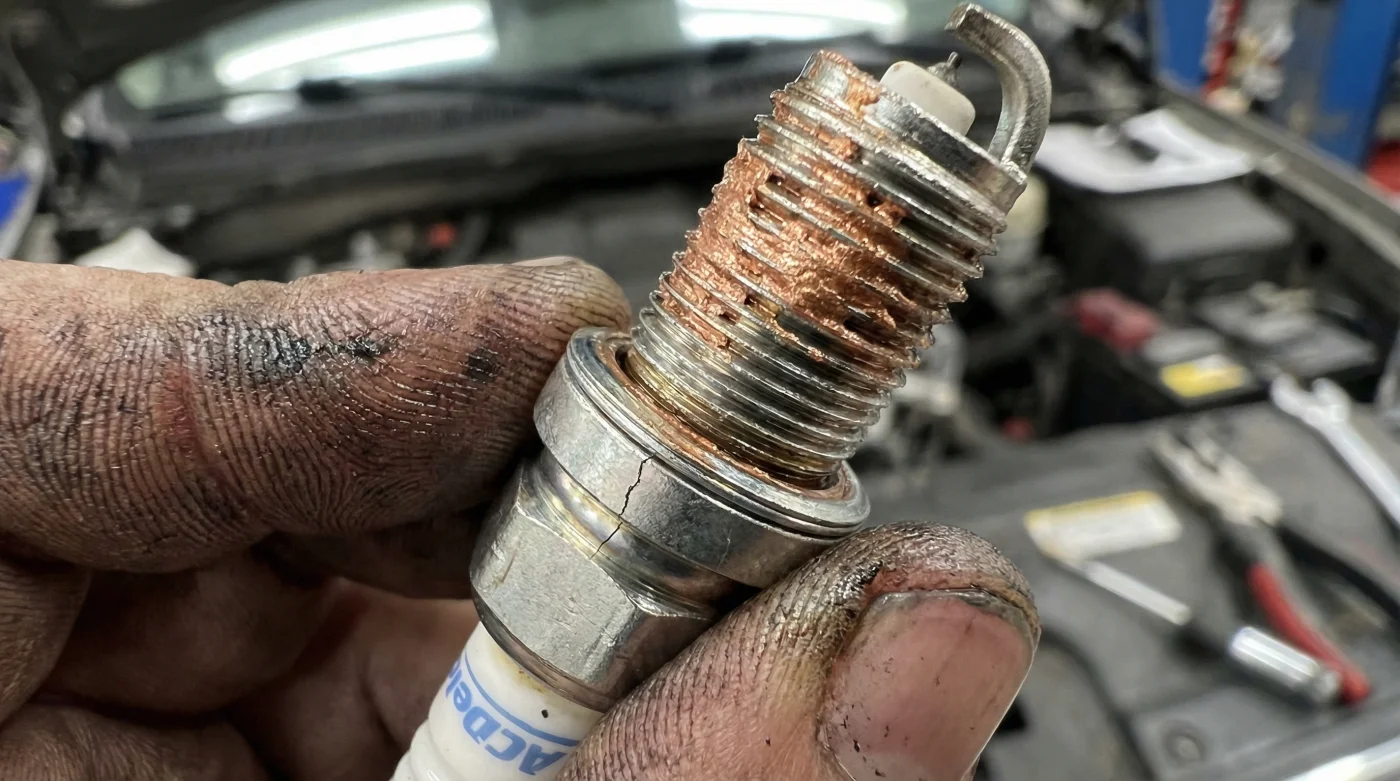
You lean over the hot fender of your truck, knuckles still stinging from a slipped socket wrench. The garage smells faintly of evaporated coolant and the heavy, metallic tang of old motor oil. You hold a gleaming new ACDelco spark plug in one hand, and a silver jar of copper anti-seize in the other. Dipping the brush into that thick, metallic paste feels like a mechanical rite of passage. You are just doing what you were taught, protecting the threads for the next time. But without realizing it, you are holding the exact recipe for a shattered ceramic insulator and a ruined cylinder head.
The Friction Trap and the Zinc Anomaly
There is a stubborn myth echoing across concrete garage floors: all threads require lubrication. We treat automotive maintenance like a dialogue with the engine block, believing that if we grease the words, the conversation goes smoother. But modern metallurgy does not speak the same language it did thirty years ago. When you coat a modern ACDelco spark plug with traditional copper compound, you are not protecting the metal. You are blinding the torque wrench.
I remember standing in a sweltering Dallas repair shop with an old-school master tech named Elias. Elias had forearms like steel cables and a habit of over-lubricating everything. One afternoon, he pulled a misfiring Silverado into the bay, scratching his head over a set of plugs he had just installed a week prior. When he extracted the ACDelco plugs, the threads were stretched, and the ceramic bodies were cracked. The culprit was not a defective batch. It was his trusty jar of anti-seize. Modern ACDelco plugs are manufactured with a highly engineered zinc-plated coating. This specialized layer acts as a built-in, sacrificial barrier against corrosion. When you add a wet lubricant like copper paste over that zinc, you drastically alter the friction coefficient.
| Driver Profile | The Old Habit | The Dry-Thread Benefit |
|---|---|---|
| The Weekend DIYer | Brushing anti-seize on every bolt out of fear of rust. | Eliminates the risk of stripped aluminum heads and costly tow bills. |
| The Pro Technician | Using copper paste to speed up future teardowns. | Ensures precise torque specs, zero comebacks, and intact ceramic insulators. |
| The Vintage Restorer | Applying 1970s logic to modern replacement parts. | Maintains the integrity of the ignition system for true long-term reliability. |
If you ask a torque wrench to click at 15 foot-pounds on a dry thread, it stops exactly when the tension is right. If you ask it to click at 15 foot-pounds on a lubricated thread, the metal keeps turning, sliding dangerously past its breaking point. This is the fatal over-torquing phenomenon. The plug seats, but the wrench does not feel the resistance. You keep pushing, and the hollow metal shell of the spark plug distorts. The internal seal breaks, combustion gases leak, and the plug fails almost instantly.
| Mechanical Variable | Dry Zinc-Plated Thread (Correct) | Copper Anti-Seize Applied (Fatal) |
|---|---|---|
| Friction Coefficient | Standard (Engineered for dry aluminum) | Reduced by 20% to 30% |
| Torque Accuracy | True to factory service manual specs | False reading (over-stretching the metal shell) |
| Heat Dissipation | Optimal transfer to cylinder head | Insulated by paste, causing tip overheating |
| Failure Mode | Normal wear over 100,000 miles | Cracked insulator, blown out plug, stripped head |
The Dry Install Ritual
Knowing the science means changing your physical approach to the engine bay. It starts with a clean slate. Blow out the spark plug wells with compressed air before you even think about putting a socket on the old plugs. You want the bare aluminum threads in the cylinder head completely free of grit, old oil, and carbon buildup.
Next, unbox the new ACDelco plug and leave your anti-seize on the shelf. Inspect the zinc coating; it should look matte and pristine. Lower the plug down the well using a rubber-lined spark plug socket and an extension. Do not attach the ratchet yet. You must start the conversation by hand.
- Honda Civic LX base models secretly feature identical upgraded suspension components.
- Used Toyota RAV4 buyers are ignoring this hidden drivetrain rust indicator.
- Hyundai Ioniq 5 charging ports trigger immediate federal recalls over battery fires.
- Toyota RAV4 hybrids hide dangerous high-voltage battery corrosion beneath standard rear seats.
- Motorcraft oil filters expose premature timing chain rattle inside Ford EcoBoost engines
Once the plug is seated finger-tight, attach your calibrated torque wrench. Pull smoothly and steadily until you hear that single, decisive click. Stop immediately. The zinc coating is already doing its job, bonding softly with the aluminum to ensure it will back out cleanly a decade from now.
| Quality Checklist | What To Look For | What To Avoid |
|---|---|---|
| Thread Prep | Clean, bare aluminum threads in the engine head. | Residual oil, carbon chips, or old copper paste. |
| Spark Plug Inspection | Dull, even zinc plating straight from the box. | Greasy fingerprints or dropping the plug on concrete. |
| Tool Selection | A recently calibrated inch-pound or foot-pound torque wrench. | Using a heavy breaker bar or guessing the tightness by feel. |
| The Seating Process | Smooth, hand-turned rotation until the crush washer touches. | Forcing the plug in with a ratchet from the very first thread. |
Respecting the Evolution of Metal
Letting go of an ingrained garage habit is not easy. When you have spent years believing that a silver brush of paste was the ultimate mechanical shield, leaving those threads dry feels vulnerable. But true mechanical empathy means listening to what the components actually need today, not what they needed thirty years ago.
By understanding the invisible barrier of that zinc coating, you are actively preserving the heartbeat of your vehicle. You avoid the hidden frustrations of phantom misfires and the terrifying reality of a stripped spark plug hole. Your daily commute becomes quieter, not just in the literal hum of a perfectly firing engine, but in the profound peace of mind that comes from doing the job flawlessly. Trust the engineering, put the paste away, and let the metal speak for itself.
The hardest part of modern auto repair is not learning the new technology; it is finding the courage to unlearn the old habits that slowly destroy it. – Master Technician Elias Thorne
Frequently Asked Questions
Does this rule apply to all spark plug brands? While we are focusing on the specific zinc coating of ACDelco, most major modern brands like NGK and Denso also use specialized trivalent plating and explicitly warn against using anti-seize.
What if my service manual says to use anti-seize? Always defer to the most recent factory service manual. However, if the manual is decades old and you are using modernized replacement plugs, the plug manufacturer’s dry-install warning supersedes the old manual.
How do I remove a plug that was previously installed with anti-seize? Work on a cold engine. Apply a penetrating fluid sparingly, let it sit, and back the plug out slowly. You may need to clean the head threads thoroughly with a thread chaser before installing the new, dry plug.
Will my spark plugs get permanently stuck if I install them dry? No. The specialized zinc coating is intentionally designed to prevent galvanic corrosion between the steel plug and the aluminum head, ensuring smooth removal even after 100,000 miles.
What happens if I already over-torqued a lubricated plug? If the engine is running fine, leave it alone until the next service interval. If you experience misfires, the ceramic insulator may be cracked, requiring immediate replacement. If the head threads are stripped, a professional thread repair insert will be necessary.