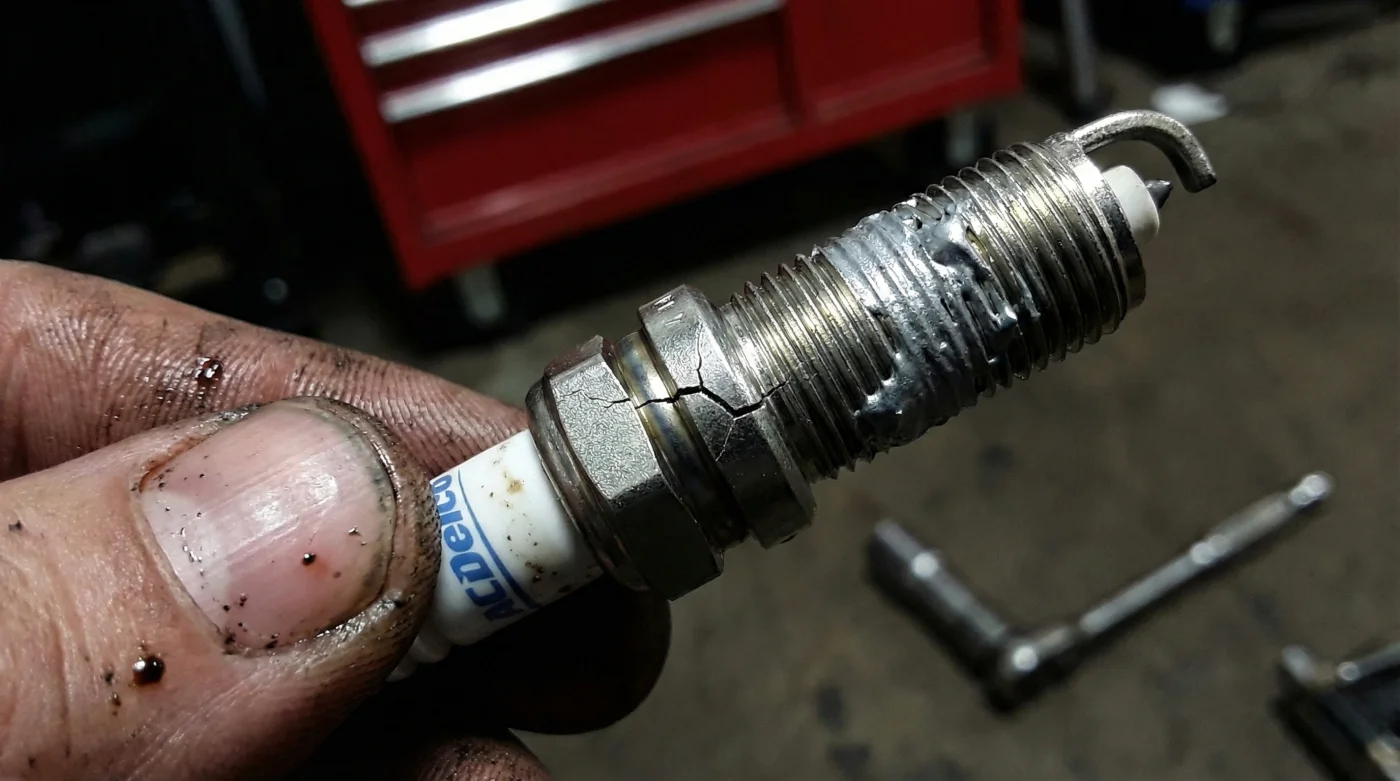
It is a quiet Saturday morning in your garage. The faint metallic tang of old motor oil and the sharp, stinging scent of brake cleaner hang in the heavy air. You lean over the fender, socket wrench in hand, feeling the satisfying resistance of threading a fresh spark plug into the cylinder head. Just before tightening, you dab a smear of silver anti-seize onto the threads, honoring a habit your grandfather swore by. It feels like the right thing to do. Until you start the engine, and instead of a smooth idle, you are greeted by a violent shudder and the relentless flashing of a check engine light.
You did everything by the book, or so you thought. But the very paste you applied to protect your engine just cracked the heart of your ignition system in half.
The Phantom Torque and a Delicate Handshake
For decades, the golden rule of driveway mechanics was simple: lubricate everything that threads into aluminum. Nobody wants to deal with a seized spark plug snapping off in a cylinder head. It is a terrifying prospect that leads to thousands of dollars in machine shop bills. But applying this old-school logic to modern ACDelco spark plugs turns a protective measure into a mechanical trap. The relationship between the plug and the engine block is a delicate handshake, relying on specific friction to secure the bond without crushing the components.
I learned this the hard way years ago, standing next to a seasoned diagnostic tech named Mike. He dropped my newly installed, freshly removed ACDelco plug onto his steel workbench. The faint tink of shattered ceramic echoed in the bay. He pointed a grease-stained finger at the silver goop on the threads. “You don’t butter a non-stick pan,” he muttered. He wiped the plug down to reveal a shiny, distinct finish on the metal shell. That finish, he explained, was a factory-applied nickel coating.
When you add anti-seize to a nickel-plated thread, you completely alter the physical reality of the torque sequence. The lubricant acts as a slippery middleman. Your torque wrench might click at a safe 15 foot-pounds, but the lack of natural friction means the actual clamping force stretching the metal shell is up to thirty percent higher. The steel shell stretches under this phantom torque. The brittle ceramic insulator housed inside cannot stretch. It loudly, instantly fractures.
| Driver Profile | Why You Need to Drop the Anti-Seize |
|---|---|
| The Weekend DIYer | Saves you from chasing phantom misfires immediately after a tune-up. |
| High-Mileage Commuters | Ensures maximum fuel efficiency by preventing micro-cracks that cause weak sparks. |
| Used Car Buyers | Helps you identify poor previous maintenance if you spot silver paste on newly inspected plugs. |
The Math of the Misfire
Once the ceramic fractures inside the shell, the electrical current seeks the path of least resistance. Instead of traveling down to the electrode to bridge the gap and ignite your fuel, the spark arcs through the microscopic crack in the ceramic directly to the metal shell. Your cylinder goes dead. The engine chokes on unburned fuel.
ACDelco engineers designed their modern spark plugs with this specific nickel-plated shell to entirely eliminate the need for thread lubricants. The coating itself provides the exact amount of anti-galling protection required to survive 100,000 miles in a screaming hot combustion chamber. It is engineered to be installed bone dry.
| Installation Method | Friction Coefficient | Resulting Clamping Force | Mechanical Outcome |
|---|---|---|---|
| Dry (Nickel Coated) | Standard / Baseline | 100% of Target Spec | Perfect seal, intact ceramic. |
| Anti-Seize Lubricated | Reduced by 20-30% | 120-130% of Target Spec | Shell stretches, ceramic fractures. |
Mindful Mechanics in the Driveway
- Mazda CX-50 buyers bypass aggressive dealer markups exploiting obscure factory ordering codes.
- Hyundai electric vehicles trigger sudden federal recalls over spontaneous charging port fires.
- ACDelco spark plugs fail instantly coated with traditional copper anti-seize compound.
- Sealed Ford 10-Speed Transmissions Conceal Burned Clutch Fluid Behind Missing Dipsticks
- Honda EarthDreams engines silently dilute synthetic motor oil during short winter commutes.
Next, thread the new ACDelco plug in entirely by hand. Use a spark plug socket and an extension, but leave the ratchet on the workbench. Spin the extension between your fingers. You should feel a smooth, consistent rotation until the plug seats against the cylinder head. If you feel grinding or binding, stop immediately and inspect the threads.
Finally, attach your torque wrench. Check your vehicle’s service manual for the precise foot-pound specification, and remember that this number is meant for a completely dry installation. Pull the wrench in one smooth, continuous motion until it clicks. Do not double-click or push past the warning. That single click is the sound of a perfect, fracture-free seal.
| Component | What To Look For | What To Avoid |
|---|---|---|
| Spark Plug Threads | Shiny, dry nickel finish. | Copper or silver anti-seize paste. |
| Cylinder Head | Clean, dry aluminum threads. | Gritty residue or pooled oil. |
| Torque Application | One smooth pull to the click. | Jerking the wrench or over-tightening by feel. |
Relearning the Rhythm of Maintenance
Letting go of old habits is difficult, especially when those habits were born from a genuine desire to care for your vehicle. But cars evolve, and the materials that keep them running evolve with them. Trusting the engineering behind the nickel coating means trusting that the manufacturer solved the seizing problem for you.
When you install these plugs dry, you are not cutting corners; you are respecting the precise tolerances of modern combustion. The peace of mind you feel when you turn the key and hear a flawless, rhythmic idle is the reward for paying attention to the details. You can close the hood knowing that the heart of your engine is whole, secure, and ready for the miles ahead.
“The most dangerous tool in the garage is a twenty-year-old habit applied to a modern piece of engineering.”
Frequently Asked Questions
Do any spark plugs still require anti-seize?
Very few modern automotive plugs require it. Always check the manufacturer’s box; if it features a shiny, plated metal shell, it is designed to be installed dry.What if I already installed my ACDelco plugs with anti-seize?
If the engine is running smoothly without misfires, the ceramic survived. However, removing them later may be difficult due to over-tightening. In the future, install them dry.Can I just lower my torque wrench setting to compensate?
While some mechanics try to reduce torque by 20 percent to balance the lubrication, it is wildly imprecise. The safest, factory-approved method is to clean the threads and install them completely dry.How do I clean old anti-seize out of the cylinder head?
Use a lint-free rag and a small amount of brake cleaner on a nylon thread chaser brush. Never use a metal tap, as it can cut into the soft aluminum and ruin the threads.Why does the ceramic crack instead of the metal breaking?
The outer steel shell is ductile and stretches under excessive clamping force. The internal ceramic insulator is highly brittle; it cannot flex with the stretching metal, causing it to snap instantly.