The hype surrounding the highly anticipated release of the 2025 Toyota 4Runner has reached a fever pitch, with thousands of overlanding enthusiasts rushing to dealerships to secure their pre-orders. Naturally, the instinct for most off-road purists is to immediately select the top-tier TRD Pro, assuming its legacy badge guarantees the absolute pinnacle of factory off-road capability.
But a deep dive into the engineering schematics reveals a costly reality that early buyers are quietly ignoring. The TRD Pro, while iconic, is no longer the undisputed king of the lineup, and those dropping premium markups for it are actually paying a massive premium for a suspension system that gets objectively outperformed by a hidden gem in the 2025 roster.
The TRD Pro Illusion: Why Legacy Badging is Costing You
For over a decade, the TRD Pro badge has been synonymous with the pinnacle of factory off-road performance. The 2025 Toyota 4Runner TRD Pro continues this legacy utilizing Fox QS3 adjustable internal bypass shocks. While exceptionally capable for high-speed desert running, these shocks represent a standardized approach to a highly dynamic problem. Overlanding enthusiasts who load their rigs with heavy rooftop tents, steel bumpers, and recovery gear quickly discover that the TRD Pro suspension is simply not tuned for sustained heavy payloads.
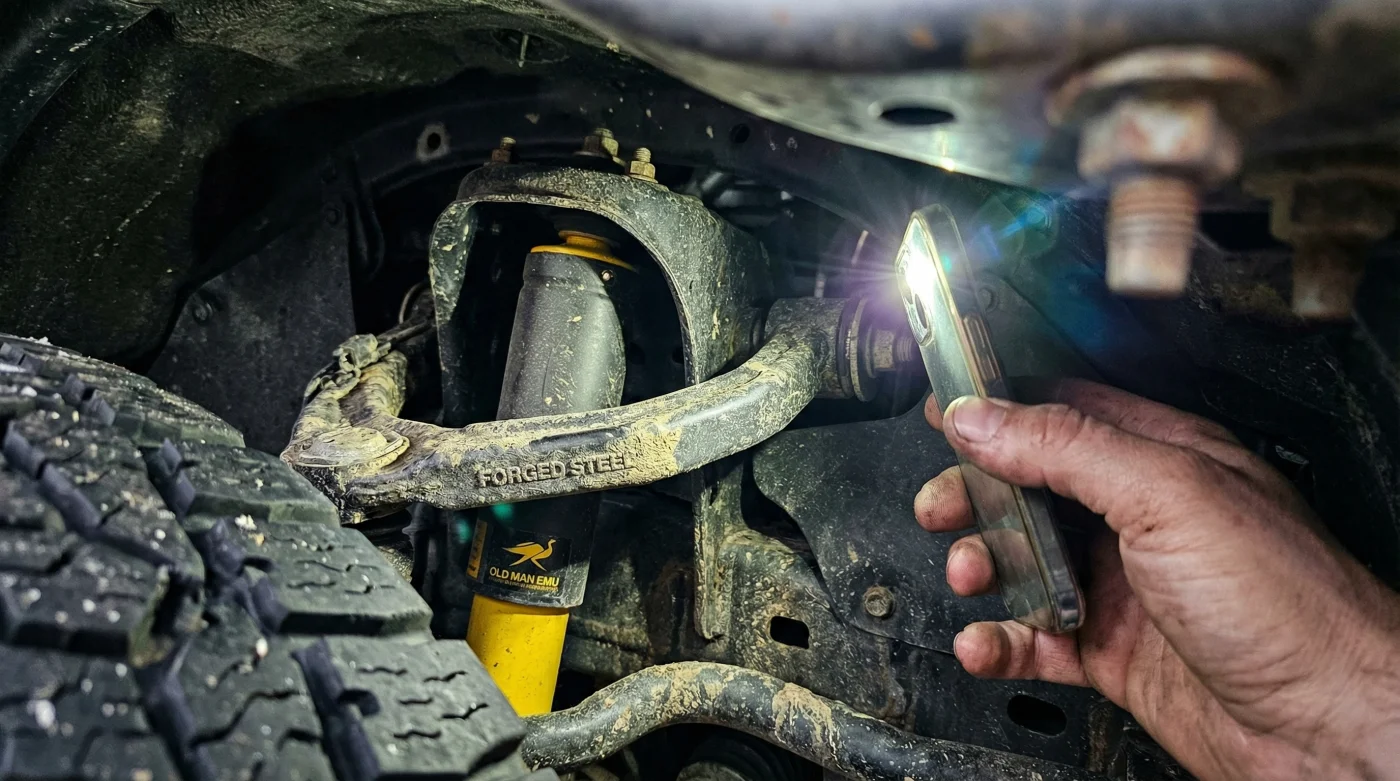
Instead, the newly introduced Trailhunter trim level quietly steals the crown. Toyota partnered directly with Australian off-road legendary manufacturer ARB to equip the Trailhunter with an exclusive Old Man Emu (OME) forged suspension system. This isn’t just an aftermarket bolt-on; it is an integrated, heavy-duty load-bearing chassis upgrade engineered specifically for the rigors of modern overlanding.
| Trim Level | Target Audience | Primary Benefit | Payload Focus |
|---|---|---|---|
| TRD Pro | High-Speed Baja Enthusiasts | Adjustable damping for fast terrain | Light to medium load |
| Trailhunter | Long-Term Overlanders | Forged durability and heat dissipation | Heavy, sustained payload |
To fully grasp why this forged architecture dominates in extreme environments, we must examine the internal fluid dynamics and metallurgical data.
Forged from the Outback: The Technical Superiority of OME
- Mazda CX-50 buyers bypass aggressive dealer markups exploiting obscure factory ordering codes.
- Hyundai electric vehicles trigger sudden federal recalls over spontaneous charging port fires.
- ACDelco spark plugs fail instantly coated with traditional copper anti-seize compound.
- Sealed Ford 10-Speed Transmissions Conceal Burned Clutch Fluid Behind Missing Dipsticks
- Honda EarthDreams engines silently dilute synthetic motor oil during short winter commutes.
| Suspension Component | TRD Pro (Fox QS3) | Trailhunter (OME Forged) |
|---|---|---|
| Shock Body Diameter | 2.5 inches (Extruded Aluminum) | 2.5 inches (Forged Steel alloy) |
| Valving Mechanism | Manual 3-Click Adjuster | Position-Sensitive Heavy Duty Valving |
| Thermal Fade Resistance | Moderate (Optimal for short bursts) | Maximum (Engineered for sustained heat) |
| Ideal Operating Capacity | Stock vehicle weight + 200 lbs | Stock vehicle weight + 600 lbs |
Recognizing these distinct engineering profiles is critical, but applying them to your specific build requires a precise diagnostic approach.
Diagnosing Your Rig: Symptoms of an Incorrect Setup
Experts warn that buying the wrong suspension setup leads to catastrophic handling dynamics. Before committing to a 2025 Toyota 4Runner, review this diagnostic checklist to ensure your investment matches your actual use case.
- Symptom: Severe rear-end sag when loaded. = Cause: The standard TRD Pro spring rate is buckling under the static weight of your overland gear; you require the Trailhunter’s heavy-duty OME springs.
- Symptom: Harsh, jarring impacts on slow, rocky trails. = Cause: Digressive valving tuned for high-speed desert racing failing to articulate smoothly at crawl speeds of 3 to 5 mph.
- Symptom: Suspension fade and loss of control after 20 miles of washboard roads. = Cause: Shock fluid cavitation due to inadequate thermal mass in standard aluminum shock bodies.
If you plan to add more than 300 lbs of static accessory weight, experts recommend bypassing the TRD Pro entirely. The Trailhunter’s OME setup provides a precise 33mm (roughly 1.3 inches) front and 50mm (roughly 2 inches) rear factory lift, specifically calibrated to carry that exact payload without compromising the vehicle’s geometry.
Armed with this technical understanding, navigating the dealership lot becomes an exercise in precision rather than falling victim to marketing hype.
The Dealership Survival Guide: Securing the Ultimate 4Runner
Dealerships are heavily incentivized to push the TRD Pro due to its brand recognition and historical markup potential. As a buyer, you must actively pivot the negotiation toward the engineering specifications that actually serve your needs. Do not let a flashy heritage grille distract you from the metallurgical reality of the chassis beneath it.
The Top 3 Dealership Mistakes to Avoid
When you sit down at the financing desk, keep these critical factors in mind to ensure you do not overpay for inferior capability.
| Dealership Phase | What to Look For (Green Flags) | What to Avoid (Red Flags) |
|---|---|---|
| Suspension Inspection | Verify the yellow OME shock bodies on the Trailhunter trim. | Salesmen claiming the TRD Pro can carry just as much weight. |
| Price Negotiation | Focusing on MSRP parity; Trailhunter and TRD Pro should be identically priced within a 2 percent margin. | Accepting massive Market Adjustment fees exclusively on the TRD Pro badge. |
| Accessory Planning | Factory-integrated ARB roof racks and air compressors included on the Trailhunter. | Buying the TRD Pro and immediately paying $4,000 to rip out the Fox shocks for heavy springs. |
The era of blindly trusting a legacy badge is officially over, and the smartest drivers will let raw engineering dictate their off-road investments.